

A Portland move is priced by models, not magic numbers: rental trucks charge a day rate plus mileage and fuel, professional movers bill hourly per crew member with minimum blocks, the city may require permits or reserved curb space for the truck on permit-zone streets, and the big cash-flow lines are deposits and overlap rent rather than anything on a receipt. Collect quotes on identical scope, then add 10 to 15 percent contingency for the edges.
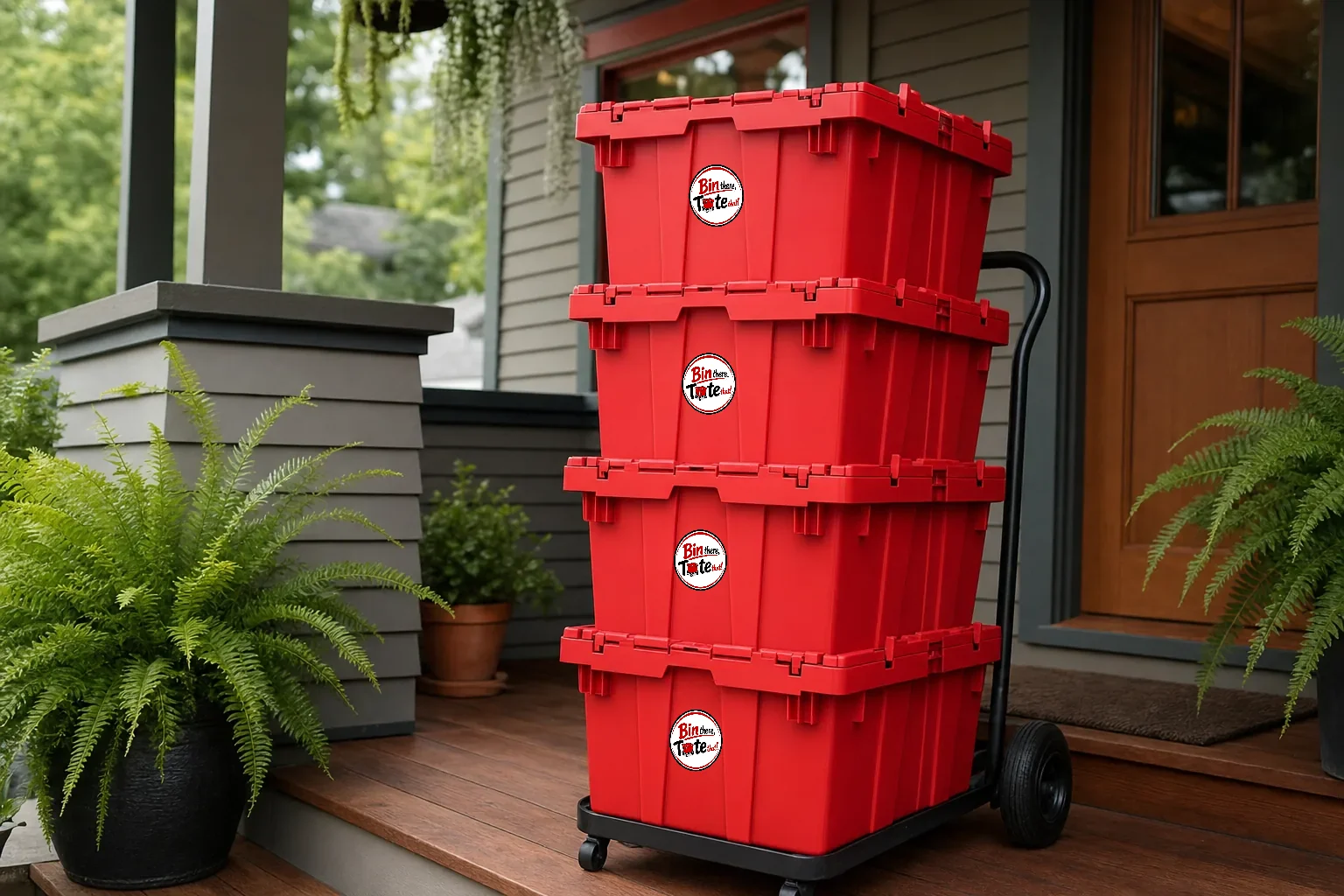
Packing supplies are the one line you can fix in advance: a Bin There, Tote That! package runs a flat $97 to $257 for two weeks, delivered and collected free across the Portland and Vancouver metro with a hand truck included, which turns an unpredictable pile of receipts into a single known number.
Where Portland moving budgets go sideways
Almost nobody blows a moving budget on the truck. The truck was quoted, compared, and booked with a confirmation number. Budgets die at the edges instead: the deposit that overlapped with last month's rent, the permit nobody knew the street required, the four days of takeout while the kitchen lived in containers, the second trip across the Ross Island Bridge because the first load ran long. In a market where a lot of moves cross a river or thread a permit-zone street, the edges are where the money goes.
So this breakdown works edge-first. Every category a Portland move can generate is listed below with its pricing model, because models stay true even when this year's numbers drift, and where a number depends on the week and the vendor, we say so instead of inventing one.
Budget by category, not by guess
The method is unglamorous and it works. List every category before you price any of them. Attach a pricing model to each: is this a flat fee, an hourly rate, a per-mile charge, or a deposit you will eventually get back? Then collect real quotes for the two or three biggest lines, use honest ranges for the small ones, and add a contingency on top of everything. A budget built this way can be wrong in the details and still land, because no whole category is missing from it.
One structural note before the table: separate the money that is gone from the money that is parked. A mover's invoice is spent; a security deposit is capital sitting at your landlord's until the walk-through. Mixing the two makes a survivable month look impossible on paper.
The Portland moving budget table
| Category | How it is priced | Planning notes |
|---|---|---|
| Rental truck | Day rate plus a per-mile charge, fuel on top | Quote your actual mileage, not the teaser rate; weekend dates cost more |
| Professional movers | Hourly, per crew member, with a minimum block of hours common | Get two or three quotes on identical scope; stairs and long carries add billable time |
| Fuel and mileage | Pay-at-the-pump, scaled by trips | A cross-metro move with a second trip doubles this line quietly |
| Street parking for the truck | Permit or reserved-space fees where required | Rules depend on your street; check the Portland Bureau of Transportation before moving day |
| Deposits and overlap rent | Refundable deposit plus days of double rent | Often the single largest cash-flow line; parked money, not spent money |
| Packing containers and supplies | Per-item retail, or one flat rental package | A tote package makes this line a known number: $97 to $257, delivered |
| Utility transfers | Setup and transfer fees vary by provider | Small individually, several at once; check each provider |
| Cleaning and deposit recovery | DIY supplies or a flat professional clean | Weigh the clean's cost against the deposit it protects |
| Contingency | 10 to 15 percent of everything above | Not optional; this is the line that absorbs the edges |
Seven steps to a number you can trust
Work the categories in this order and each step feeds the next.
- Inventory the home first. Every quote, truck size, and container count downstream depends on how much stuff exists, so walk the rooms and count before calling anyone.
- Decide the labor model. Full-service movers, hybrid with hired loaders, or pure DIY. This one choice swings the budget more than every other line combined.
- Collect quotes on identical scope. Same inventory, same date, same addresses to each company. Quotes on different assumptions cannot be compared, only admired.
- Check the curb early. If either address sits on a metered or permit-zone street, sort out truck parking through the city well before the date. A ticket or a forced double-park costs more than the paperwork ever would.
- Lock in containers as a flat line. Supplies are the one category you can fully de-risk. A delivered tote package fixes the cost in advance: totes, hand truck, delivery, and pickup for one price from the package rate card, free across Portland and Vancouver, instead of a running tab of boxes and tape.
- Book the building logistics. Elevator reservations, loading dock windows, HOA notice. Free to arrange early, expensive to discover late.
- Add the contingency and stop. Ten to fifteen percent on top, then close the spreadsheet. Rebuilding the budget nightly is a hobby, not a control.
Budgets fail at the edges, never the middle.
The costs nobody puts in the spreadsheet
Four lines show up in real Portland moves and almost never in first-draft budgets. Double utilities, because both addresses run overlapping service for a week or two. The takeout stretch, when the kitchen packs early and unpacks late, at Portland restaurant prices. Time off work, since a weekday move trades wages for a cheaper truck. And re-buys: the ordinary things like shower curtains, batteries, and pantry basics that were purged or lost and must be repurchased on arrival, usually in one demoralizing first-week shop.
None of these is avoidable in full. All of them are predictable, which is what the contingency line is for.
Where trimming actually works
Every budget guide says "cut costs" and then lists suffering. Here is the more useful version: the cuts ranked by pain. Moving mid-week and mid-month trims truck and mover rates for zero quality-of-life cost. Flexible dates let you take a mover's slow-day pricing. A serious pre-move purge shrinks the truck size, the hours, and the container count all at once, which makes the donation run the highest-yield chore in the whole process. What rarely pays is cheaping out on the things protecting your stuff and your deposit: sound containers, real blankets, adequate labor. Damage is the most expensive line a budget can grow.
The labor-model fork deserves its own honest chooser, since it is the biggest swing in the table.
- Heavy furniture, stairs, or a piano are involved
- Your time is worth more than the crew's invoice
- Nobody in your circle owes you a favor that big
- The move is local and the furniture is manageable
- You can muster two capable friends and a weekday
- Cash matters more than a sore back tomorrow
- Your containers stack uniformly, which speeds loading
Build the table, work the seven steps, and the number you carry into moving day will be one you actually trust. For the rest of the playbook, from timing your move to labeling systems that survive unpacking, the full library lives in our Portland moving tips hub.

Written by the Bin There, Tote That! team
We rent, deliver, wash, and pick up moving totes across the Portland and Vancouver metro every week, so the advice here comes from vans and doorsteps, not a content mill. Facts about competitors are checked at publication and date-stamped in the text.