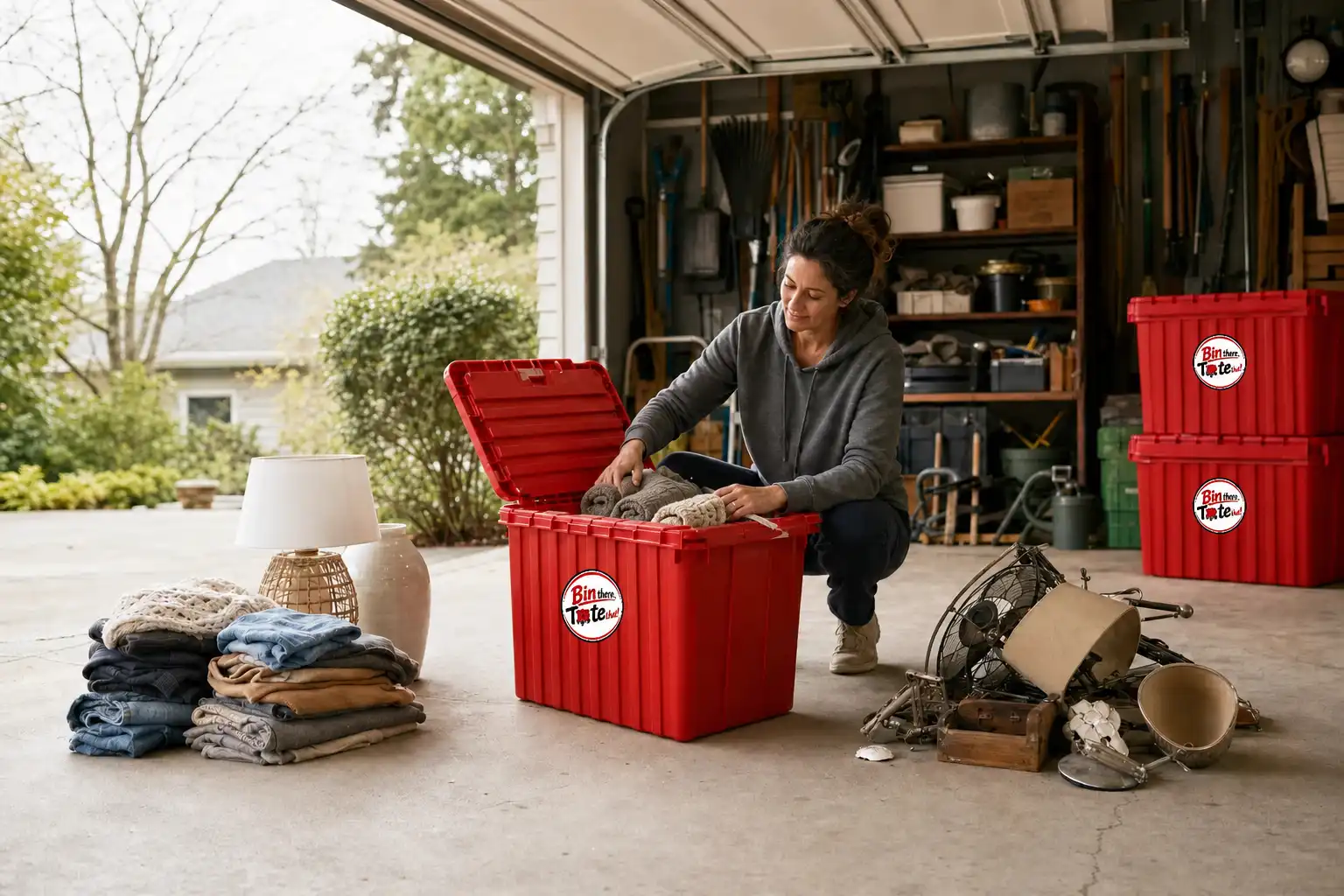
Downsize before you pack, not while you pack: every object you cull is one you don't pay to box, carry, and re-home, which makes decluttering the highest-return hour of the entire move. Use the four-pile method with real deadlines: keep what passed the one-year test, donate within a week of sorting, list sale items by four weeks out, and demote anything unsold to donate at two weeks.
The payoff is concrete. A house that would need our 50-tote Standard package at $197 often fits the 25-tote Essential package at $127 after an honest cull, and the lifting you skip is free.
The economics of owning less on moving day
Every object in your house is about to cost you three times: once to pack, once to carry, once to find a home for at the other end. Multiply that by a few thousand objects and you see why decluttering isn't a virtue project. It's the cheapest labor-saving device in the entire move. A shelf you empty into the donate pile in July is a container you don't pack, lift, or unpack in August.
The trap is that decluttering has no deadline of its own, so it loses every scheduling fight to tasks that do. Give it one. Start six to eight weeks out, work in short sessions, and finish before packing begins, because sorting and packing at the same time produces boxes labeled "misc" that you will still own, unopened, at the next move.
The four-pile method, done honestly
Keep, donate, sell, toss. You've heard it. The method fails not because it's wrong but because people negotiate with it. So here it is with the tests and deadlines that make it stick.
| Pile | The honest test | Deadline | Where it goes |
|---|---|---|---|
| Keep | You used it in the last year, or it would cost real money to rebuy the week you need it | Packs with the house | Into a tote, labeled by room |
| Donate | Useful to someone, worth under roughly $50, not worth your selling time | Out of the house within one week of sorting | Nonprofit drop-off, or a scheduled pickup for furniture |
| Sell | Worth enough that you'd genuinely photograph, list, and meet a stranger for it | Listed by four weeks out; unsold items demote to donate at two weeks | Marketplace listings, consignment, one weekend sale |
| Toss | Broken, expired, or unusable; nobody's charity wants a fitness on-ramp of obligations | Bagged the same day | Garbage, recycling, or a hazmat run for chemicals |
The two deadlines in the middle are the whole trick. A donate pile that lingers in the garage quietly reapplies for residency, and a sell pile with no demotion date becomes a museum of optimism.
Order of attack matters as much as method. Start where sentiment is thinnest and volume is thickest: the garage, the storage closet, the attic, the basement shelves. Those rooms hold the duplicates, the abandoned hobbies, and the boxes still taped from the last move, which are the easiest wins and build the deciding muscle. Save the emotionally loaded categories, photos, books, and kids' artwork, for last, when you're practiced and the finish line is visible. A first session spent relitigating the wedding albums ends the whole project by dinnertime.
The sunk-cost trap, and other lies your stuff tells
Most downsizing failures are one bad argument wearing different outfits. "I paid $400 for that treadmill" is the classic. The $400 left in the past either way; the only live question is whether the treadmill earns its truck space going forward. Price paid is not a reason to move something twice.
Its cousins deserve naming too. "I might need it someday" is usually true of things a hardware store sells for $12. "It was a gift" confuses the object with the affection, which you keep either way. "I'll fix it at the new place" has a documented success rate somewhere near the crawl space where the broken chair will live. Be kind to yourself about all of this, and then be decisive anyway.
You already paid for it once. Don't pay movers to agree.
Timing the sales so they actually happen
Selling takes calendar time, not just effort, so it runs on its own schedule inside your moving timeline.
- Six weeks out: list the big-ticket items. Furniture, exercise gear, instruments. Big items need the longest runway and their buyers need to arrange their own trucks.
- Five weeks: photograph and list the middle tier. Electronics, tools, bikes. Honest photos, honest flaws, prices you'd accept this week.
- Four weeks: one yard sale or porch sale weekend, if you'll enjoy it. Treat it as a clearance event, not a fundraiser.
- Two weeks: demote everything unsold to donate. No relisting, no price drops, no second sale. The move is close and your time is now worth more than the residual value.
- One week: donation runs complete. Book charity furniture pickups well ahead; the good slots go early, and drivers won't take what sat in the rain.
Donation logistics, minus the guesswork
Donating is faster than selling but it still has rules. Call ahead or check the website before hauling furniture; most charities decline mattresses, damaged upholstery, and older baby equipment for safety and resale reasons. Clothes, books, kitchenware, and working small appliances move easily almost anywhere. Get the receipt if you itemize taxes, and keep a photo inventory of anything substantial.
Neighborhood channels absorb what thrift stores won't. A free pile with a sign works remarkably well on a dry Portland weekend, and local buy-nothing groups will claim odd items, half-used craft supplies, moving leftovers, that no donation counter wants. The rule stays the same either way: whatever channel you pick, the item leaves the property this week.
For the pile that no charity wants and no bin accepts, the answer isn't the moving truck. Old paint, chemicals, and dead electronics have proper drop-off channels, which we cover alongside the rest of the forbidden cargo in what not to pack.
How downsizing shrinks your container order
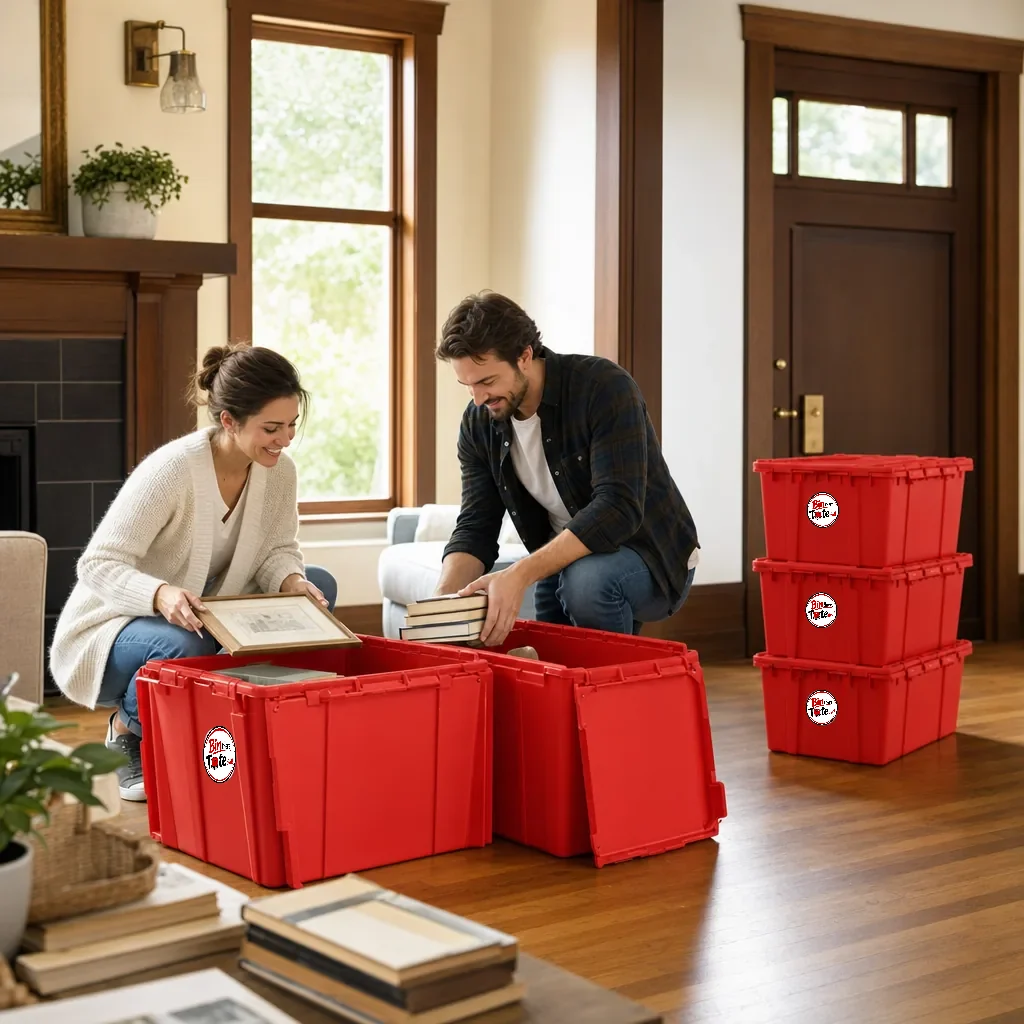
Here's where the effort turns into a number. Container needs track volume, and volume is exactly what you've been cutting. A two-to-three-bedroom house typically points at our 50-tote Standard package at $197. The same house after a genuine cull, with the garage sorted and the closets honest, often packs into the 25-tote Essential package at $127. That's a $100 difference you created with a label maker and some resolve, before counting the lifting you skipped.
Our advice, freely given against our own interest: downsize first, then book the smaller package. The tote counts for each home size are listed on the four package sizes page, and since delivery and pickup are free across the Portland and Vancouver metro either way, the only thing a leaner order costs you is the excuse to keep the treadmill.
Keep it or let it go?
When an object stalls you mid-sort, run it through this fork and keep moving.
- You reached for it in the last twelve months
- Replacing it would cost real money at an inconvenient time
- It earned a spot in your one keepsake container
- Its main argument is the price you once paid
- It's waiting on a repair, a diet, or a hobby revival
- You forgot you owned it until this sort
- Someone else would use it this month; you wouldn't use it this year
Downsizing is week one of a longer campaign: the full schedule it slots into is our 8-week moving checklist, and the whole shelf of packing and planning guides is filed under our complete moving tips index.

Written by the Bin There, Tote That! team
We rent, deliver, wash, and pick up moving totes across the Portland and Vancouver metro every week, so the advice here comes from vans and doorsteps, not a content mill. Facts about competitors are checked at publication and date-stamped in the text.