Pack clothes in this order: run a donation pass first, fold everyday clothes flat into rigid containers, keep tailored and wrinkle-prone pieces on their hangers using the drawstring trash-bag trick or a wardrobe box, and give shoes their own container so they never share space with clean fabric. Leave dresser drawers full only if the dresser is solid wood and the drawers travel separately.
Sequence beats technique: pack off-season clothes weeks early, keep a working rotation until the final days, and hold back a two-day duffel that rides in the car. Unpack in the same order, current season first.
Clothes are a volume problem wearing a simple disguise
Nothing in a closet is fragile and almost nothing in it is heavy, which lulls people into treating clothing as the easy part of a move. Then the closet comes off its rods and turns out to be the single largest category of stuff in the house. The average adult wardrobe fills more containers than the kitchen. The work is not protecting clothes; it is compressing a small boutique into a truck without turning every garment into a wrinkled ball.
Method matters less than sequence here. Edit first, pick the right technique per garment type second, and pack in an order that makes the first week at the new place easy. Here is each piece in turn.
The donation pass comes before the first fold
Moving is the one time you will handle every piece of clothing you own, so the edit costs nothing extra. Pull everything out, and be honest about the jeans that have not fit since two apartments ago and the shirt you keep out of guilt. Anything clean and wearable goes to a donation bin or a buy-nothing group; Portland has no shortage of either. What you keep is what you pack, and a quarter-smaller wardrobe is a quarter fewer containers to carry, label, and find homes for.
You are not packing a closet. You are choosing one.
Fold flat, roll, or leave it in the drawers: the honest version
Every packing article picks a champion here. The truth is that each method wins somewhere and loses somewhere, and pretending otherwise is how people end up rolling three hundred t-shirts the night before a truck arrives.
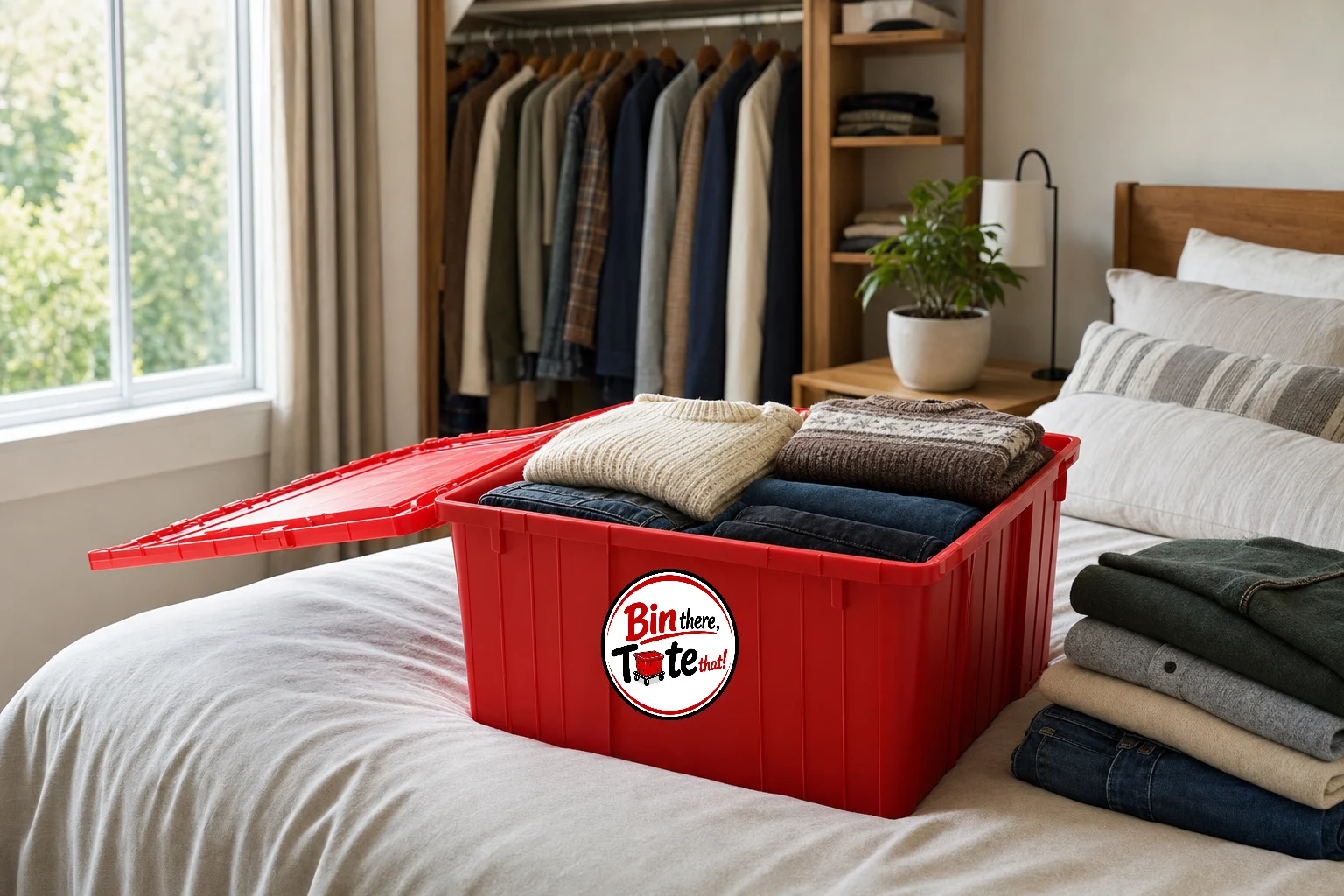
Folding flat is the workhorse. It is fast, it stacks cleanly in a rigid container, and it leaves fewer creases than rolling on anything structured. For moving day speed, fold.
Rolling saves real space in a suitcase and keeps knits tidy, but it is slow at wardrobe scale and puts spiral wrinkles into woven shirts. Roll for the overnight bag, not the whole closet.
Vacuum compression bags deserve their own honest line: brilliant for bulky bedding and the puffer-jacket shelf, hard on structure. Wool and down come out needing days to reloft, and anything crease-prone comes out looking pressed by accident. Compress what has no shape to lose and nothing you plan to wear in the first week.
Leaving clothes in dresser drawers sounds free and sometimes is. The honest caveats: a full dresser is a two-person lift at best, drawers slide open on stairs unless the dresser is wrapped shut, and particleboard furniture can rack and loosen when carried loaded. If the dresser is solid wood and traveling a short hop, take the drawers out, carry them separately like open trays, and slide them back in on the truck. If it is flat-pack furniture, empty it entirely.
| Garment type | Best method | Skip this |
|---|---|---|
| T-shirts, jeans, knits | Fold flat in stacks, pack snug | Rolling hundreds of them one by one |
| Suits, dresses, work shirts | Stay on hangers, bagged or in a wardrobe box | Folding anything tailored |
| Coats and bulky layers | Compress into larger containers late in the pack | Vacuum bags for wool and down you need soon |
| Delicates and small items | Zip pouches, then into any container as filler | Loose in a drawer that gets carried tilted |
| Off-season everything | Pack first, label by season, unpack last | Mixing seasons in one container |
Hanging clothes: the trash-bag trick and when to spend on wardrobe boxes
Hanging clothes want to arrive hanging. Two ways to make that happen. The free way is the trash-bag trick: gather ten to fifteen hangers, pull a clean drawstring bag up over the clothes from the bottom, and cinch the drawstring around the hanger necks. Each bundle carries like a garment bag, hooks over anything in the truck cab or back seat, and unpacks in one motion at the new closet.
Wardrobe boxes earn their price for the clothes with the most to lose: suits, dresses, anything tailored or silk. One or two boxes for the good stuff, trash-bag bundles for the everyday hanging clothes, and folded stacks for everything else is the mix that moves most closets efficiently.
Shoes, bags, and the small stuff
Shoes ruin clothing containers when they share them, so give footwear its own space. Stuff each pair with socks or paper to hold its shape, set pairs sole-to-sole, and load the heavy boots on the bottom. Original shoeboxes are worth using for anything you would resole. Belts coil inside shoes; jewelry travels in a small hard case that stays with you, not on the truck; handbags stuff with soft items and nest into each other like Russian dolls.
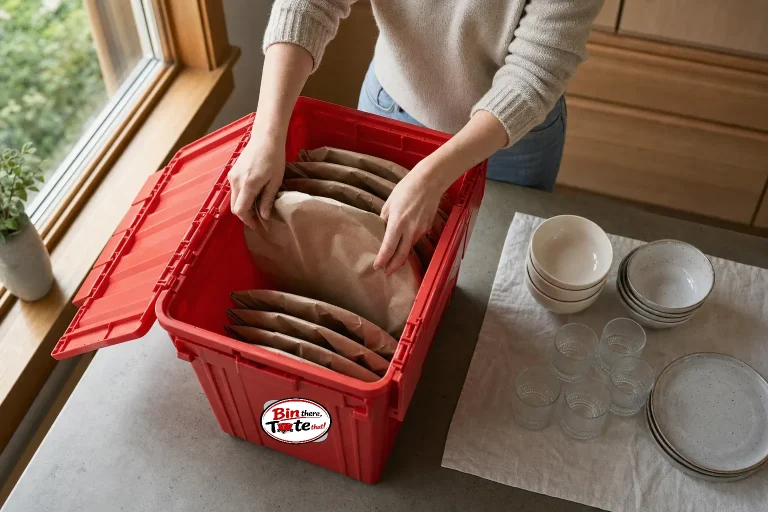
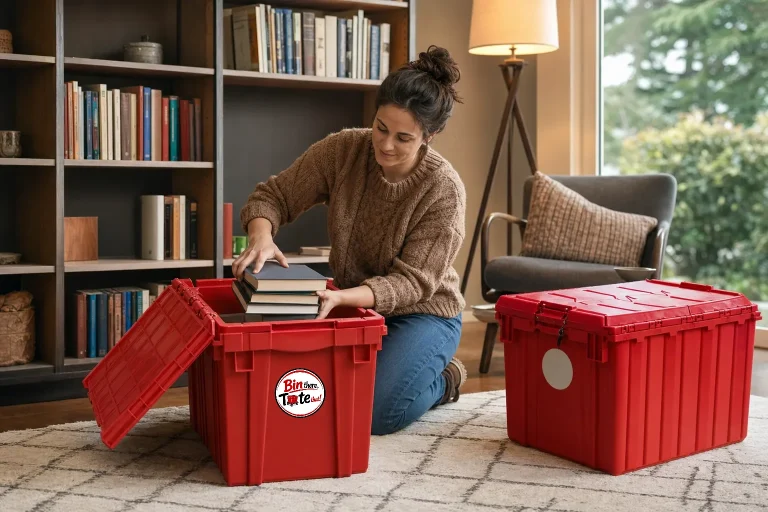
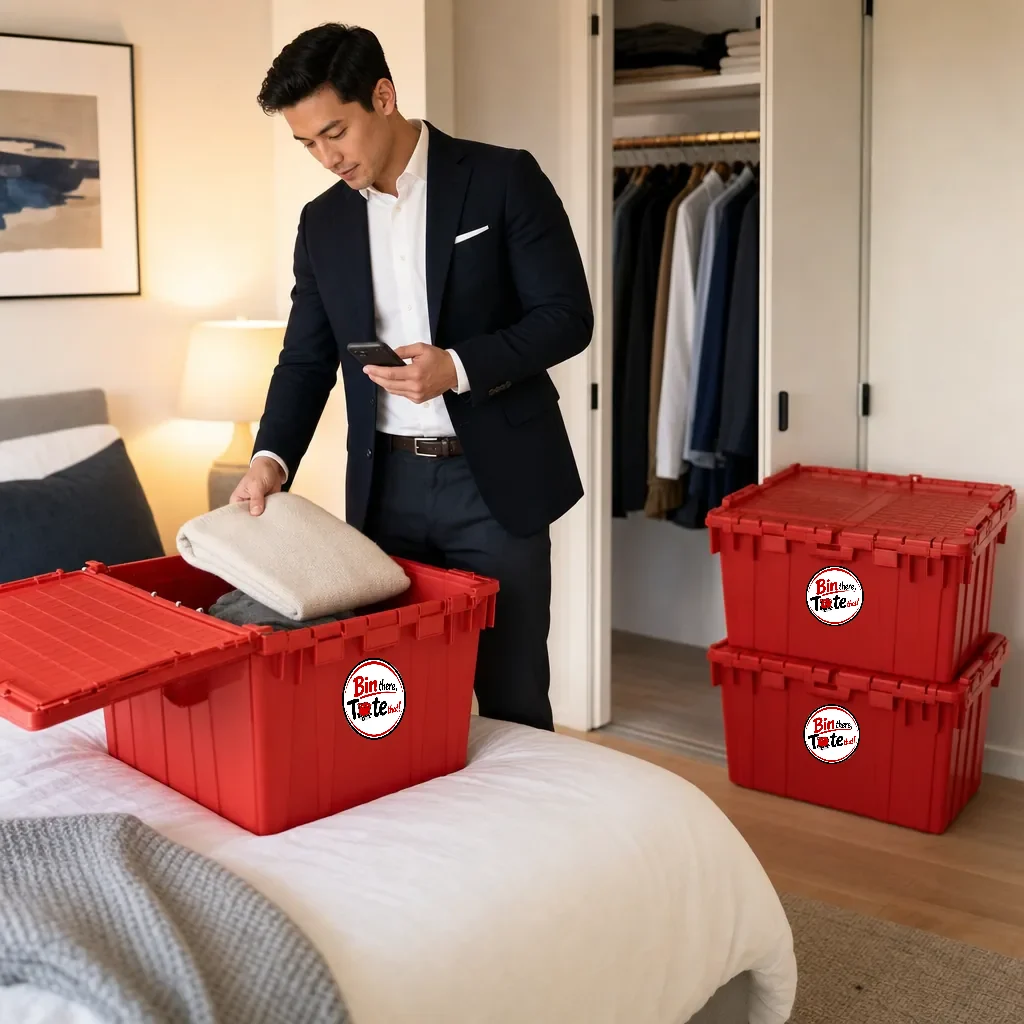
A rigid tote happens to be the ideal shoe container, since one pair of wet Blundstones cannot soak through a plastic wall into your sweaters. This is where a delivered stack pays off: our totes arrive free across the Portland and Vancouver metro, the two-week window lets the closet get packed a full week before the truck shows up, and empty totes leave from the new address instead of becoming a hallway of dead cardboard. The whole fleet system is described on the our tote rental fleet page.
Pack by season, unpack by season
The order you pack determines how livable the first week is. Work backward from moving day.
- Three weeks out: off-season clothes, formalwear, and anything occasion-specific. In July, that means every coat except one rain shell. This is Oregon.
- Two weeks out: the deep bench: extra jeans, the sweater surplus, most shoes. Leave a working rotation of seven or eight outfits.
- Final days: the working rotation, folded into one or two clearly labeled containers that get loaded last.
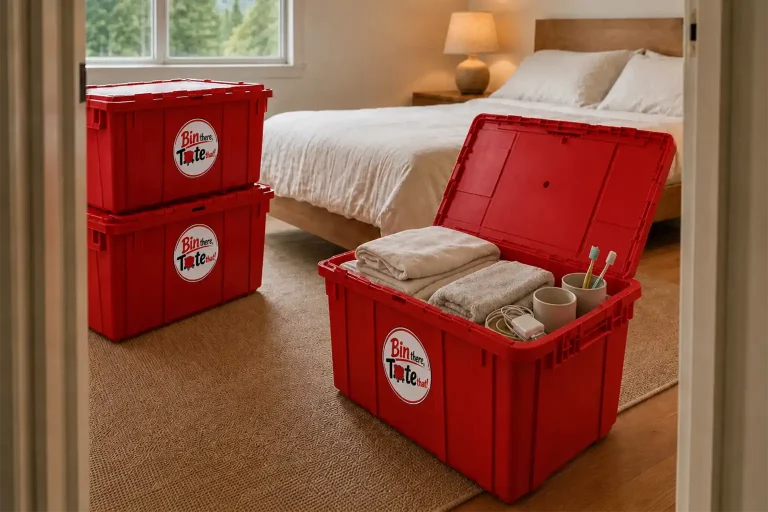
- Kept out entirely: a duffel with two days of clothes, sleepwear, and toiletries that rides in the car with you. That bag is part of a bigger first-day kit, covered in our first-night box guide.
At the new place, reverse it: the duffel keeps you dressed, the working rotation unpacks first, and the off-season containers can wait in a closet corner for a month without hurting anyone.
Hang it or fold it: the quick chooser
- It is tailored, pleated, silk, or wrinkle-prone
- You would iron it before wearing it anyway
- It hangs in the new closet the day you arrive
- It is a knit, a tee, denim, or anything casual
- It shrugs off a fold and a week in a stack
- It is off-season and will not be missed for a month
Handle the closet this way and clothing becomes the quiet success of the move: edited down, packed by season, and hanging where it belongs by the first evening. When you are ready for the heavier rooms, the shelf-by-shelf guides wait in every guide on the moving tips hub.

Written by the Bin There, Tote That! team
We rent, deliver, wash, and pick up moving totes across the Portland and Vancouver metro every week, so the advice here comes from vans and doorsteps, not a content mill. Facts about competitors are checked at publication and date-stamped in the text.