
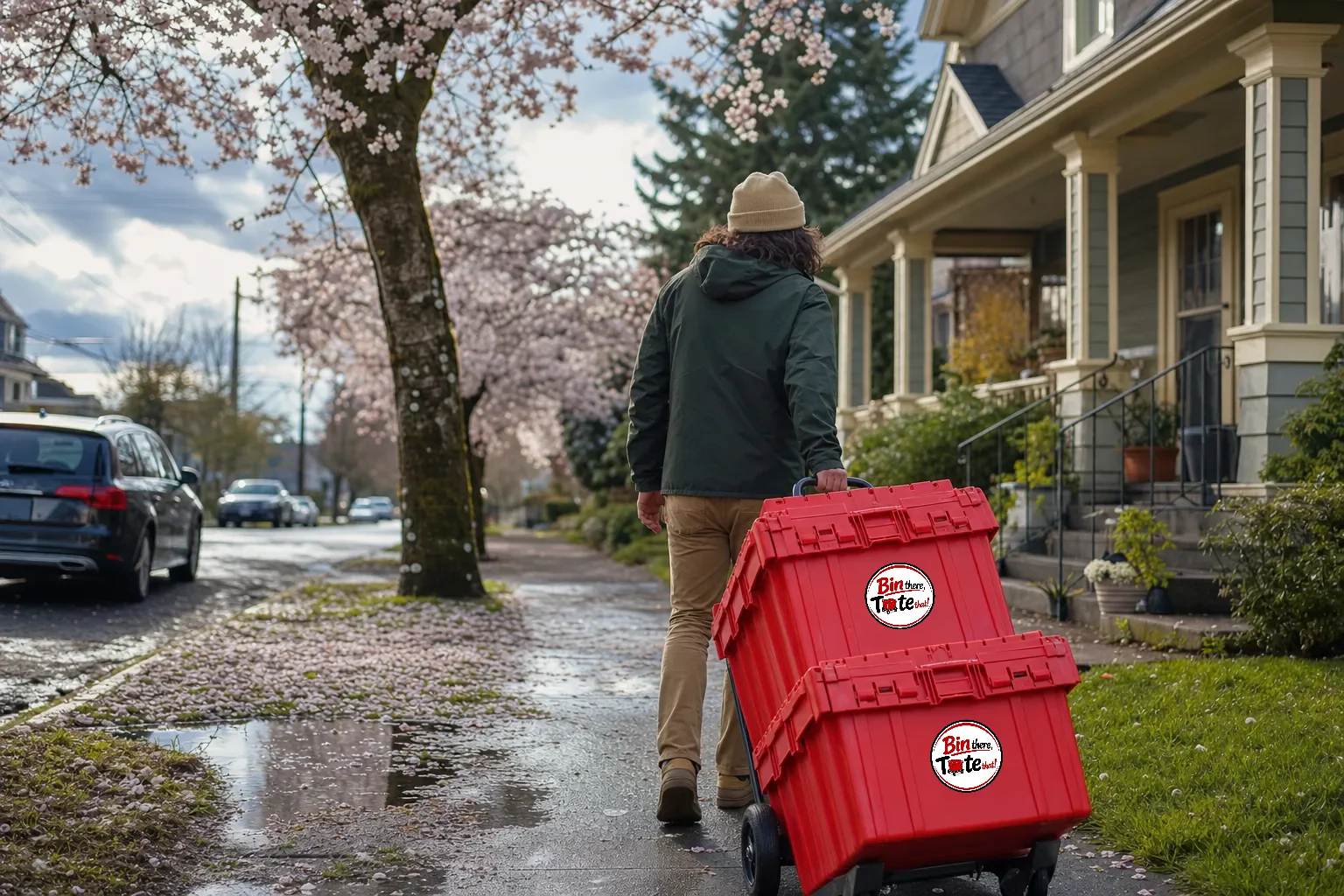
The best time to move in Portland, balancing weather against demand, is early-to-mid fall: October offers post-summer availability and pricing while the rain is still intermittent. Winter is the cheapest and most negotiable window for movers with a solid rain plan; summer buys reliably dry weather at peak prices and the year's tightest truck and crew availability, with month-end weekends the worst slots of all.
Within any season, a Tuesday-to-Thursday move between the 10th and 20th dodges the lease-turnover crush. And container logistics needn't follow the season: Bin There, Tote That! delivers lidded totes free across Portland and Vancouver all year, $97 to $257 flat for two weeks.
Two clocks decide your moving date
Every Portland move sits at the intersection of two clocks. The demand clock: trucks, movers, and elevators are scarce when everyone wants them, plentiful when nobody does, and prices follow. The weather clock: the region is broadly dry and pleasant from late June into September and wet for most of the rest, with the shoulder months as a coin flip.
The uncomfortable part is that the clocks disagree. The months with the friendliest skies are the months with the ugliest competition for trucks and time slots. Picking your date is really picking which clock you'd rather fight, and the good news is that one of them can be beaten with a tarp and a plan, while the other can only be beaten with money.
A note on scope before the tour: this is about when to move, not about any one company's rates. Seasonal demand gives the industry its shape; your actual numbers come from getting quotes for real dates, which is why flexible movers should always price two windows against each other before committing.
Summer: perfect skies, worst-case demand
June through September is peak season in Portland the way it is nearly everywhere in the country: leases turn over, school is out, houses close, and everyone converges on the same trucks. Expect rental fleets to book out, mover calendars to fill weeks ahead, and rates across the industry to sit at their annual high. The last weekend of any summer month is the single most contested slot on the calendar, with the end of August traditionally the fiercest of all.
If summer is your window, the play is to book everything absurdly early and to slide off the peaks: mid-month beats month-end, weekdays beat Saturdays, and a morning start beats afternoon heat, which the occasional Portland heat wave can make genuinely punishing for stair carries.
Fall: the shoulder-season sweet spot
October and early November are the quiet bargain of the Portland calendar. The summer scramble is over, so trucks and crews come free again and scheduling turns polite. The weather starts flipping wet, but early fall rain tends to arrive as showers with workable gaps rather than day-long soakings, and the temperature is ideal for physical work.
For anyone with date flexibility, a mid-week, mid-month move in October is about as good as the intersection of the two clocks ever gets here: near-winter pricing with near-summer logistics. The one caveat is daylight; by November the useful moving day shortens noticeably, so start early.
Winter: cheapest, wettest, occasionally icy
December through February is the deep off-season, and it rewards the brave. Demand bottoms out, movers offer their most negotiable rates of the year, apartment specials appear, and you can often book quality help on short notice, a sentence nobody has ever written about August.
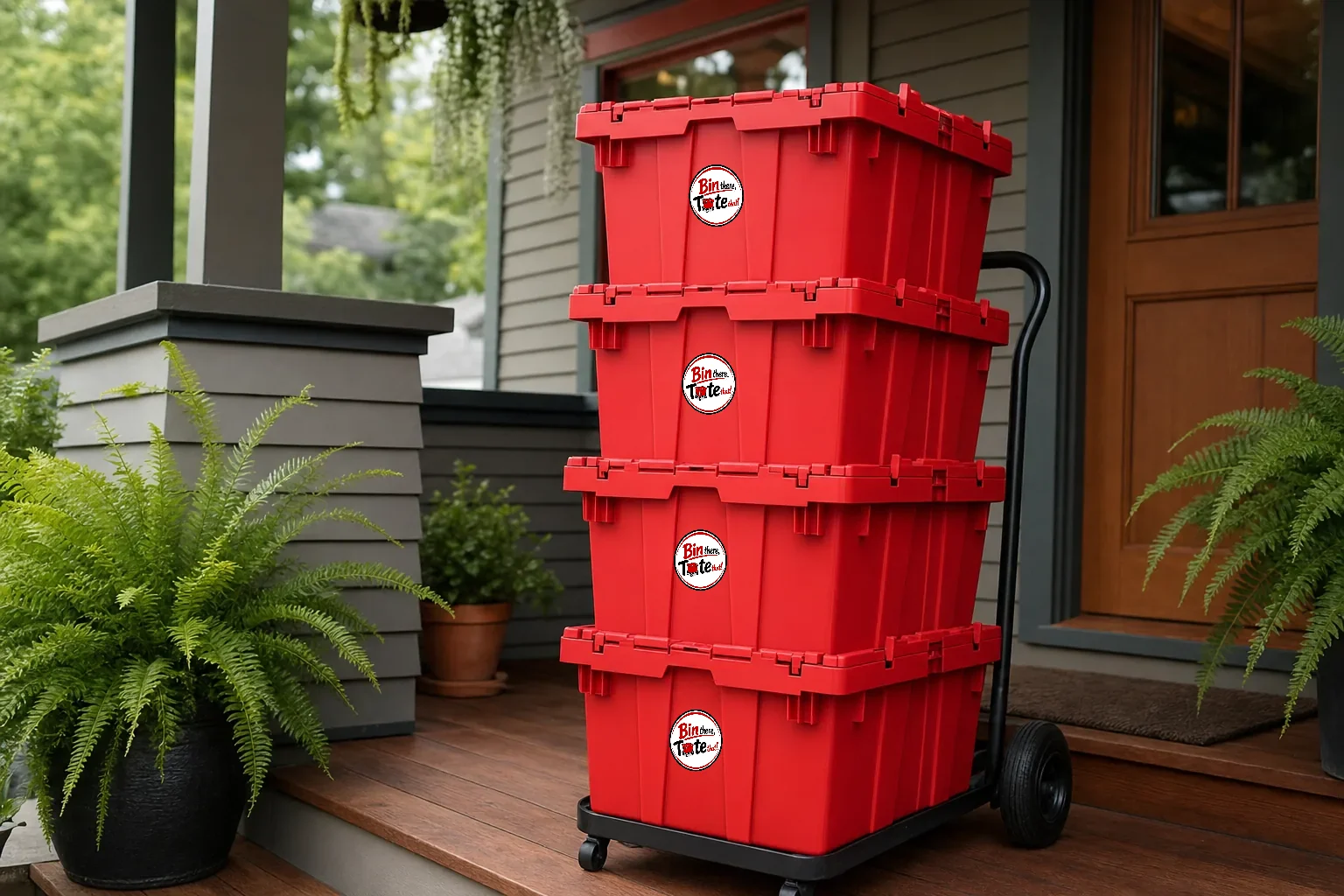
The trade is the sky. Winter moves here are wet by default and, a few times most winters, complicated by ice or a dusting of snow that this region famously does not handle in stride. A winter mover needs a rain plan, not just a rain hope: covered staging, short carries, lidded containers, and the willingness to shift a day if an ice storm lands on yours. Our wet-weather moving playbook is the companion piece for exactly this window.
The weeks around Thanksgiving and the late-December holidays behave like their own micro-season: demand is low, but vendor staffing runs thin and apartment buildings often restrict elevator reservations during holiday weeks. If your move lands there, confirm every booking twice and expect friendly prices with slower phone lines.
Spring: the wildcard with a deadline
March through May is transition season in both senses. Weather-wise it's showery and changeable, drier than deep winter but rarely trustworthy for a full day. Demand-wise it climbs steadily as the school year winds down, with late May behaving like a preview of summer. Early spring still shops like the off-season; by Memorial Day the discounts are gone.
Spring suits movers whose dates float inside a range: watch the ten-day forecast, grab a dry-looking mid-week window in March or April, and you'll bank most of winter's savings with half its risk. One local ripple worth knowing: neighborhoods near the universities see their own surge at spring term's end and again each September, so addresses close to a campus should book earlier than the season alone would suggest.
The whole year in one table
The honest calendar, compressed.
| Season | Weather reality | Demand and pricing | Verdict |
|---|---|---|---|
| Summer (Jun–Sep) | Reliably dry, occasionally hot | Annual peak; month-ends brutal | Book far ahead, dodge the last weekend |
| Fall (Oct–Nov) | Cooling, showers with gaps | Falling fast after summer | The sweet spot for flexible movers |
| Winter (Dec–Feb) | Wet by default, occasional ice | Annual low; most negotiable | Cheapest, for those with a rain plan |
| Spring (Mar–May) | Changeable, improving | Climbing toward summer | Early spring shops like off-season |
Day of the week, time of the month
Whatever the season, the same fine-tuning applies, because everyone's lease ends on the same day and everyone prefers the same Saturday.
- Aim mid-month. The 10th through the 20th sidesteps the lease-turnover crush at both ends of the month.
- Move Tuesday through Thursday. Weekends carry a premium in availability even when they don't in price.
- Reserve the elevator early if either building has one; in close-in apartment buildings the elevator calendar fills before the truck does.
- Stack your rental window across the date. A two-week tote rental means packing can start the weekend before a mid-month move and unpacking can finish the weekend after, no rushed single day.
- Confirm everything the week before. Off-peak bookings are easy to make and easy for vendors to forget.
Everyone wants the last Saturday. Want differently.
So when should you move?
The fork comes down to which is more flexible: your calendar or your budget.
- School schedules or a closing date decide for you
- You can book trucks and crews weeks ahead
- Guaranteed dry pavement is worth peak pricing
- Your dates can float toward October or February
- Savings matter more than a chance of drizzle
- You're set up with lidded containers and a rain plan
- Short-notice flexibility appeals more than a fixed slot
One piece of the logistics ignores the season entirely: Bin There, Tote That! delivers totes free across Portland and Vancouver year-round, January drizzle or August crunch, on the same flat $97 to $257 packages; our two-week rental process works identically in every month. For budgeting the rest of the move, and everything else the calendar touches, head to the wider moving tips collection.

Written by the Bin There, Tote That! team
We rent, deliver, wash, and pick up moving totes across the Portland and Vancouver metro every week, so the advice here comes from vans and doorsteps, not a content mill. Facts about competitors are checked at publication and date-stamped in the text.