To keep a move dry in Portland's wet season, roughly October through May, minimize every item's seconds in open air: stage everything in a garage, porch, or lobby before the truck opens, run a fixed truck-to-door chain with one person per zone, park as close to the door as physically possible, and protect floors at both ends with taped-down paper or cardboard paths plus a towel station inside each door.
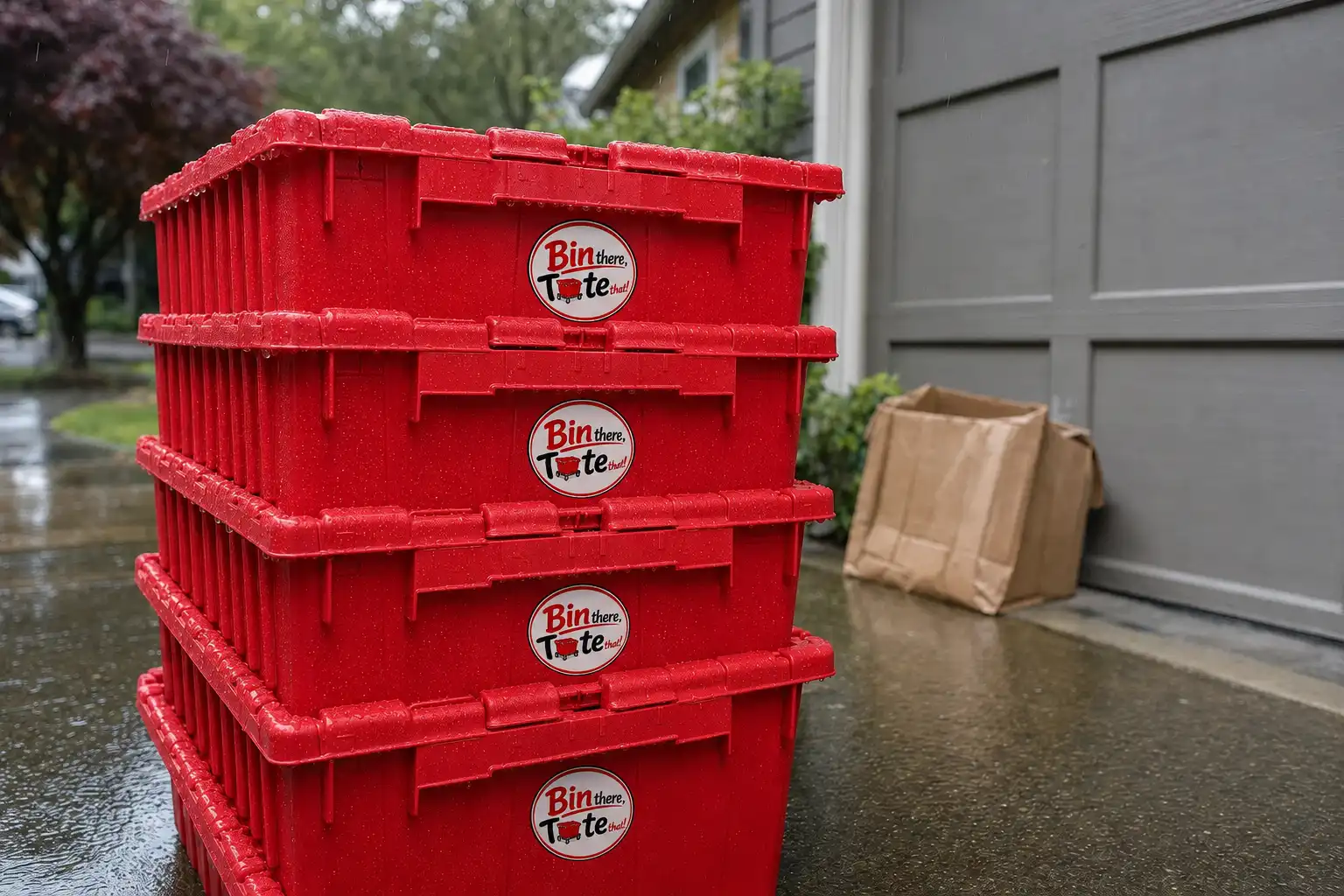
Container choice does half the work. Cardboard's failure points, wicking bottoms, peeling tape, running ink, disappear with rigid lidded totes, which is why wet-season movers rent them. Bin There, Tote That! delivers sealed, sanitized totes with a hand truck free across Portland and Vancouver, from $97 for two weeks.
Assume it will rain, then plan like you mean it
Portland's wet season runs roughly October through May, which means most local moves happen under a sky that's at least considering it. You can't schedule around that; deposits, lease dates, and closing days don't consult the forecast. What you can do is run the move so that rain becomes an inconvenience instead of an insurance claim.
The whole playbook comes down to one principle: shrink the number of seconds each item spends in open air. Everything below, staging, the carry chain, floor protection, load order, is a different way of buying down those seconds. A well-run wet move has boxes outdoors for less time than it takes to read this paragraph.
Watch the radar, not the forecast. Portland rain often arrives in bands with twenty-minute gaps between them, and a load window timed to a gap keeps half the day dry. The hourly radar on your phone is a better moving-day tool than any weekly outlook, because it tells you when to sprint and when to stand down and stack.
What soaks first, and what it costs you
Rain doesn't damage a move evenly. It goes after specific weak points, and knowing them tells you where to spend your effort.
| Weak point | What rain does to it | The counter |
|---|---|---|
| Cardboard box bottoms | Wick water off wet ground in seconds, then release the contents mid-carry | Never set boxes down outside; carry or dolly them the whole way |
| Packing tape | Loses grip on damp cardboard, seams peel open | Tape before the humidity gets in, or use containers with latching lids |
| Mattresses and sofas | Absorb water they'll hold for weeks, plus whatever the truck bed adds | Bag them; a mattress bag costs less than one night in a hotel |
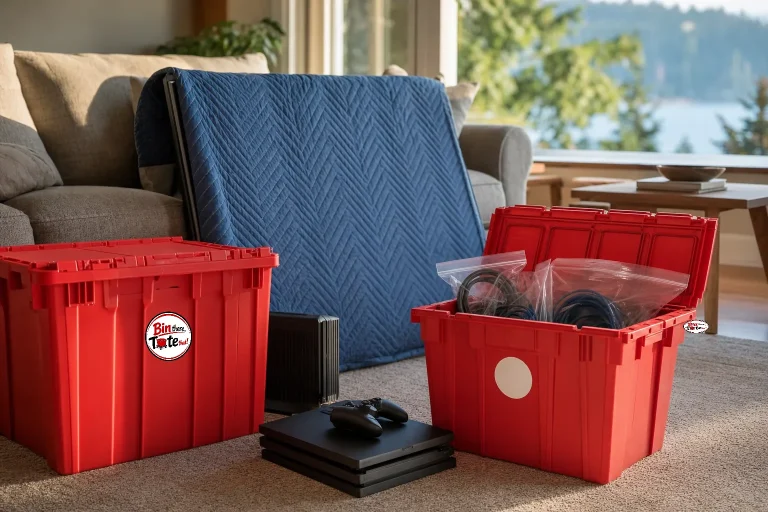
| Electronics | Moisture in vents and ports, worst when moved cold into a warm room | Load last, unload first, let them reach room temperature before powering on |
| Paper labels and marker ink | Blur into abstract art, and the unpack becomes a guessing game | Label on tape strips under a lid lip, or on the container's dry side |
| Hardwood floors at both ends | Grit plus water ground in by fifty boot passes | Run protection paths before the first trip, not after the first footprints |
Stage everything under cover before the truck opens
The biggest wet-move mistake is packing the truck straight from rooms all over the house. Every trip becomes its own little expedition, doors stand open, and the carry pace is set by whoever's still hunting for the next box.
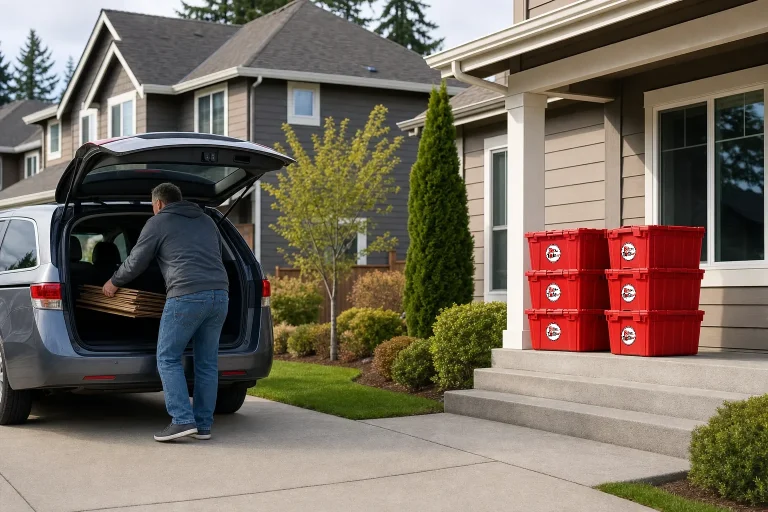
Instead, stage. Pick the covered spot closest to where the truck will park, a garage, a porch, a building lobby if the neighbors will forgive you for an hour, and move everything there first while it's still dry work. Stack containers in loading order: heavy and uniform at the front of the pile, awkward items behind. When the truck opens, the outdoor phase becomes a short, fast relay instead of a long, damp scavenger hunt.
If your building has no covered staging at all, make one: a canopy, a couple of tarps rigged over the walkway, even a large patio umbrella walked alongside the dolly beats nothing.
Run a truck-to-door chain, not a parade
With two or more people, stop carrying boxes end to end. Build a chain that keeps each person in one zone, because zones can be optimized and parades can't.
- Position one person inside at the staging pile, handing containers out in load order.
- Put your fastest walker on the outdoor leg, the only rainy segment, moving stacked containers by hand truck, two or three per trip.
- Station one person in the truck to receive and stack, so nothing waits on the wet tailgate.
- Keep the doors shut between hand-offs. An open front door in a Portland squall waters your hallway for the whole load.
- Reverse the same chain at the new place, unloading straight to a dry drop zone inside, never onto the driveway.
Protect the floors and build a towel station
Both homes need defending, and the one you're leaving probably has a deposit riding on it. Before the first trip, tape down a hard path: rosin paper, flattened cardboard, or purpose-made floor film from any hardware store, running from the door to each main room. Grit suspended in rainwater is what scratches hardwood, and boot traffic supplies both all day.
Then set a towel station just inside each door: a stack of old towels, one on the floor as a boot mat, one for wiping wet container lids before they go on furniture or carpet, one for hands so phone screens survive. Assign the least load-bearing member of your crew to run it. It sounds fussy right up until the first person skates a wet sock across laminate. Keep one more towel out by the tailgate for hands and handles; wet grips are how boxes get dropped.
Rain doesn't ruin moves. Open air does.
The container question decides half of this
Read the table above again and notice how many weak points are really cardboard weak points. Bottoms that wick, tape that peels, ink that runs: that's one material failing three ways. Swap it for a rigid container with an attached, water-shedding lid and those rows simply leave the table.
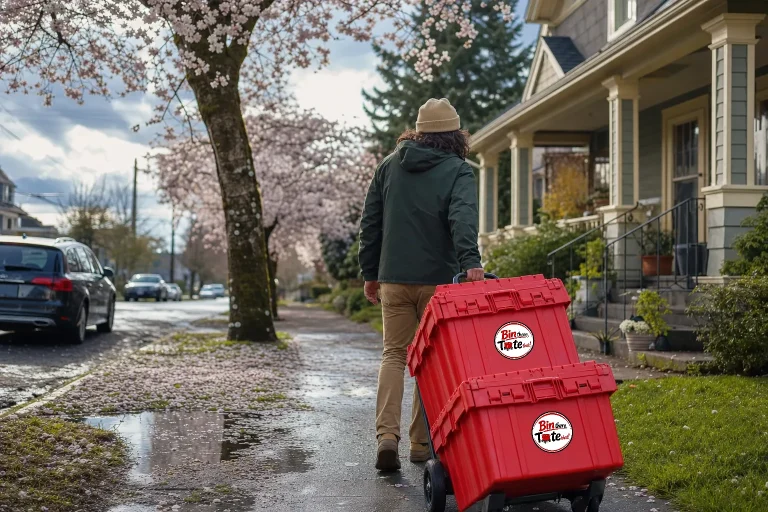
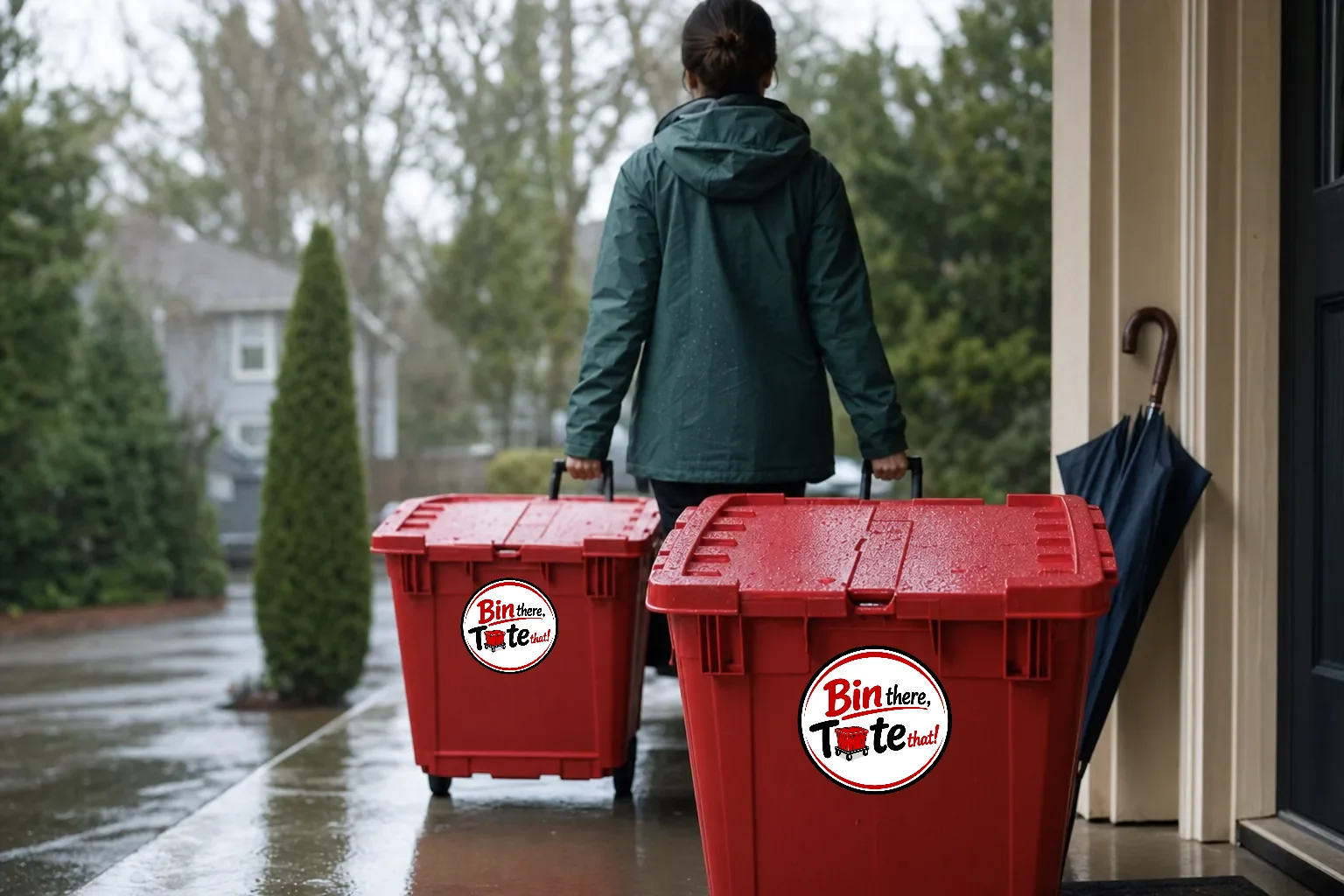
This is the quiet reason wet-season movers like lidded rental totes. Rain beads off the lid, the stack rides a hand truck across the wet stretch without touching the ground, and a drop of water on the label side wipes off with a sleeve. Bin There, Tote That! delivers them free across Portland and Vancouver with the hand truck included, on flat two-week packages from $97, and the delivery itself happens under our rain jackets, not yours.
Cardboard can survive a Portland winter move. It just demands perfection: dry ground, fast trips, flawless tape. Totes forgive.
Move in the rain, or wait it out?
Sometimes the calendar has slack and sometimes it doesn't. Here's the honest fork.
- Your dates are flexible by even two or three days
- The load includes uncovered furniture or a piano
- You're solo, with no one to run a chain with
- Lease or closing dates are fixed and stacked
- You've got covered staging at both ends
- Your containers seal and stack on a dolly
- A crew of three or more can hold the chain
If the timing itself is still up for debate, our guide to the best time of year to move in Portland weighs the seasons properly. For everything beyond the weather, the rest of the moving tips shelf is open.

Written by the Bin There, Tote That! team
We rent, deliver, wash, and pick up moving totes across the Portland and Vancouver metro every week, so the advice here comes from vans and doorsteps, not a content mill. Facts about competitors are checked at publication and date-stamped in the text.