Moving with kids works when three rules hold. First, match the job to the age: toddlers get routine protected at all costs, grade-schoolers get real jobs and their own labeled containers, teenagers get early notice and genuine say. Second, every child packs one personal tote that rides in the car and never enters the truck, holding the irreplaceables and the first-night kit.
Third, moving day itself forks cleanly: either a dedicated adult is off carrying duty to run the kids, or the kids spend the day with someone they love and return after the beds are built. Bedrooms get unpacked first at the new place, and bedtime happens at the normal hour. Everything else is furniture.
What changes at each age
Moving with kids is three different projects wearing one name, and the age of your children decides which project you're running. Get the diagnosis right and everything downstream gets easier.
Toddlers and preschoolers don't understand the move; they understand that their world is being put in boxes by the people they trust. The risk isn't logistics, it's disruption. Your job is to keep naps, meals, and bedtime boring and identical while chaos happens around them, and to keep small climbers away from stacks of anything.
Grade-schoolers understand the move and have opinions about it, mostly objections. They're also, usefully, old enough to work. Give them real jobs with real ownership: their own room, their own labels, their own container. Competence is the antidote to feeling swept along.
Teenagers understand everything and are losing the most: a friend group, a school, a bedroom door that closes on a known world. Logistically they're adults; emotionally the move can land harder than it does on you. Tell them early, give them a real say where one exists (their room setup, the goodbye plans), and don't dress the move up as an upgrade if it isn't one to them.
| Age band | What they can actually do | What to skip |
|---|---|---|
| Under 5 | Decorate their tote, carry stuffed animals, stay gloriously off schedule-critical tasks | Any expectation of packing help; long explanations more than a week out |
| Ages 6 to 11 | Pack their own room with supervision, label containers, run a donate pile | Fragile items, heavy lifting, deciding alone what gets thrown away |
| Ages 12 and up | Pack their room start to finish, disassemble their own furniture, wrangle younger siblings | Being informed last; having their stuff purged for them |
The own-tote trick
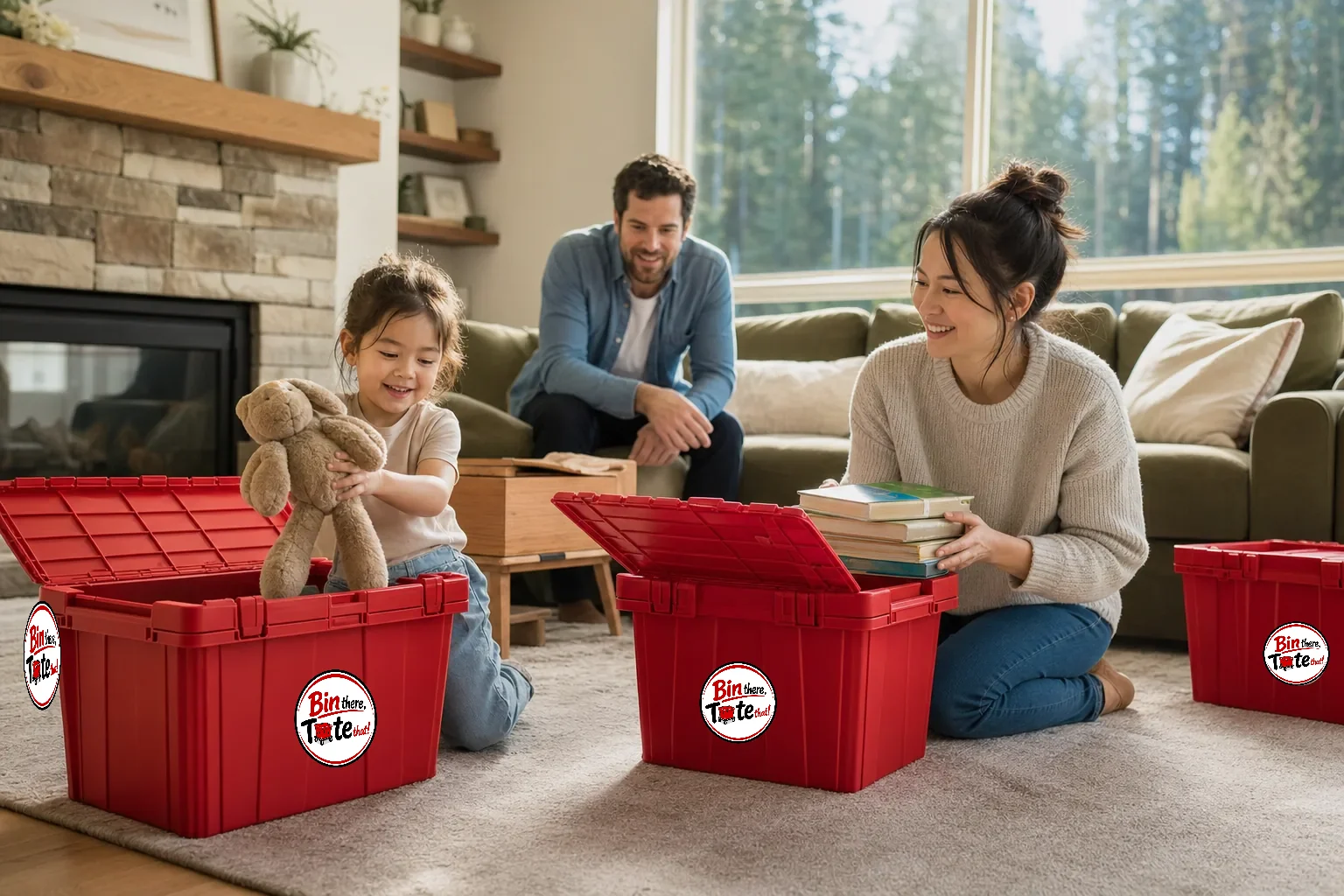
Here's the single highest-return move in this whole guide. Every kid gets one container that is theirs alone: they pack it, they decorate the label, and it never leaves their sight. Not on the truck. It rides in the car, at their feet, like a carry-on.
Inside goes whatever survival means at their age: the irreplaceable stuffed animal, the current Lego project, chargers and headphones, pajamas, tomorrow's clothes, the night-light. The rule does two jobs at once. It guarantees the one item that cannot be lost is never in the sixty-container haystack on night one, and it hands the kid a piece of the move they fully control.
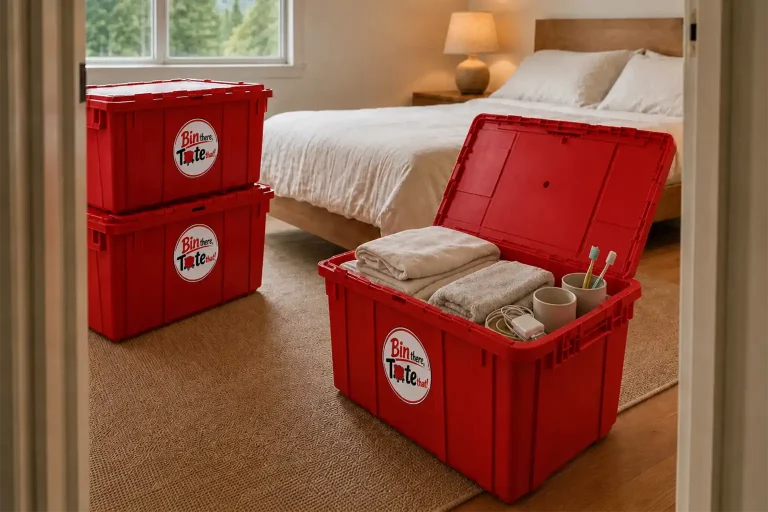
A rigid tote with a locking lid does this better than a duffel bag, because it stacks in the car, survives being sat on, and feels official. Since our totes show up two weeks before moving day with free delivery, the kids' totes can be packed, decorated with painter's tape, and parked by the front door on day one while the grown-up packing grinds on behind them. It becomes the mascot of the move.
Kids don't need a perfect move. They need a boring one.
School transfer timing
Paperwork moves slower than trucks. As soon as the new address is certain, request records from the current school and contact the new district about enrollment; districts differ on what they need and how long it takes, so ask both offices for their specific list. Immunization records, proof of address, and birth certificates come up almost everywhere.
The calendar question matters more than most parents expect. A move over summer break is the clean cut. A mid-year move trades that cleanness for speed, and if you have any flexibility, landing between terms or after a natural break beats a random Tuesday in the middle of a unit. For teenagers in credit-bearing classes, talk to a counselor at both schools before picking the date; course alignment is solvable early and painful late.
One more thing worth the phone call: ask the new school for a start-day plan. A kid who arrives knowing where the lunchroom is and which door to enter has spent their courage on friends instead of hallways.
The keep-the-routine rule
Through the whole packing fortnight, one rule outranks the schedule: the kids' routine survives. Same wake-up, same meals at roughly the same table, same bath, same books, same bedtime, even when the bed is the last unpacked island in a sea of containers.
This is not sentimentality; it's load management. Children read disruption off their environment, and routine is the signal that the important things are intact. In practice it means you pack their room last and stop packing an hour before bedtime, because a toddler who watched their bookshelf disappear at 7:40 p.m. does not go down easy at 8. Keep two weeks of normal clothes, the full bedtime kit, and breakfast gear out of the containers until the final morning. The master eight-week moving checklist has a family lane for exactly this sequencing.
Moving day: kids on site or kids elsewhere?
There are exactly two good versions of moving day with children, and both are chosen in advance. The bad version is the improvised middle, where kids orbit the loading path all day, half-supervised, while stressed adults carry heavy things past them.
- They're old enough to help and actually want to
- One adult can be off carrying duty entirely, all day
- Being part of it matters to them more than convenience matters to you
- Anyone in the house is under five
- Stairs, a busy street, or a tight elevator are part of the route
- Every available adult is needed for the actual moving
- A grandparent or trusted friend is genuinely available
If the kids stay elsewhere, have them reappear after the beds are up, so their first sight of the new home includes their own room taking shape. If pets are in the picture too, the same fork applies twice over; our guide to keeping cats and dogs calm through a move covers that species of chaos.
First night: bedroom-first order
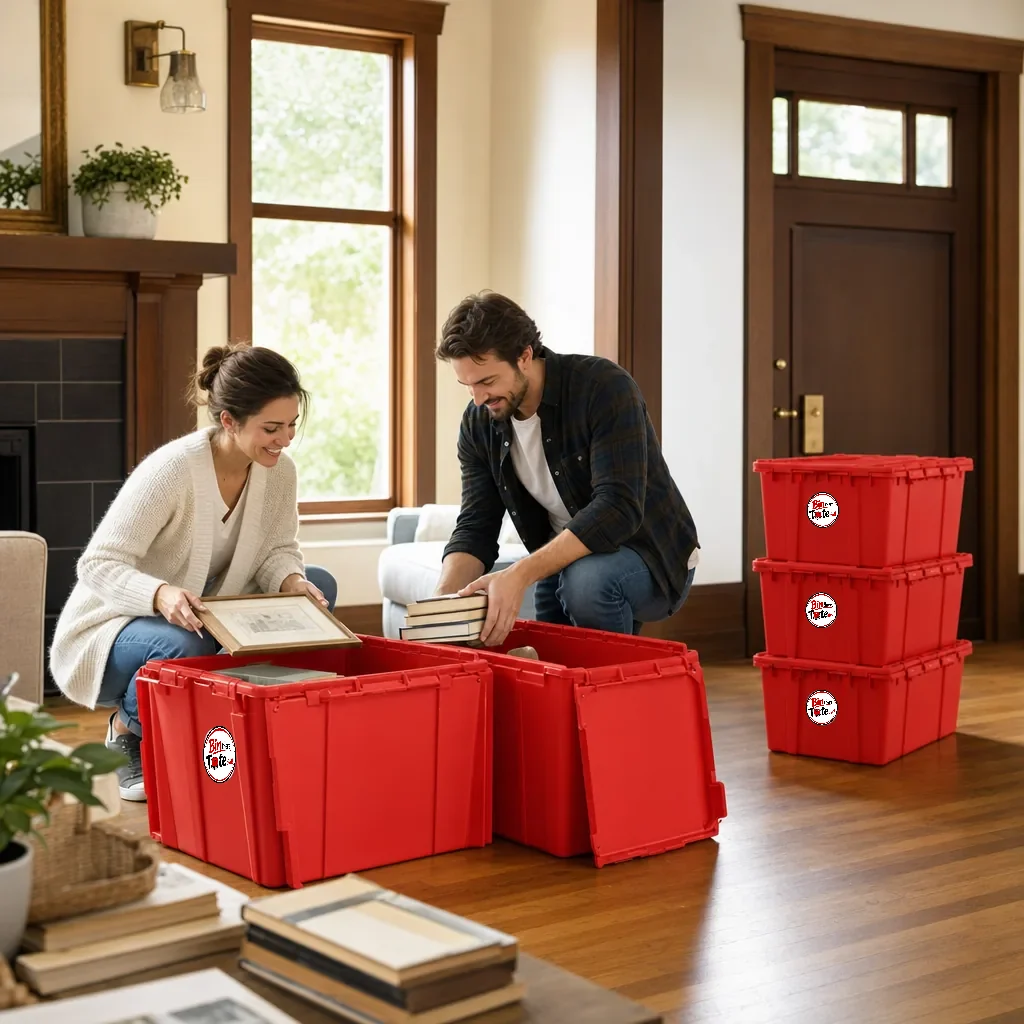
Unpacking a family home has one correct opening sequence, and it isn't the kitchen. Bedrooms first, kids' rooms first among them. The goal is simple: by nightfall, every child sleeps in a made bed, in their own room, with their own tote open beside it.
- Beds up before anything else. Frames, mattresses, actual sheets. Ninety minutes, highest priority in the house.
- Open each kid's personal tote and let them place the first three things themselves. Their room starts belonging to them immediately.
- Bathroom next: towels, toothbrushes, toilet paper, night-light plugged in and tested before dark.
- Kitchen gets ten minutes, not two hours: breakfast gear and snacks. Dinner is takeout; this is law.
- Run bedtime at the normal hour in the new room, full routine, no shortcuts. The first boring bedtime is the move actually ending.
Everything else can wait. A well-stocked first-night essentials container for the adults makes the wait comfortable, and since rented totes get collected from the new house up to two weeks after delivery, the unpacking can proceed at a family pace instead of a deadline pace. When you're ready for the next battle plan, the full library of moving guides has one for nearly everything.

Written by the Bin There, Tote That! team
We rent, deliver, wash, and pick up moving totes across the Portland and Vancouver metro every week, so the advice here comes from vans and doorsteps, not a content mill. Facts about competitors are checked at publication and date-stamped in the text.