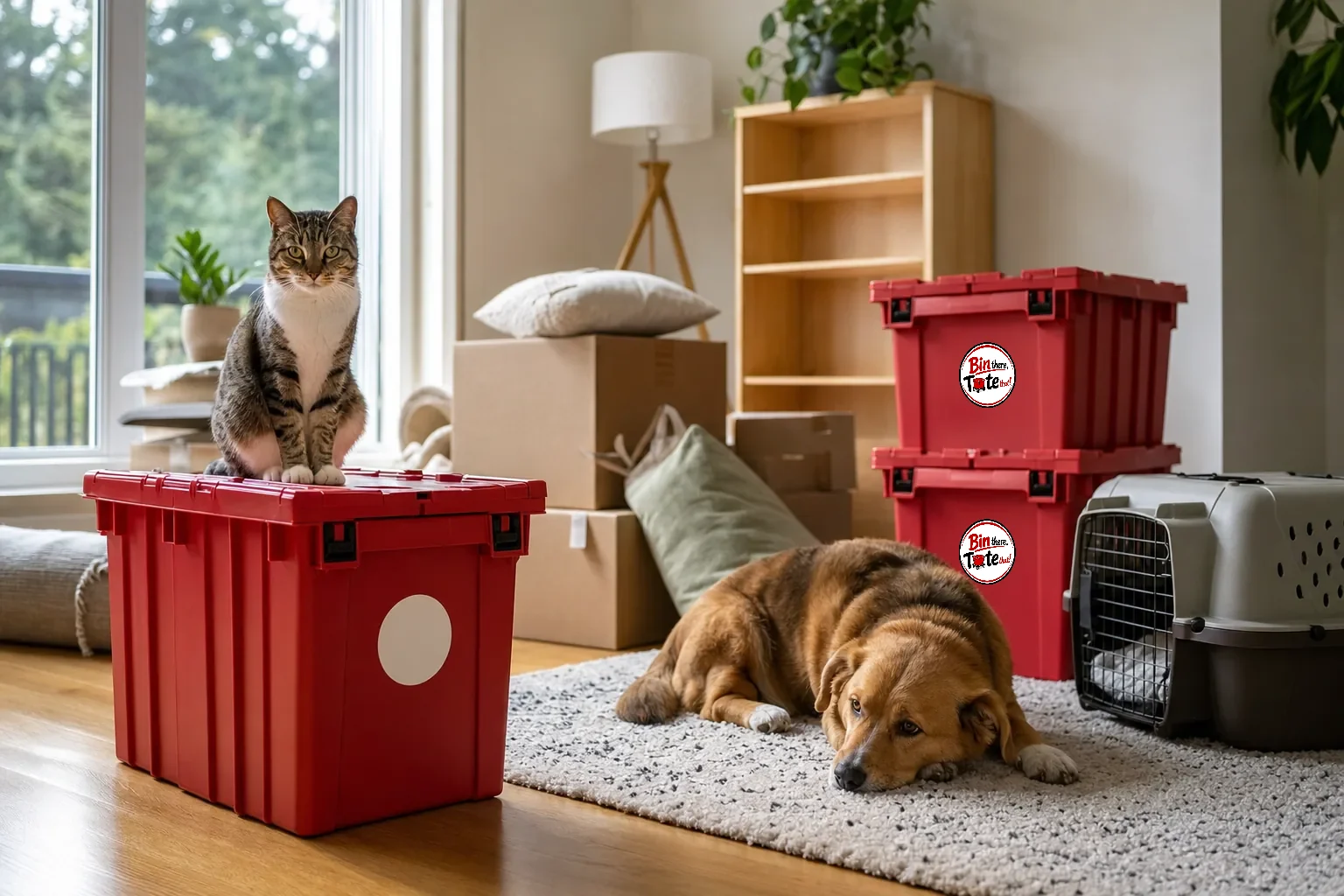
Keeping pets calm through a move comes down to species-correct plans. Cats bond to territory, so they get one closed, stocked room at each end of the move and a slow, room-by-room release into the new house. Dogs bond to people and routine, so they get their walks and meal times defended all week and a leashed tour of the new place on arrival.
Universal rules: acclimate the carrier two weeks early, update microchip and tag details before the truck rolls, and never transport an animal in the moving truck. Pets ride in your car, secured, with you. Most animals settle within a week; persistent appetite or litter-box changes are a vet call.
Cats and dogs need opposite plans
Most pet-moving advice fails by treating "pets" as one species. They aren't, and the difference decides your whole plan. Cats are territory animals: their security is the place itself, its smells and its known geography, and a move dismantles that world completely. Dogs are pack animals: their security is you, plus the daily rhythm of walks, meals, and couch time, and a move is survivable chaos as long as both stay intact.
So the cat plan is about controlling territory: shrink the world to one safe room during the loud parts, then expand it slowly at the new place. The dog plan is about defending routine: same walk times, same feeding times, same person holding the leash, whatever else the week does. Run the cat plan on a dog and you've pointlessly confined a social animal. Run the dog plan on a cat and you'll spend week one checking under the new porch with a flashlight.
Cats attach to places. Dogs attach to you.
Two weeks out: the prep that matters
The calm move is built before the truck exists. Three jobs, in order of importance.
Make the carrier furniture. A carrier that only appears for vet visits is a trap with a handle. Two weeks ahead, leave it open in the living room with a familiar blanket and the occasional treat inside, and let it become boring. A cat that has napped in the carrier voluntarily rides differently than one extracted from under the bed on moving morning. Dogs get the same treatment with the car: a few short, pleasant drives that end somewhere good.
Update the paperwork. New address and current phone number on the microchip registry and the ID tag, before moving day, not after. If you're changing vets, request records now. The American Veterinary Medical Association keeps a straightforward rundown of travel prep for animals worth ten minutes of your time.
Talk to your vet if your animal is a hard traveler. Severe car anxiety has real solutions, but they need a vet visit and a trial run beforehand, never a first dose on the highway.
The moving-day room, both ends
Moving day's biggest pet risk isn't stress. It's the front door, propped open for hours while strangers walk heavy things through it. A spooked cat through an open door is a genuine emergency; a loose dog on an unfamiliar street isn't much better. The fix is one closed room at each end of the move.
- Pick the room at the old place that empties first, ideally a bathroom or small bedroom away from the loading path.
- Stock it the night before: water, bed, litter box or chew, a worn t-shirt that smells like you, and the carrier, open.
- Pet goes in before the first container moves. Sign on the door: PET INSIDE, DO NOT OPEN. Everyone helping gets told out loud too.
- Load the room's contents last, transfer the animal to the carrier, and make it the final departure from the old house.
- Repeat in reverse at the new place: one room set up first, pet installed with the door shut, before the unloading parade begins.
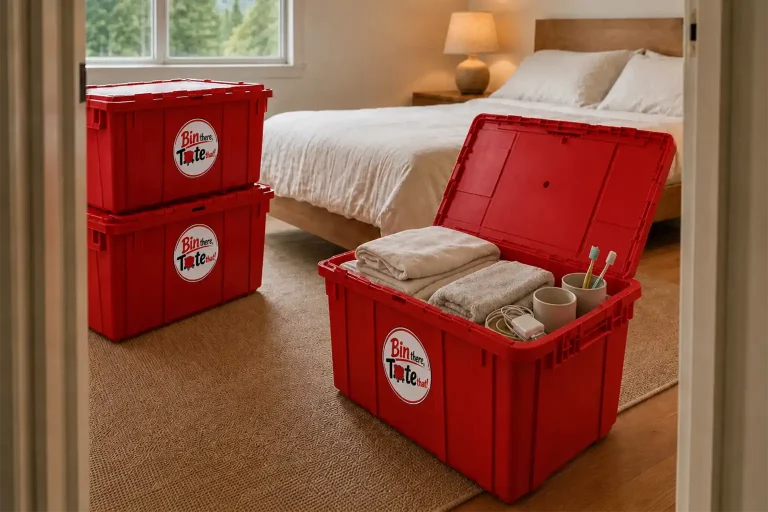
The shorter the chaos window, the easier this is on everyone, which is an underrated argument for containers that move fast. Uniform totes with sealed lids stack straight onto a dolly and roll out in batches, with no half-packed open boxes lingering for a cat to colonize or a dog to inventory. Ours arrive free up to two weeks early and get collected from the new place when you're done, so the box-mountain phase never really happens; the tote rental page explains the setup.

Transport: the never-in-the-truck rule
One rule has no exceptions: animals never ride in the moving truck. Not the cab with a stranger, and absolutely never the cargo box, which is unventilated, untempered, and pitch dark. Pets travel in your own car, in a secured carrier or with a dog restrained by a crash-rated harness, on the same trip as the humans they trust.
For the drive itself: cats stay in the carrier the entire ride, however eloquently they object, because a loose cat under a brake pedal is a hazard to everyone in the car. Dogs get a long walk before departure, water at every stop, and never a moment alone in a parked car in summer. Feed lightly a few hours before leaving rather than a full breakfast at go-time; queasy passengers travel better on a mostly empty stomach. For long hauls, book pet-friendly stops ahead instead of discovering at 9 p.m. that the county's one motel says no.
Arrival and the first week
At the new house, the two species part ways again. The cat stays in its one prepared room for at least a few days: litter, food, water, hiding spot, your worn shirt, visits from you, door closed. When it's eating normally and greeting you at the door of that room, open the door and let it map the house at its own speed, one hallway at a time. Keep indoor-outdoor cats fully inside for a few weeks; released early, some of them attempt the commute back to the old territory.
The dog wants the opposite: a leashed grand tour early, then the fastest possible return to the old rhythm. Same walk times as the old life, meals on schedule, the familiar bed in a spot that roughly matches its old position relative to yours. Walk the fence line before the first off-leash backyard session; previous owners' gaps are a classic first-week escape. Expect some regression from either species, from appetite dips to a protest puddle, and give it a week of patience before you worry. If it persists, that's a vet call, not a training problem.
Pets on site, or boarded for the day?
Like every moving-day question, this one goes better decided in advance. The honest split:
- A closed, stocked room can truly stay closed all day
- Your animal handles novelty and noise with a shrug
- The move is short enough to finish in a single day
- Your pet is an escape artist or a door-darter
- Strangers, noise, or doorbells already trigger big reactions
- The move spans multiple days or both ends of town
- No adult can own the pet-room door as their actual job
Households running this playbook alongside small humans should read the companion guide to moving with kids, since the two plans share a moving-day logic. The day-of playbook covers the humans' end of the operation, and the wider collection of moving guides picks up wherever this one leaves off.

Written by the Bin There, Tote That! team
We rent, deliver, wash, and pick up moving totes across the Portland and Vancouver metro every week, so the advice here comes from vans and doorsteps, not a content mill. Facts about competitors are checked at publication and date-stamped in the text.