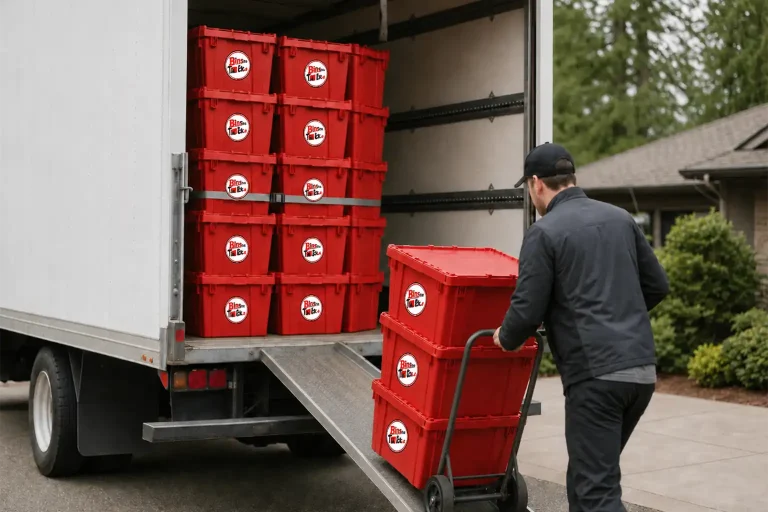

A smooth moving day is built the night before: everything sealed and staged by the exit, phones and tools charged, parking for the truck solved at both addresses, and kids and pets booked elsewhere for the day. On the morning itself, keep coffee and water flowing, protect floors and door frames before the first trip, give the crew a two-minute tour, and keep your essentials tote in your car, never in the truck.
Close it out like a professional: load last what the evening needs first, walk the empty house twice before lockup, photograph the meters, and thank the crew with cash sized to the day's difficulty.
What a smooth moving day actually looks like
A good moving day is boring. The truck arrives, things leave the house in a steady rhythm, nobody hunts for keys or tape or the dog, and by afternoon you're eating takeout on a floor that echoes. Every dramatic moving day, by contrast, was lost the night before: nothing staged, nothing charged, six decisions waiting at the door that should have been made on Tuesday.
So this playbook starts before the alarm goes off. Fifteen tips, in roughly the order the day will ask for them.
The 15 tips, in order
- Stage everything the night before. Sealed containers stacked by the exit, furniture cleared of clutter, disassembly done. The morning is for moving things, not deciding things.
- Charge everything, and locate the chargers. Phones, the drill, earbuds. Tape one phone charger to the kitchen counter so it can't migrate into a sealed box.
- Sleep like it's a race day, because it is one. Nothing about lifting furniture improves after five hours of sleep.
- Solve parking before the truck does. Know where a 20-plus-foot truck will sit at both addresses. On Portland's permit-zone streets and skinny Southeast blocks, cone off a space with your own cars the night before and check whether your building needs an elevator reservation or a certificate of insurance from the movers.
- Put coffee and water on infinite supply. A case of bottled water by the door and a coffee run before the crew lands buys more goodwill per dollar than anything else on this list.
- Protect the house before the first trip through it. Old towels or rosin paper on the floors, a moving blanket over the stair rail, door frames padded where the couch will argue. Both houses, not just the new one.
- Keep the essentials tote in your car, never the truck. First-night gear, documents, meds, valuables. If it would ruin your evening to lose it, it rides with you. The full manifest is in our first-night tote guide.
- Hand off kids and pets early. A moving day is heavy objects, propped-open doors, and strangers in every room. Arrange the sitter or kennel for the whole day, and make the handoff before the truck arrives, not during.
- Give the crew a tour before the first box moves. Two minutes: what goes, what stays, what's fragile, where the bathroom is. A crew that understands the house works faster than one that asks per item.
- Assign one human to the truck and one to the house. One person answers loading questions, the other keeps the flow of boxes and the flow of decisions moving. If it's just the two of you, the roles still help.
- Feed people at actual mealtimes. Order lunch to the old house before you think you need it. Hungry crews slow down; hungry owners make bad calls about what to leave behind.
- Load last what the evening needs first. Tools, cleaning kit, kids' bedding, the box spring wrench. The back of the truck should read like your first two hours at the new place, a habit explained in our truck loading guide.
- Walk the empty house like an inspector. Every closet shelf, cabinet, drawer, the dishwasher, the attic hatch, the crawl space, behind every door, the shed. Then run the walkthrough again with fresh eyes or a second person before the key changes hands.
- Photograph the meters and the empty rooms. Thirty seconds of photos settles utility bills and deposit disputes months later, when memory won't.
- Thank the crew properly. If the movers worked hard, a cash tip per crew member is a common courtesy, sized to the difficulty of the day; there's no universal formula, so let the stairs, the rain, and the care they took set the number. Cold drinks and a genuine thank-you are never wrong.
The moving day run sheet
Here's the same day as a schedule. Adjust the clock to your move; keep the order, and build in slack: every leg of a moving day runs long, never short, so a plan with no buffer is a plan that ends in the dark. If your building has an elevator window or your movers have a second job that afternoon, pad the morning, not the evening.
| Time | What's happening | Who owns it |
|---|---|---|
| 7:00 | Coffee, breakfast, essentials tote into your car trunk | You |
| 7:30 | Kid and pet handoff; floor and door protection down | House lead |
| 8:00 | Truck parks in the saved space; crew tour of the house | Both leads |
| 8:15 | Loading starts: furniture frame first, tote columns behind | Truck lead |
| 11:30 | Lunch arrives before anyone asks for it | House lead |
| 1:00 | Load-last items on; double walkthrough of the empty house | Both leads |
| 1:30 | Meter photos, lockup, keys handed over | You |
| 2:00 | Unload at the new place: beds and kitchen off first | Truck lead |
| 5:00 | Crew thanked and tipped; takeout on the echoing floor | Everyone |
Where moving days go sideways
Three failure modes account for most bad moving days, and all three are preventable by breakfast.
The morning starts with packing. If anything is still going into boxes when the truck arrives, the whole day queues behind it, and you pay a crew to watch you wrap mugs. Sealed by the night before is the rule; everything else is negotiable.
Nobody owns the truck spot. A truck circling the block on a permit street burns crew time and neighbor patience at once. The parking plan takes ten minutes the night before and zero on the day.
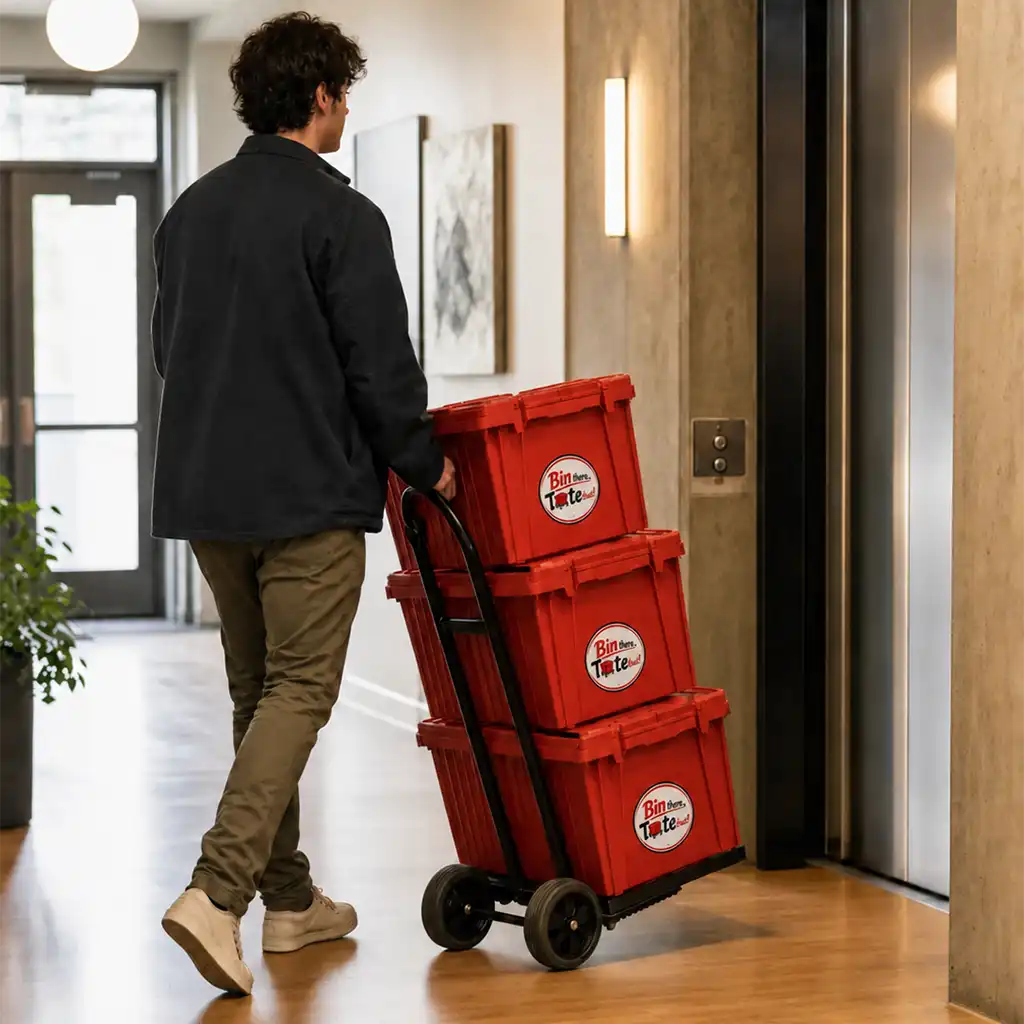
Box logistics eat the week before. Hunting cardboard, taping, breaking down, dump runs after. One fix for the whole category: we deliver stacks of cleaned totes to your door free across the Portland and Vancouver metro, they stack flat and fast on a dolly on the day, and we collect them from the new place when you've unpacked. The four-step version is on the delivery and pickup rundown.
Smooth is a decision you make the night before.
Friends-and-truck day, or pro-crew day?
The fifteen tips hold either way, but the day runs differently depending on who's lifting.
- The load is an apartment, not a four-bedroom archive
- You can field four reliable adults, pizza budget included
- Flexibility matters more to you than speed
- Heavy furniture, stairs, or a strict elevator window is involved
- Your building requires proof of insurance to move in
- The whole move must fit one scheduled day, no overruns
- Your social capital is worth more than the crew's invoice
Moving day is one square on a much longer calendar, and the eight weeks that set it up are their own project. Wet-weather contingencies get dedicated treatment in moving in Portland rain, and the rest of our moving guides, checklist included, live in the moving tips hub.

Written by the Bin There, Tote That! team
We rent, deliver, wash, and pick up moving totes across the Portland and Vancouver metro every week, so the advice here comes from vans and doorsteps, not a content mill. Facts about competitors are checked at publication and date-stamped in the text.