Load a moving truck in vertical tiers from the cab wall to the door: heaviest furniture and appliances first, low and forward over the axle, then boxes stacked floor to ceiling with heavy on the bottom, mattresses on edge along the walls, straps every tier or two, and the things you'll need first loaded last. Fill every gap as you go, because voids are where loads shift.
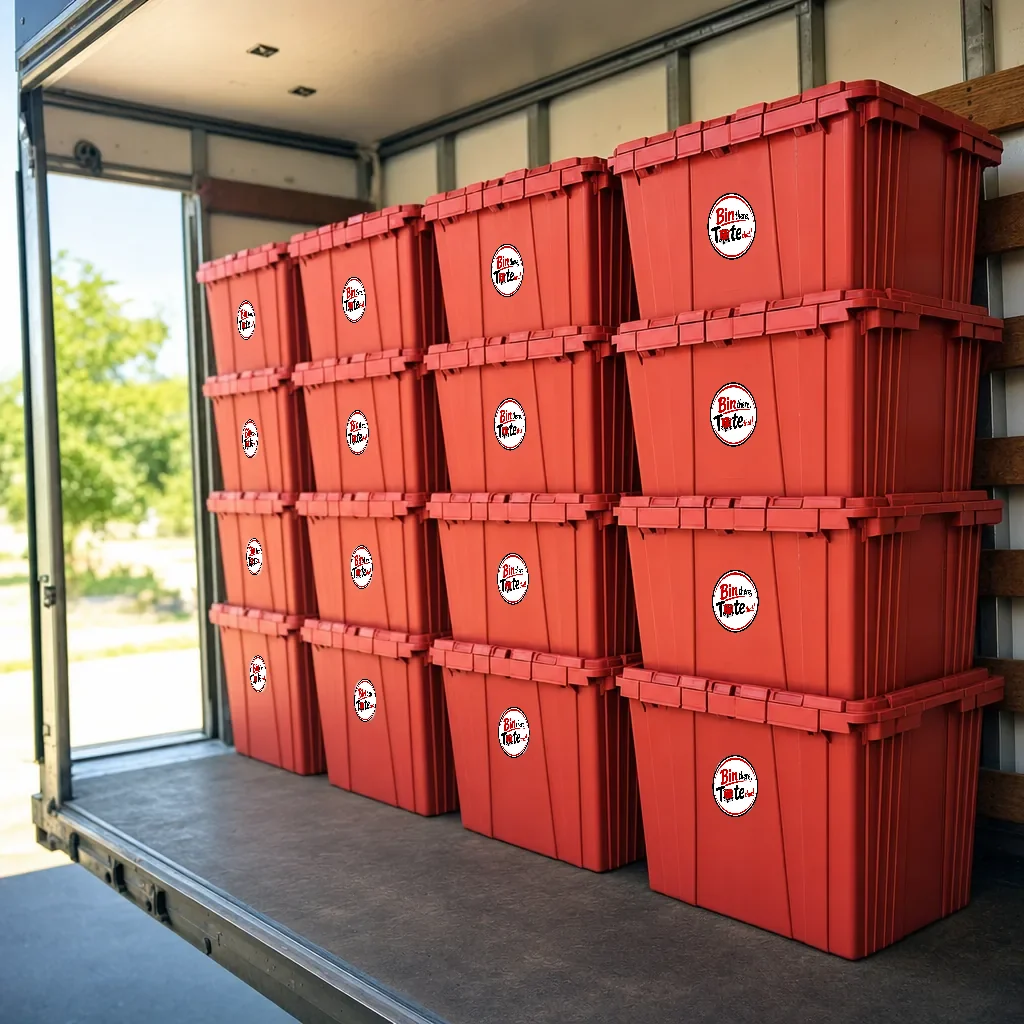
Uniform containers make all of it easier: identical footprints build straight, full-height columns with no crush and no wasted air, which is why a tote-packed truck simply fits more than a mixed-cardboard one.
A moving truck is a physics problem
Most people load a truck the way they empty a house: whatever's nearest the door goes in next. Then the truck is somehow full with a third of the garage still on the driveway, and the return trip nobody budgeted for gets penciled in. Loading is a packing problem, a weight problem, and a friction problem all at once, and each one has a known answer.
The good news is that none of the answers require experience. They require a sequence, a few anchor rules, and containers that cooperate. This guide covers all three, in the order you'll use them on the day.
The loading order, step by step
Work in vertical tiers, floor to ceiling, front wall to door, and finish each tier before starting the next. Here's the sequence.
- Appliances and the heaviest furniture go in first, against the wall behind the cab. Washer, dryer, dressers, the piano you swore you'd sell. Heavy items belong low and forward, over or ahead of the axle, where they steady the truck instead of swinging it.
- Build the first tier to the ceiling. Stack heavy boxes on the floor beside the appliances, medium boxes above them, light awkward things on top. A tier that stops at waist height wastes the most expensive air you'll rent all year.
- Stand mattresses and box springs along the walls. They pad the furniture, fill the shallow gap that fits nothing else, and come out early at the destination when you want beds assembled first.
- Load sofas and headboards on end where you can. Vertical furniture trades floor space for ceiling space, and trucks have more ceiling than people use.
- Strap off each completed section. Most rental trucks have rails or E-track along the walls. A strap every few feet turns eight loose tiers into one solid block that cannot fall over, because there is nowhere to fall.
- Fill every void as you go. Cushions, duffel bags, rolled rugs, the laundry basket. A gap left behind you is a gap you cannot reach once the next tier goes up, and gaps are where shifting starts.
- Load last what you need first. The vacuum, the toolbox, the box of cleaning supplies, the kids' room if bedtime will beat the unload. The back of the truck is the front of your evening.
The Tetris tax: mixed cardboard vs. uniform containers
Every mixed pile of grocery-store and liquor-store boxes pays a tax in the truck. Different footprints can't share a column, so towers go up crooked, stop early, and leave triangles of air nothing fits into. Uniform containers pay no such tax. Here's the difference, factor by factor.
| Load factor | Mixed cardboard boxes | Uniform plastic totes |
|---|---|---|
| Column building | Footprints don't match, so towers stagger and lean | Identical footprints, lids that locate the tote above |
| Stack height | Soft boxes crush; stacks stop three or four high | Rigid walls carry the load to the ceiling |
| Wasted air | Odd gaps at every seam between sizes | Columns sit flush; voids only where you choose |
| Bottom row survival | Carries the tower in its cardboard knees | Unbothered; that's what the plastic is for |
| Loading speed | Each placement is a judgment call | Same move, repeated; a human conveyor works fast |
| Strapping | Straps bite into soft edges | Flat rigid faces take a strap cleanly |
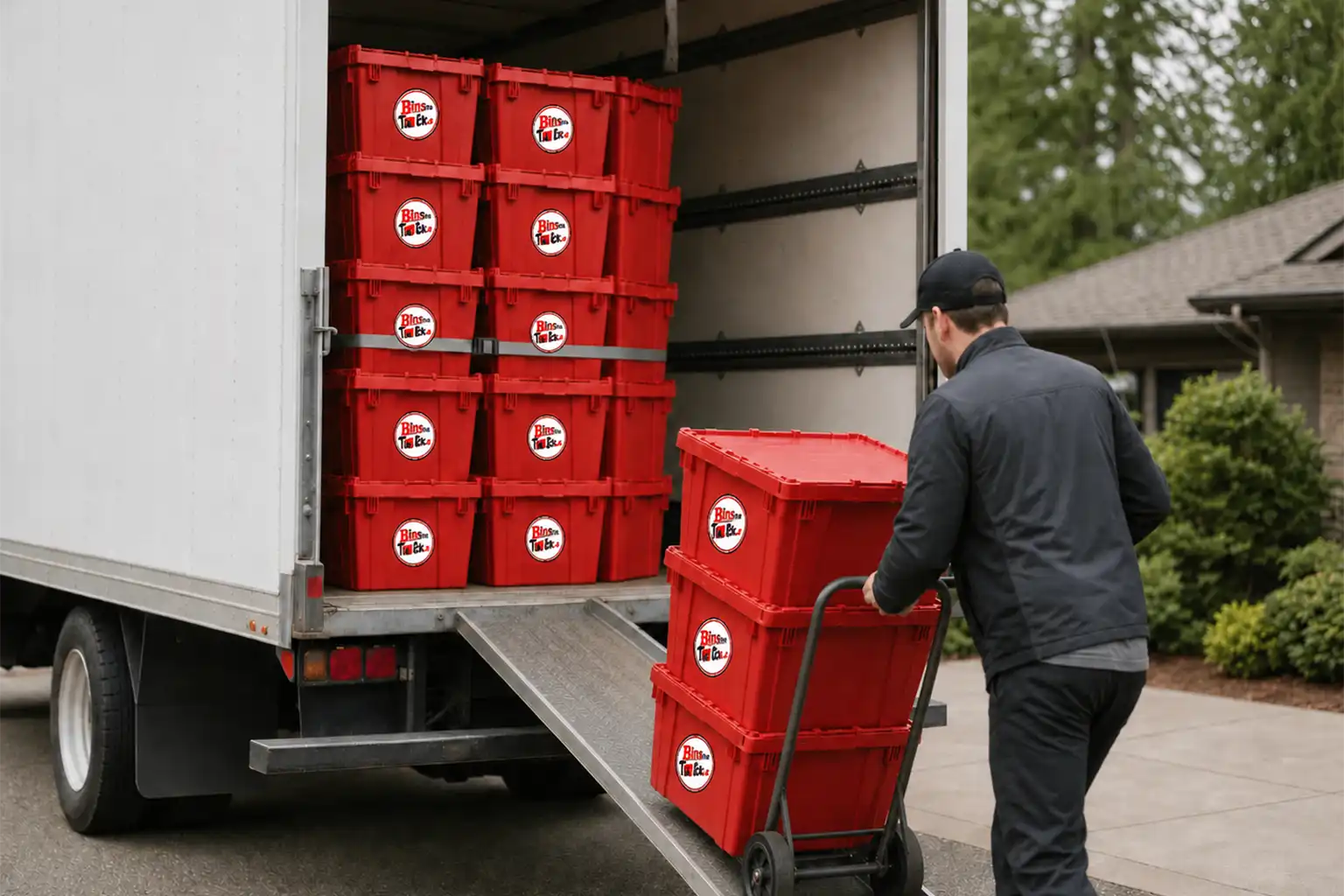
This is the quiet argument for renting uniform plastic totes for the boxed half of your load: the same containers that stack in your hallway stack in the truck, in straight columns, without a cardboard box at the bottom slowly becoming a parallelogram. Ours arrive at your door with a hand truck included, which turns the driveway-to-truck leg into a rolling job instead of a carrying one.
Weight, balance, and the drive itself
A well-packed truck can still drive badly if the weight sits in the wrong place. Keep the heavy half of the load in the front half of the box, split weight evenly left to right, and resist the urge to pile everything dense along one wall because it happened to load first. A tail-heavy truck lightens the steering axle, which you will notice on the Banfield in the rain, at exactly the moment you'd rather not.
Long, thin, and awkward items get the leftover geography. Rolled rugs and floor lamps slide into the gap above the cab if your truck has a mom's-attic shelf, or stand in corners braced by the load around them. Rakes, brooms, and curtain rods bundle together with tape into one manageable log. Mirrors and framed art travel on edge, never flat, slotted between mattresses or padded furniture where the load itself holds them upright. And leave the last two feet by the door slightly loose on purpose: that's where the ramp meets the box, where feet land in the rain, and where your load-last items need to sit without an avalanche behind them.
Air is the only thing you should leave behind.
The five loading mistakes that cost real money
Watch a hundred DIY loads and the same failures repeat.
Loading loose furniture first and boxes wherever. Furniture is the frame; boxes are the fill. Reverse them and neither does its job.
Skipping the straps. Rental trucks brake harder than cars, and an unstrapped wall of boxes becomes a wave with your dishes in it. Strap every tier or two, not just the last one.
Flat-loading the mattress. Laid flat it eats a quarter of the floor. On edge against a wall it protects the dresser and costs you inches.
Overpacking the big boxes. Heavy things in small containers, light things in large ones. A box one person can't lift slows the whole chain, whatever it's made of.
No last-on plan. If the tools, the cleaning kit, and the first-night gear go in early, you'll unload half the truck to reach them. Decide what comes off first before anything goes on, and keep the truly critical stuff out of the truck entirely, as covered in our moving day playbook.
Load it yourselves, or hire the muscle?
The loading order works either way. The real fork is who executes it.
- You have three or more able people and a full day
- Nothing in the house outweighs your strongest pair
- Stairs and elevators aren't part of the story
- A piano, safe, or appliance set is coming along
- Your crew is two adults and a group chat full of maybes
- Craftsman stairs, narrow doors, or a third-floor walkup are involved
- You'd rather pay for two hours of muscle than a chiropractor
However the truck gets loaded, what goes into the containers matters as much as how they stack: fragile screens have their own rules in our electronics and TV packing guide, and the heavy, greasy, awkward stuff has its own in the garage and tools guide. The rest of the craft lives in our full collection of moving guides.

Written by the Bin There, Tote That! team
We rent, deliver, wash, and pick up moving totes across the Portland and Vancouver metro every week, so the advice here comes from vans and doorsteps, not a content mill. Facts about competitors are checked at publication and date-stamped in the text.