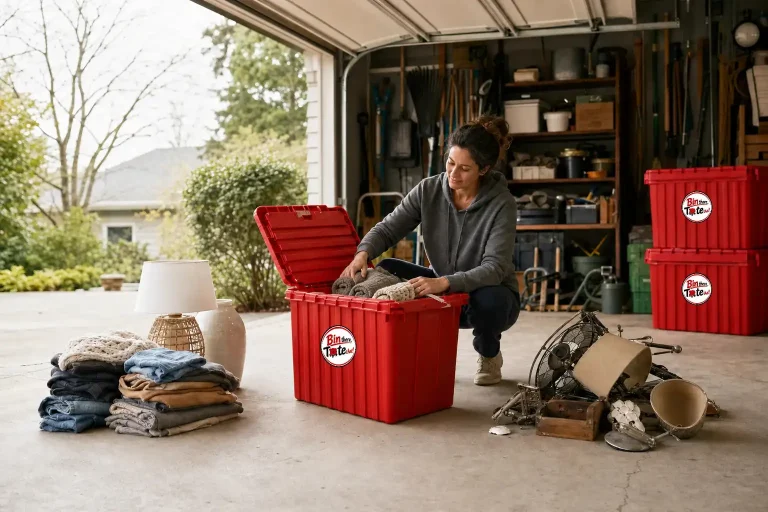
Pack the garage in three ordered passes, starting two weekends before the truck: drain every fuel and deliver hazardous liquids to your county disposal program first, triage tools at the garage-sale fork second, and only then wrap and pack. Blades travel in taped cardboard sheaths pointing one direction, hardware rides in zip bags taped to the machines it came off, and long-handled tools bundle in threes like firewood.
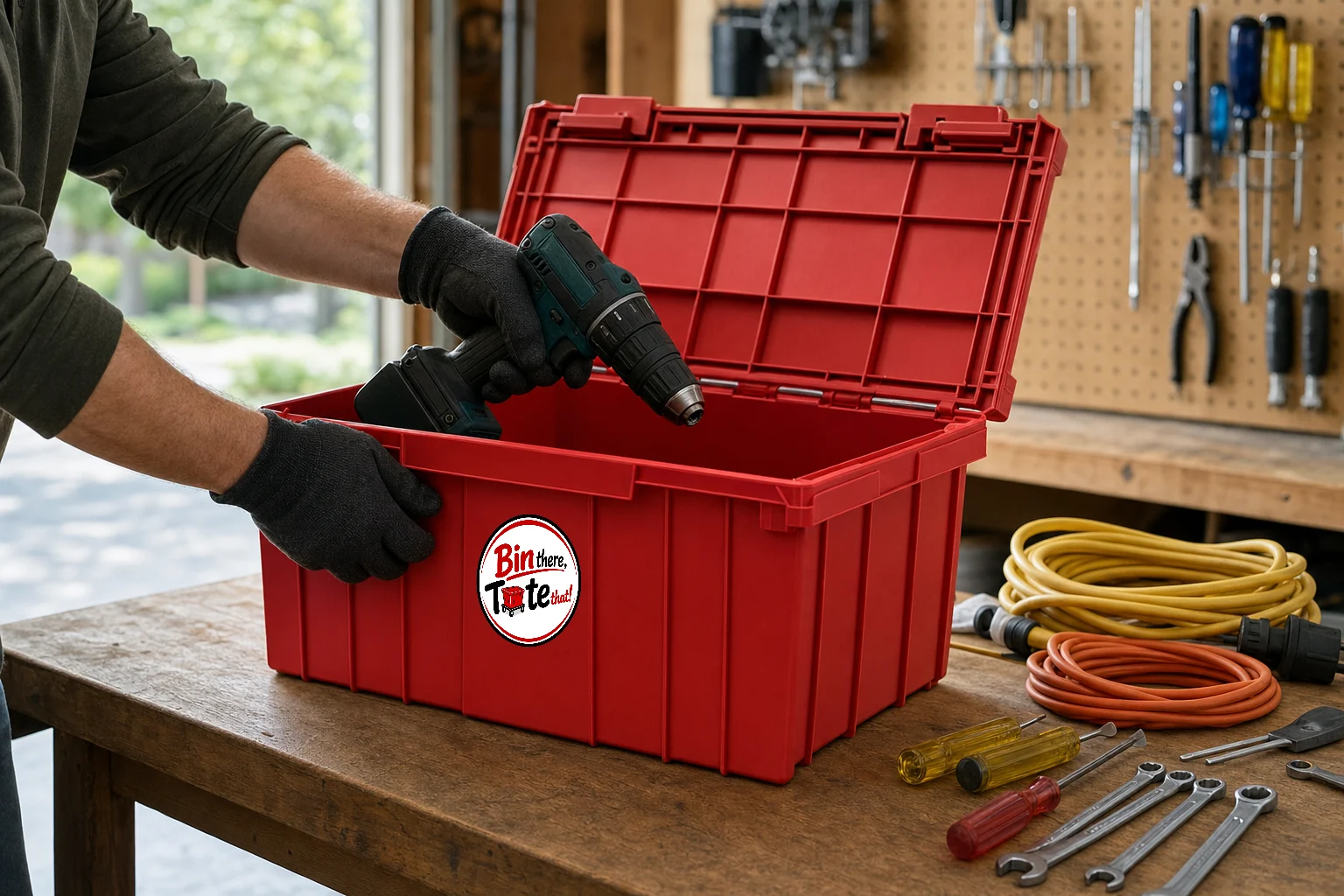
Keep tool containers to about half full, since metal weight climbs fast, and put the dense loads in rigid containers that can take it. The garage is the most postponed room in every move; a schedule is what beats it.
The most postponed room in every move
Nobody packs the garage first. It sits at the bottom of every list because it holds the hardest inventory in the house: things that are greasy, sharp, flammable, oddly shaped, or all four at once, and because half of it belongs to projects you keep meaning to start. Then moving week arrives and the garage is still untouched, and it swallows the entire final weekend.
The fix is to treat the garage as a small logistics job with its own schedule, started two weekends before the truck. It rewards process more than any other room: drain first, triage second, wrap and bundle third. Do those in order and the space that looked impossible packs down into a tidy, honest wall of containers.
Fuels drain first, before anything gets wrapped
Start with the step that has a deadline. Anything with an engine needs its fuel gone before moving day: run the mower and trimmer dry or siphon the tank, and give the machine a day with the cap off to air out, outdoors if the weather allows. Propane tanks, gas cans with anything in them, and most solvents should not go in a moving truck at all, full stop. Leftover paint, pesticides, and old chemicals go to your county's household hazardous waste program rather than the truck or the bin.
Plan a single disposal run early in the process, because these facilities keep limited hours and moving week has no slack for a second trip. The full list of what stays off the truck, fuels and beyond, is in our guide to what not to pack for a move; read it before you load a single shelf from the garage.
Tool triage: the garage-sale fork
Garages accumulate by default, so every item faces a fork before it earns wrapping paper: does it move, or does it find a new owner? A tool you have not touched in three years has already answered. Portland's spring and summer garage-sale culture will absorb duplicates and orphans, buy-nothing groups take the rest, and the deeper method for shrinking a whole household is covered in our downsizing before a move guide.
- It is the second or third copy of a tool you own
- It is rusted, cordless-with-no-charger, or missing parts
- It belongs to the project you have quietly abandoned
- You reached for it in the past year
- Replacing it would cost more than a month of storage
- The new place has the project it was bought for
Blades, bits, and everything that cuts
Sharp edges are the garage's signature hazard, and the person they usually cut is the one unpacking. Every blade travels sheathed: fold corrugated cardboard over saw teeth and machete edges and tape it closed, snap guards onto chisels and plane irons, and point every wrapped edge the same direction in the container so future-you reaches in against the spines, not the teeth. Circular saw blades and router bits stack in their cases or between cardboard discs. Then label the container honestly: SHARP, opens from the top.
Hardware bags live taped to their machines
Disassembly is where garages lose things. Every time bolts come off a shelf bracket, a bench, or a bike rack, they go straight into a zip-top bag, the bag gets labeled with the machine's name, and the bag gets taped to the machine itself. Not into a communal hardware jar, not into a pocket. The workbench that arrives with its own bolts taped to its leg gets rebuilt in ten minutes; the one whose bolts went into the mystery jar waits weeks.
The same rule covers accessories: sanding discs tape to the sander's case, the drill's charger rides in the drill bag, the mower key tapes under the mower handle. Machines and their parts are a marriage. Do not separate them in transit.
Every loose bolt is a future trip to the hardware store.
Long handles bundle like firewood
Rakes, shovels, brooms, and the pruning pole have no container that fits them, so stop looking for one. Bundle them instead: three or four handles together, business ends alternating, wrapped at both ends and the middle with stretch wrap or tape over a moving blanket around the sharp end. Each bundle carries like a single awkward but harmless log and leans flat along the truck wall.
The shed follows the same logic with two extra rules. Hoses drain, coil, and get taped into their own circles so they cannot spring open mid-carry. Planters travel empty: dump the soil into a garden bed or a yard-debris bin, because dirt is astonishing weight for zero value, and terracotta pots nest with paper between them like oversized teacups. Patio cushions get bagged against the weather and become free padding for whatever rides beside them. The weekend sequence for the whole territory looks like this:
- Two weekends out: the disposal run. Fuels drained, hazmat delivered to the county facility, garage-sale pile staged.
- The sale or giveaway: one Saturday morning, priced to disappear.
- One weekend out: wrap blades, bag hardware, bundle handles, pack shelf by shelf.
- Moving week: only the daily-use tools remain: one screwdriver, one utility knife, the tape. They travel in the car, because moving day always needs them.
What goes where: the garage loading map
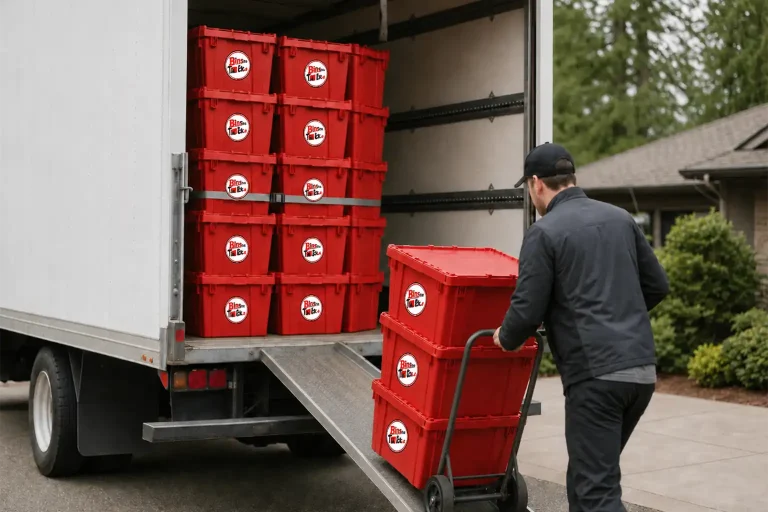
Garage cargo is hard on containers, which is exactly why it should go into containers that do not care. Cardboard sags under metal and dissolves on a wet driveway; rigid totes take dense loads, wipe clean afterward, and stack into a stable wall while they wait out a drizzle by the curb. Ours come sanitized, get collected from the new address when you finish, and you can rent a full stack of heavy-duty totes with free delivery on both ends of the move and a hand truck included for wheeling the dense ones.
| Garage cargo | Prep before packing | Where it rides |
|---|---|---|
| Hand tools | Wipe down, sort by trade, half-fill only | Rigid containers, low in the load |
| Power tools | Batteries off, cords coiled, in cases where they exist | Padded containers, mid-load |
| Blades and cutting tools | Cardboard sheaths taped shut, edges one direction | Marked container, top-opening, never overfilled |
| Long-handled tools | Bundled in threes, wrapped ends | Flat along the truck wall |
| Mower and engines | Fuel drained dry, blades sheathed, key bagged | Truck floor, loaded last near the door |
| Paint, propane, solvents | None. They do not move | County hazardous waste facility or a new owner |
Pack the garage on its own schedule and it goes from the room you dread to the first room finished. The rest of the house each have their own playbooks, all shelved in our moving advice shelf.

Written by the Bin There, Tote That! team
We rent, deliver, wash, and pick up moving totes across the Portland and Vancouver metro every week, so the advice here comes from vans and doorsteps, not a content mill. Facts about competitors are checked at publication and date-stamped in the text.