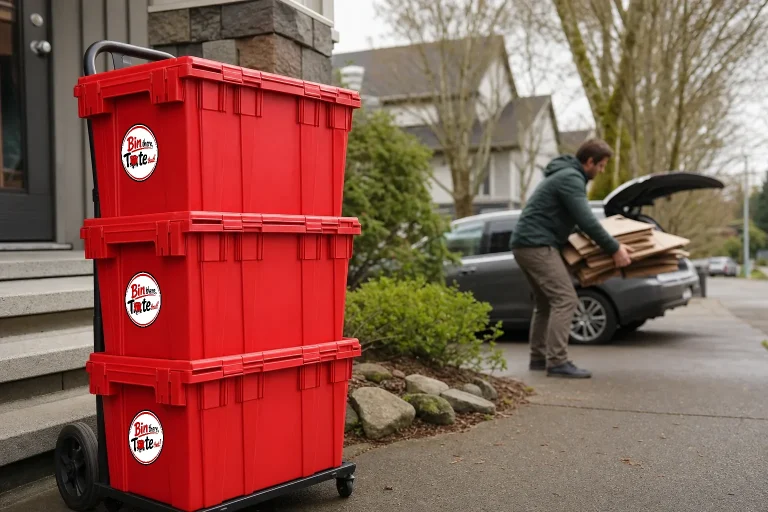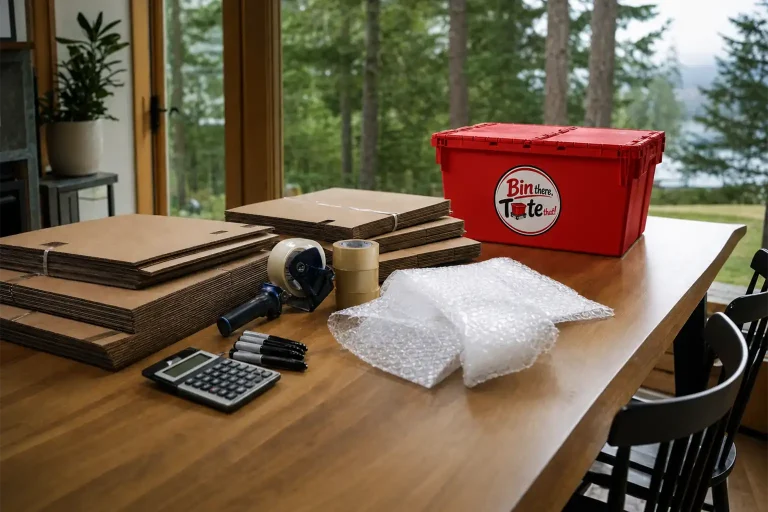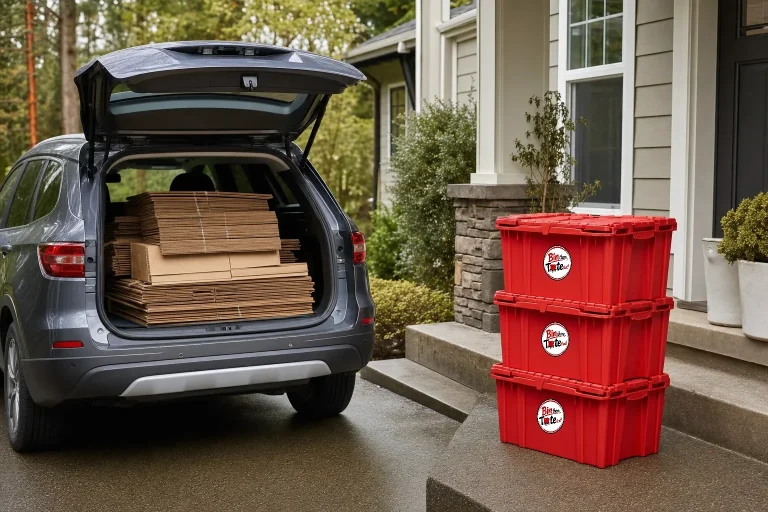
Buying cardboard moving boxes from U-Haul means paying per box, folding and taping each one yourself, and handling disposal after the move; renting delivered plastic totes from Bin There, Tote That! means a flat package ($97 to $257 for two weeks), boxes that arrive assembled with free delivery and a hand truck, and free pickup of the empties from your new Portland or Vancouver address.
U-Haul earns real points for its 100% buy-back on unused boxes and its deep specialty catalog, as of July 2026. For a full household move where your time is the scarce resource, the tote package removes assembly and disposal from the job entirely.
What does U-Haul actually sell you?
U-Haul stocks cardboard the way a hardware store stocks screws: every size, in any quantity. Small, medium, large, and extra-large boxes sold individually or in room-count kits, plus the specialty stuff most people forget exists, wardrobe boxes with hanger bars, dish barrels, mirror and TV cartons. Pricing runs per box, with kits bundling a modest discount; U-Haul sets those numbers per market, so check current store pricing before you budget. The kits are graded by home size, which helps with estimating, though the counts assume average rooms holding average stuff, two categories that describe almost nobody's bookshelf.
To be clear about scope: this page is about the boxes you buy and keep. U-Haul also runs a reusable plastic box rental, which is a different product with different logistics, and we compared it separately in our look at U-Haul's Ready-To-Go rental program. Here, the question is simpler. When the box is cardboard and it's yours, what does it really ask of you between the register and the recycling bin?
What do delivered totes replace?
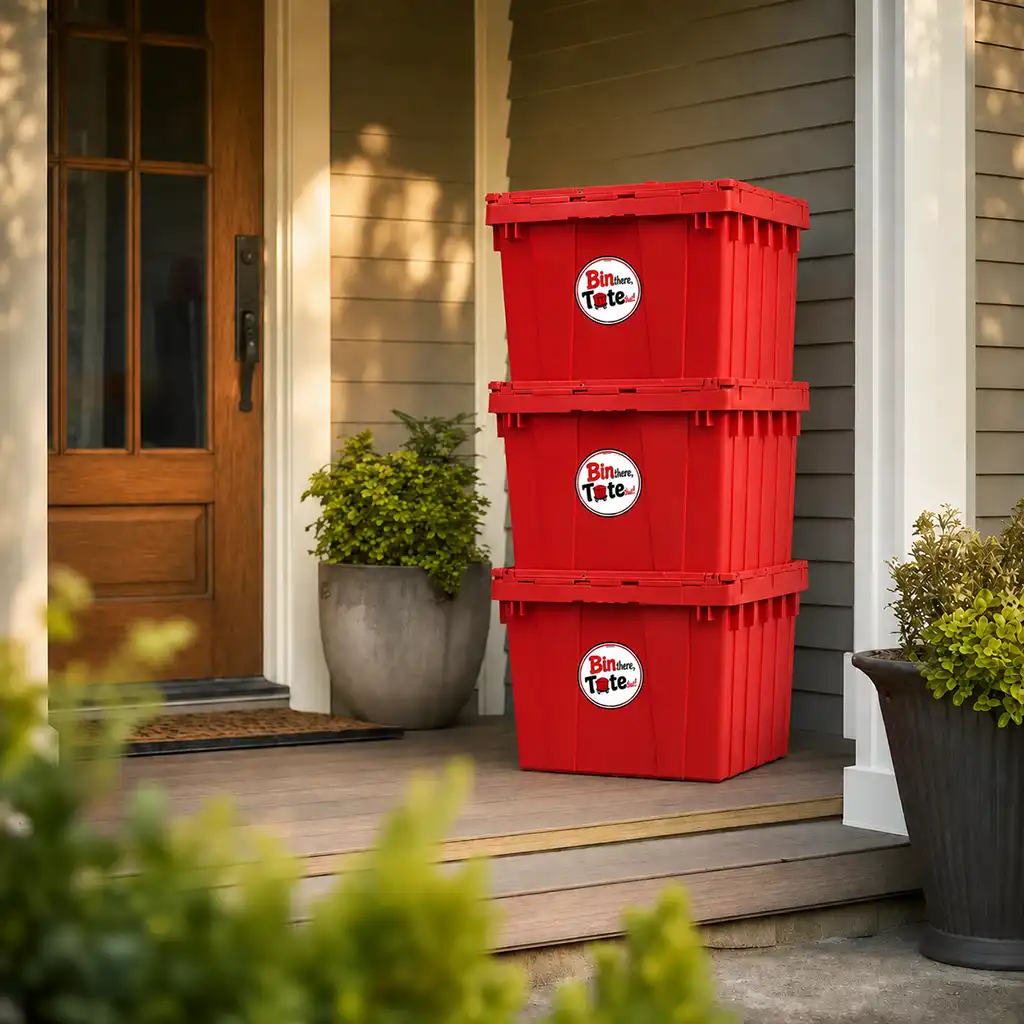
Bin There, Tote That! rents plastic moving totes by the package: 10 totes for $97, 25 for $127, 50 for $197, or 75 for $257, each for two full weeks. Every package includes free delivery to your door, free pickup from your new address anywhere in the Portland or Vancouver metro, and a standard hand truck. Totes arrive washed and sanitized, assembled, lids on. Booking takes a few minutes online, or call or text (971) 402-0969 and a human will size the package to your place.
Notice what's missing from that paragraph: tape, a utility knife, an evening of folding, and a trunk full of flattened board headed somewhere after the move. A rented tote replaces the box, sure. Mostly it replaces the chores that orbit the box.
Cost, assembly, disposal: side by side
Here's the whole lifecycle in one table, from checkout to the day the containers leave your life. U-Haul program details are current as of July 2026. Read it top to bottom and notice which column keeps handing tasks back to you; that pattern is the actual comparison.
| Stage | U-Haul cardboard boxes | Delivered totes (us) |
|---|---|---|
| Day one | Flat bundles; you fold and tape every box bottom | Arrive assembled with lids, ready to fill |
| Tape and supplies | A running cost you rebuy when the roll dies mid-box | Lids close on their own; no tape budget exists |
| Cost structure | Per box plus kits; total climbs with your count | Four flat packages, $97 to $257, two weeks |
| If you overbuy | Unused boxes refundable with receipt at any center | Packages sized by home; add extra totes if needed |
| Working life | One move at full strength, maybe a soft second | Commercial crates that survive hundreds of rentals |
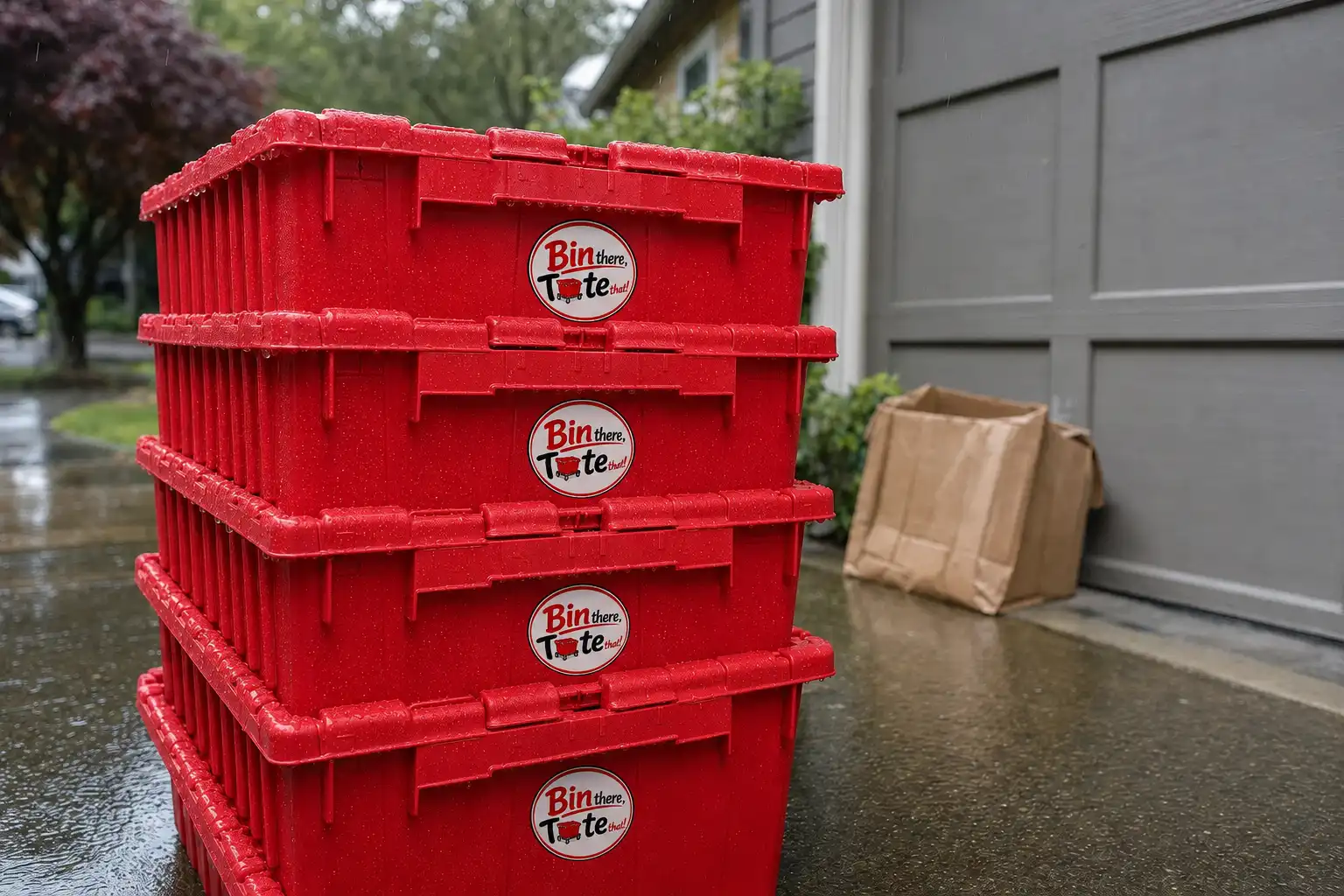
| February on the sidewalk | Wicks water from the ground up | Sheds rain and keeps the contents dry |
| Moving gear | Dolly is a separate purchase or rental | Standard hand truck rides along free |
| When you're done | Cut, flatten, bundle, recycle or store | Stack them by the door; we collect free |
The full to-do list of a box you own
Ownership sounds simple until you write down everything a cardboard box asks of its owner. Follow one U-Haul medium from purchase to the curb.
- Estimate and buy. Guess your count, drive to the store, load flat bundles into a vehicle that can take them.
- Assemble. Fold the base, tape it twice if anything heavy is going in, repeat forty or sixty times.
- Pack, move, unpack. The part both options share.
- Break it all down. Slice the tape, flatten every box, and peel the labels if you're conscientious.
- Get rid of it. Portland's curbside program takes flattened cardboard in the blue bin, and extra board goes out as taped bundles no bigger than three feet on any side, per the city's recycling guidelines. That's real work with fifty boxes.
- Or store it. The other ending: a cardboard slab colony behind the water heater, kept for a someday move.
A rented tote runs the same list with three items: pack, move, unpack. Steps one, two, four, five, and six belong to us.
Where buying from U-Haul genuinely wins
Credit where it's due, because U-Haul does a few things here better than anyone.
- The buy-back is real. U-Haul guarantees a full refund on any unused box returned with your receipt at any U-Haul center nationwide, as of July 2026. Overbuying, the classic cardboard sin, gets a safety net.
- The catalog is deep. Wardrobe boxes, dish barrels, mirror cartons. If your move includes a gown collection or a china cabinet, specialty cardboard earns its keep, and totes don't come in gown-shaped.
- You keep what you buy. If you actually want permanent boxes for shipping or storage afterward, purchase beats rental by definition.
Where delivered totes win
Everywhere the work lives, basically. Cardboard's low sticker price buys you a project; a tote package buys you out of one.
Assembly night never happens. Sixty boxes means an hour or two of folding and taping before a single item gets packed. Totes skip straight to packing, which matters most for the people with the least spare time.
The price is a number, not a running total. Cardboard totals drift upward with each extra box, tape roll, and marker. A two-bedroom apartment is $127 in totes, printed on the site before you commit. The full grid is on our four flat packages page.
Rain stops being a scheduling factor. Portland moves happen in drizzle more often than not, and cardboard on a wet sidewalk fails from the bottom up, usually mid-carry. Sealed totes shrug off a soaked porch, a damp truck bed, and the sprint up the new front steps without the contents ever finding out. When the forecast is a coin flip nine months of the year, containers that ignore weather earn their fee before lunch.
The ending is the best part. After a cardboard move you're the proud owner of fifty empty boxes and a disposal project. After a tote move you stack empties by the door and go back to your life. Someone else drives away with them.
Cardboard assigns homework. Totes grade themselves.
Which should you pick?
Both answers are legitimate. Match the option to the move, not to habit.
- You need wardrobe boxes, dish barrels, or other specialty shapes
- You want boxes to keep for shipping or storage afterward
- You're moving out of the metro, where a rental can't follow
- Your evenings are worth more than a tape gun
- You're staying within Portland or Vancouver, where pickup is free
- You'd rather not own fifty empty boxes on the far side of the move
- The forecast says what Portland forecasts usually say
Want the wider view? We've written up renting plastic moving boxes in Portland from every angle, and if you're still deciding on the material itself, start with the full cardboard versus plastic totes comparison.

Written by the Bin There, Tote That! team
We rent, deliver, wash, and pick up moving totes across the Portland and Vancouver metro every week, so the advice here comes from vans and doorsteps, not a content mill. Facts about competitors are checked at publication and date-stamped in the text.