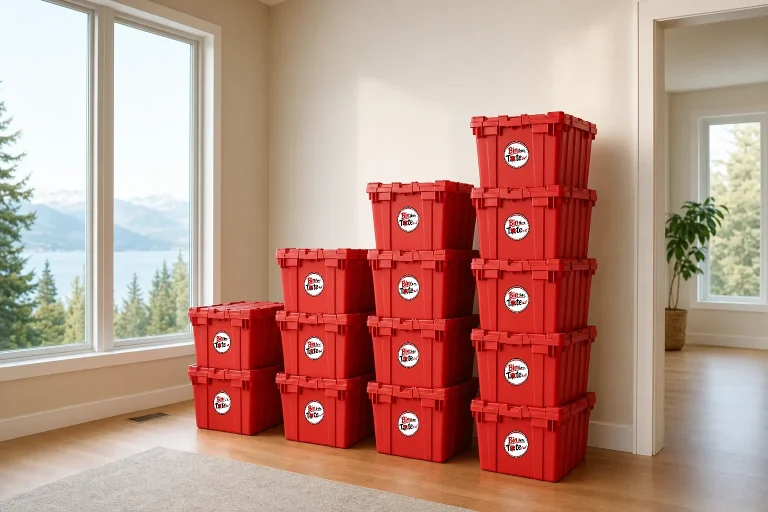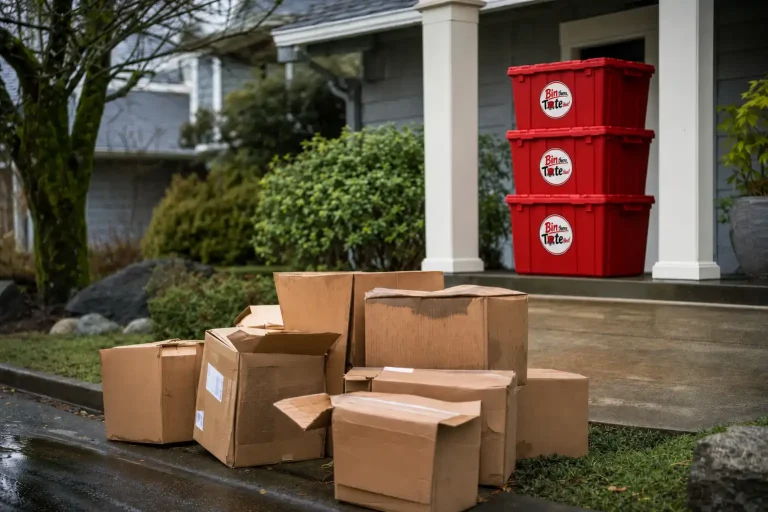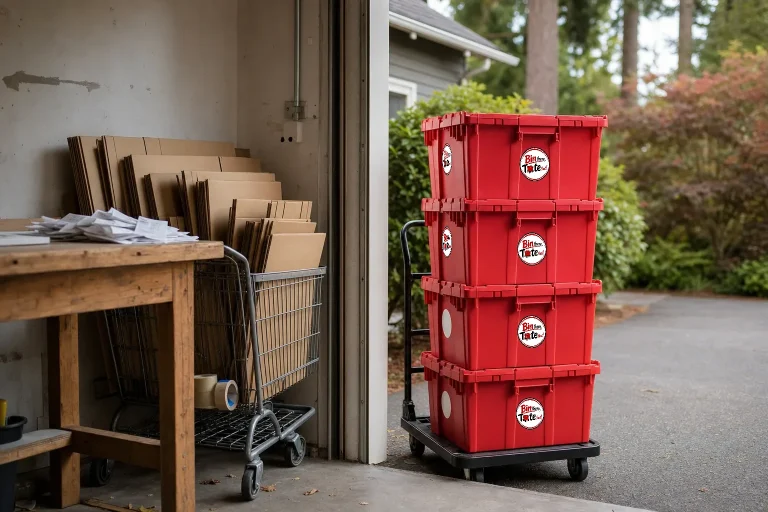
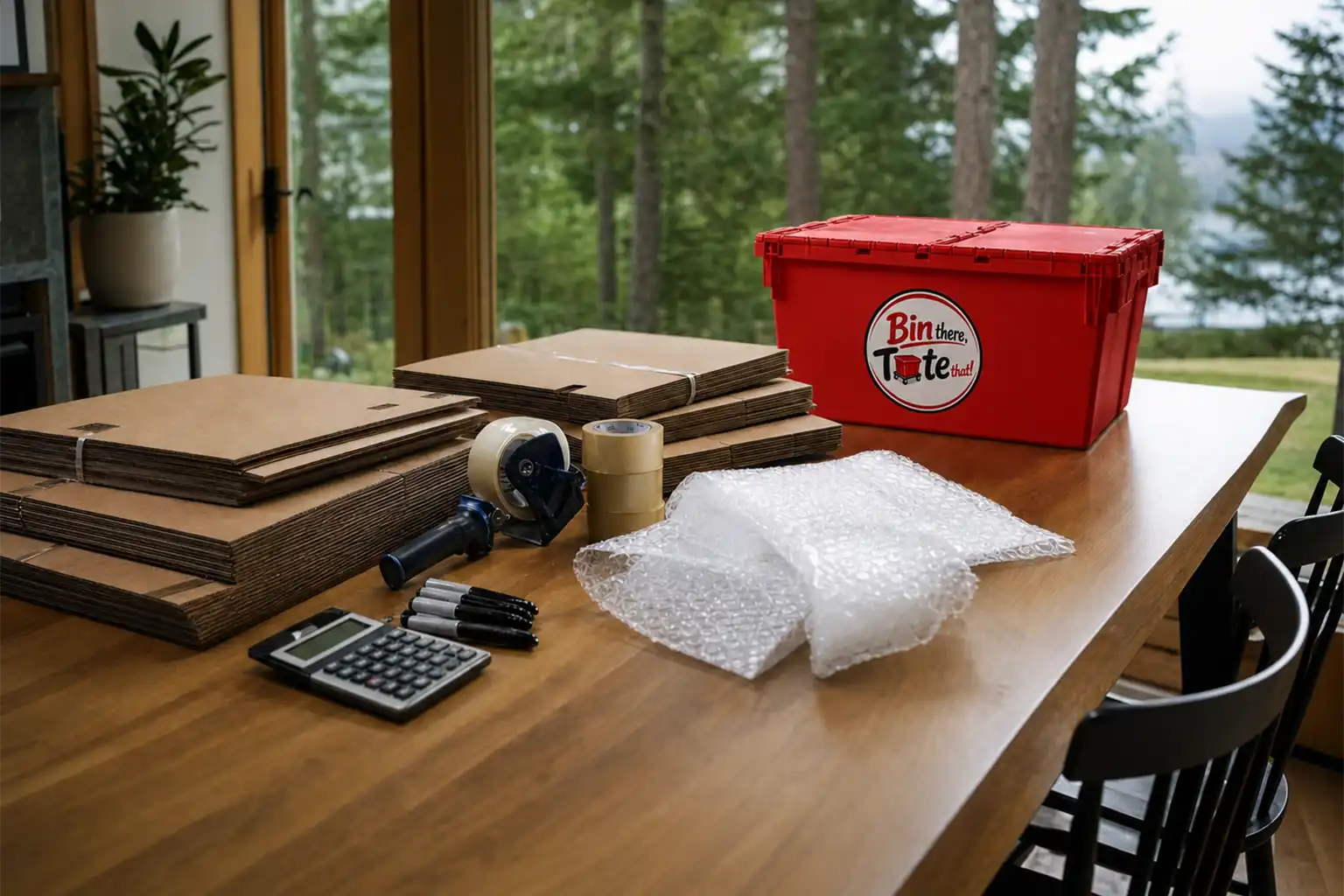
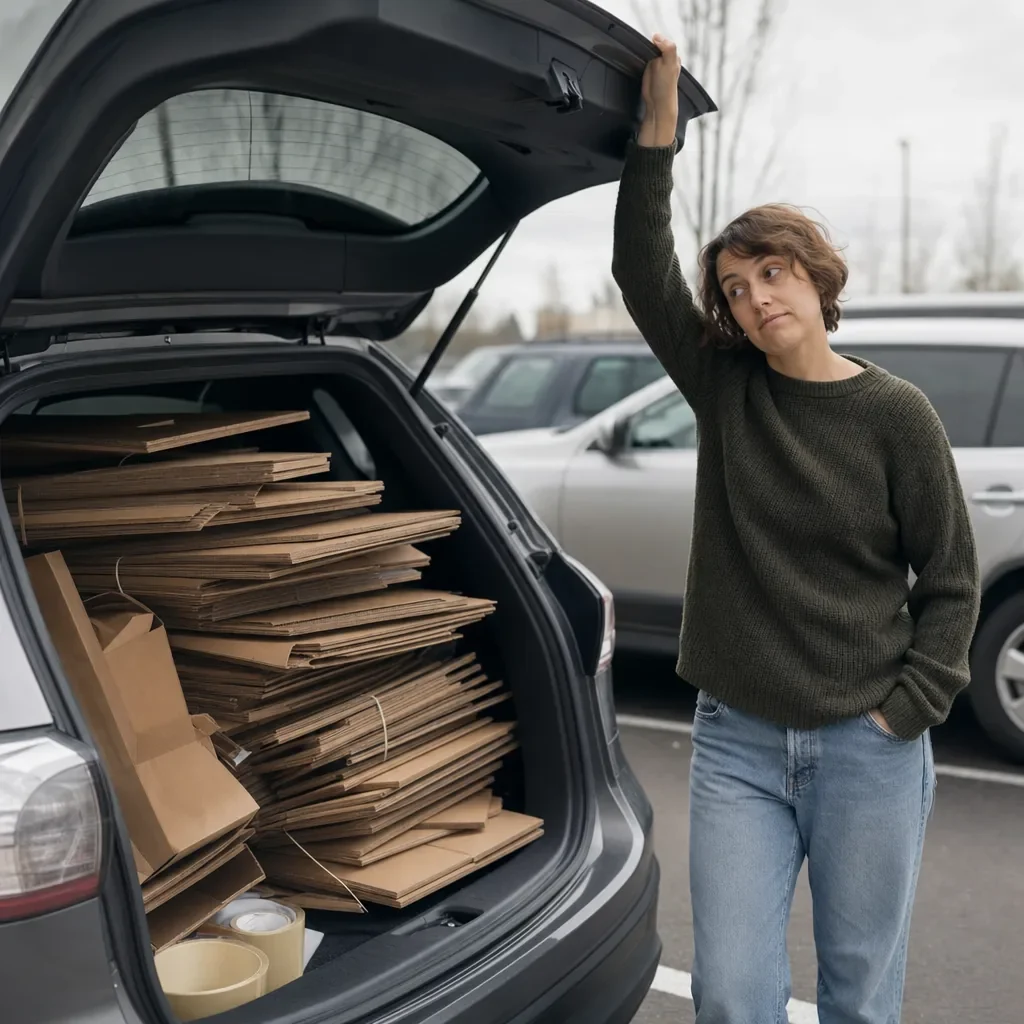
Cardboard is rarely as cheap as it looks for a two-bedroom move. A typical two-bedroom packs into 60 or more boxes, and once you add tape, a dispenser, bubble wrap, packing paper, a marker, a dolly rental, multiple store trips, and the breakdown afterward, the true cost climbs well past the price of the boxes alone and consumes close to a full working day of your time. Bin There, Tote That! covers the same move for a flat $127 (25 totes, apartment) or $197 (50 totes, house), delivered free across the Portland and Vancouver metro with a hand truck included and free pickup after two weeks, as of July 2026.
The exception is the mover with genuinely free boxes and genuinely free time. With both, cardboard can still win on cash. With neither, the flat rate usually wins on cash and always wins on hours.
Why the sticker price on a box misleads
A single medium cardboard box costs about as much as a coffee, which is why cardboard has a reputation as the budget choice. The reputation survives because nobody ever totals the whole bill. A two-bedroom move is not one box. It is a small procurement project: dozens of containers in several sizes, the tape to close them, the tools to apply the tape, the padding to fill them, the wheels to move them, and the labor of acquiring, building, and then destroying all of it.
This post totals that project honestly, category by category, and puts the sum next to the flat-rate alternative: a delivered tote package at $127 or $197 for a two-bedroom, depending on whether you live in an apartment or a house. Some numbers below are hedged ranges rather than store prices, because supply pricing shifts and we would rather flag an estimate than fake a receipt.
What a two-bedroom move actually puts in your cart
Start with the containers. A typical two-bedroom home packs into 60 or more boxes across small, medium, and large sizes, and most movers who guess lower end up back at the store mid-pack. Our sizing guide for boxes and totes breaks the counting down room by room if you want to check your own estimate.
Then comes everything the boxes require to function. Tape, because an untaped box is a chute. A dispenser, because taping sixty boxes by picking at the roll's edge is a punishment. Bubble wrap and packing paper for the kitchen, the glassware, and anything with a screen. A fat marker for labeling. A dolly, rented or borrowed, because sixty loaded boxes and a bare pair of arms is how backs get wrecked. None of these is expensive alone. Together they form a second, quieter bill stapled to the first one.
The category-by-category ledger
Here is the full list side by side. Cardboard figures are honest industry ranges, not quotes from any particular store, and supply prices drift with the season, so treat them as planning figures and check current prices before you shop.
| Cost category | Buying cardboard | Delivered totes (us) |
|---|---|---|
| Containers | 60+ new boxes in mixed sizes, roughly $1 to $4 apiece | 25 or 50 totes, covered by the flat rate |
| Packing tape | Four to eight rolls to seal tops and reinforce bottoms | Zero. Lids close without adhesive. |
| Tape dispenser | One gun-style dispenser, a modest one-time buy | Nothing to dispense |
| Bubble wrap and paper | Several rolls and bundles, the kitchen eats most of it | Still worth buying for fragiles, same cost either way |
| Marker and labels | A few dollars, easy to forget until box thirty | You will still want the marker |
| Dolly | Weekend rental or a borrowed favor you now owe | Standard hand truck rides along free |
| Getting it all home | One to three store trips in a car that fights you | Free delivery to your door |
| Getting rid of it | Weeks of flattening, bundling, and recycling-cart rationing | Free pickup from your new address |
| The shape of the total | A stack of receipts plus a stack of hours | $127 or $197 flat, two-week rental |
The hours that never make the receipt
Cash is only half the ledger. Cardboard also bills you in time, and the time bill arrives in installments.
- Sourcing: researching sizes, driving to the store, loading the car, possibly repeating the loop when the first haul runs short. An hour or two per trip is normal.
- Assembly: folding and taping each box before it can hold anything. A couple of minutes each sounds trivial until you multiply it by sixty and do it standing on a kitchen floor.
- Reinforcement and repair: re-taping the bottoms of the heavy ones, rebuilding the one that gave way on the stairs.
- Breakdown: after the move, cutting tape, flattening everything, and feeding the pile to a recycling cart that accepts a fraction of it per week.
Add it up and the cardboard route quietly consumes something close to a full working day, scattered across the weeks when your schedule is already at its worst.
When cardboard still wins on price
An honest ledger cuts both ways, so here is the other side. Cardboard beats a rented tote package in a few real cases.
- Your boxes are genuinely free and genuinely sound. A friend just moved, a workplace has clean stock headed for recycling, and you have the time to collect it all. The container line drops to zero, and that is a real saving even after tape and wrap.
- The boxes are staying packed. Rentals go back after two weeks. If half your belongings are headed into a storage unit for a year, buy containers instead.
- You are shipping, not moving. Anything leaving via a carrier needs cardboard. Totes do not board planes.
- The whole move fits in a car. A dorm room or a furnished-room move may need ten boxes total, and buying ten is cheap by any measure.
Cheap per box. Expensive per move.
What the flat rate buys instead
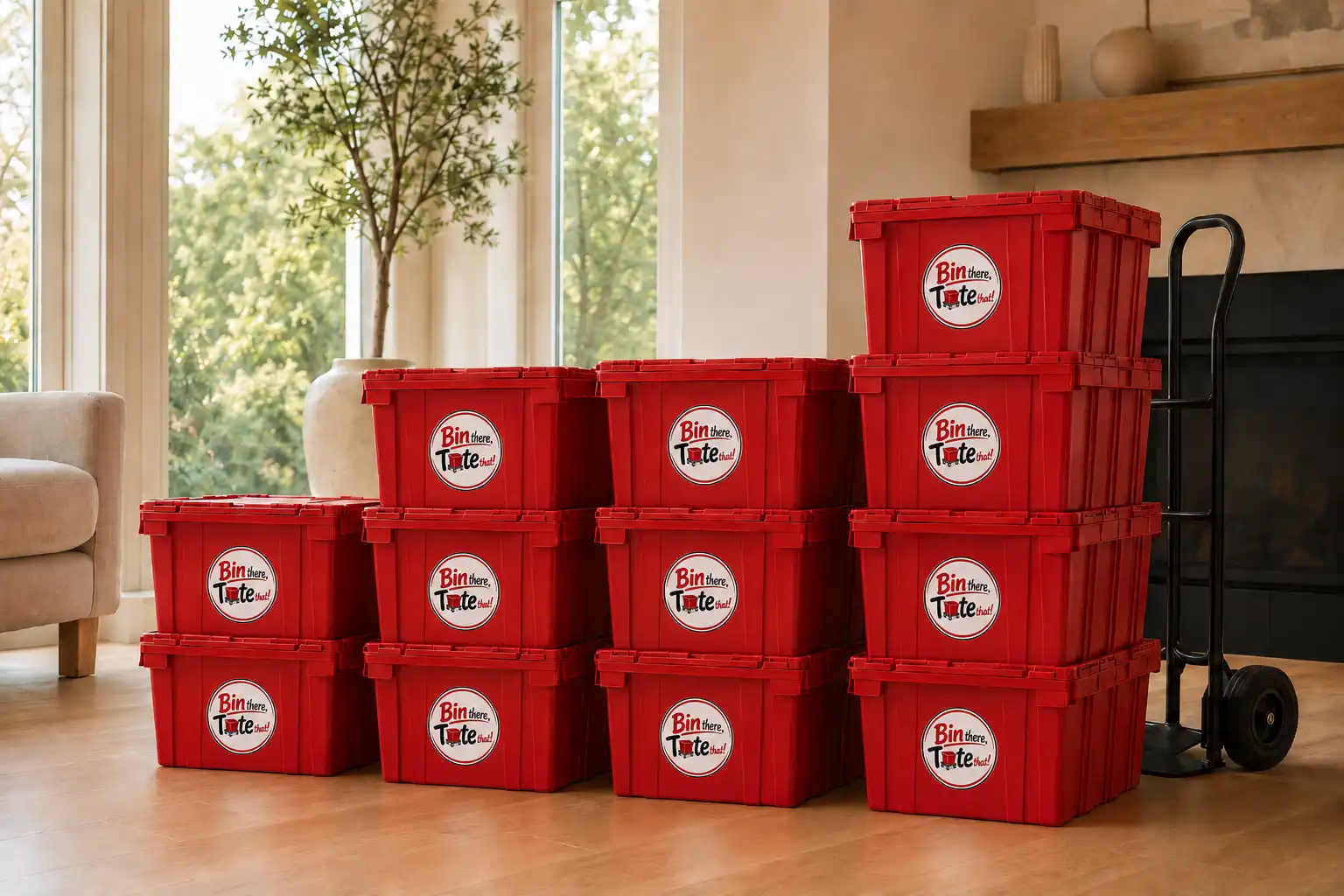
Now the other column. Bin There, Tote That! prices a two-bedroom one of two ways: the Essential Move, 25 totes at $127 for a one-to-two-bedroom apartment, or the Standard Move, 50 totes at $197 for a two-to-three-bedroom house. Both are two-week rentals with free delivery and free pickup across the Portland and Vancouver metro, a standard hand truck included, and every tote washed and sanitized before it reaches you. The full package lineup lives on our current rates page.
Notice what disappears from the ledger. No container purchases, no tape, no dispenser, no dolly rental, no store trips, no breakdown weeks. What remains is the padding you would buy anyway and a marker you probably own. That is the entire supply project reduced to one delivery you did not drive for, which is the point of renting moving totes in Portland in the first place.
So which costs less for a two-bedroom?
Run your own numbers against the table above, then check yourself against this fork.
- You have a free, clean box supply already lined up
- Your things are headed into long-term storage
- Spare hours are something you actually have
- You would be buying most of those 60+ boxes new
- You want one known number instead of a running tab
- The dolly, delivery, and disposal matter to your week
- Rain is in the forecast, and this is Portland, so it is
Money is one axis of this decision. Durability, weather, and stacking are the others, and they get their own fair hearing in our full cardboard versus plastic totes comparison.

Written by the Bin There, Tote That! team
We rent, deliver, wash, and pick up moving totes across the Portland and Vancouver metro every week, so the advice here comes from vans and doorsteps, not a content mill. Facts about competitors are checked at publication and date-stamped in the text.