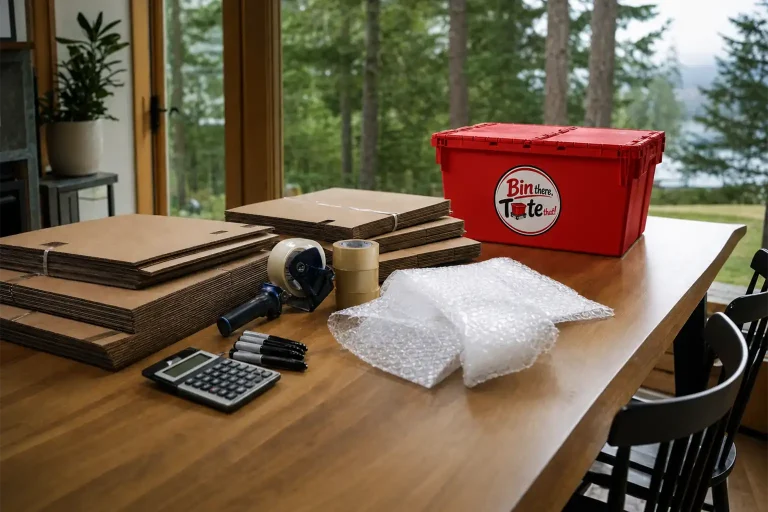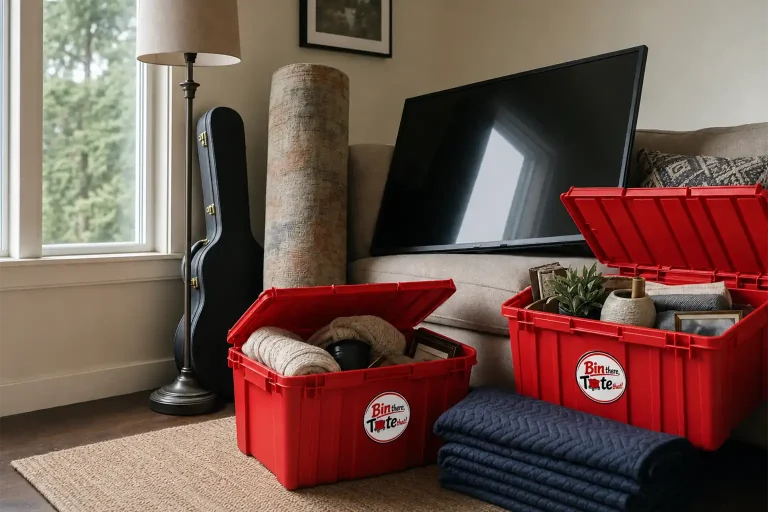
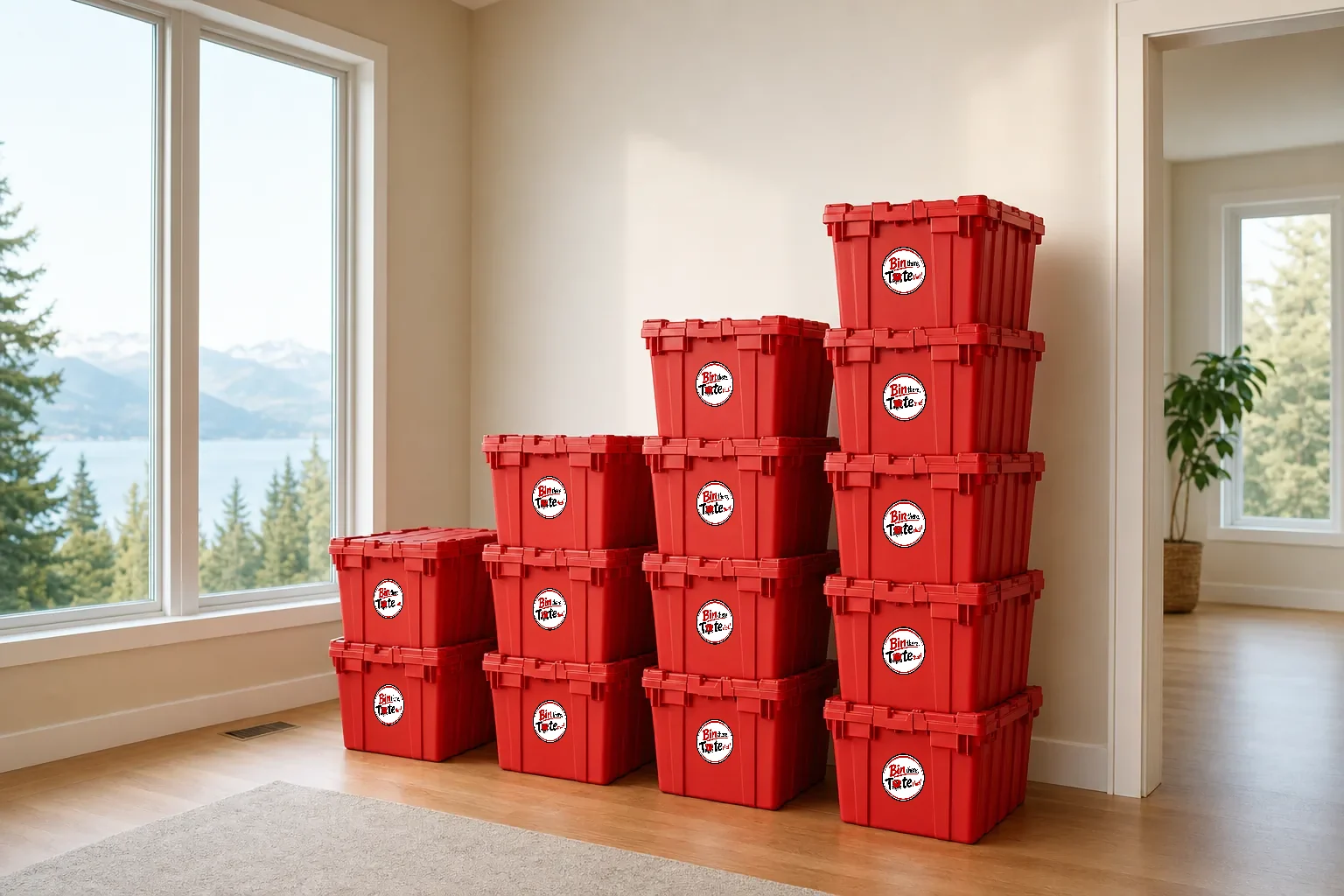
A studio typically packs into 20 to 35 boxes, a one-bedroom into 30 to 45, a two-bedroom into 45 to 70, and a two-to-three-bedroom house into 70 to 100 or more. Most first guesses land at roughly two-thirds of the real figure, because closets, cabinets, garages, and bookshelves hide their volume until packing night. Count storage spaces rather than rooms, then add 20 percent.
In rented totes the numbers shrink and simplify: Bin There, Tote That! sizes the same homes as 10 totes ($97), 25 totes ($127), 50 totes ($197), or 75 totes ($257), delivered free across Portland and Vancouver with extra totes available if the estimate still runs short, as of July 2026.
Why every first guess comes in low
Ask someone mid-pack how the estimate went and you will hear the same story: they ran out of boxes on a Tuesday night with the kitchen half done. The pattern is so reliable it deserves an explanation. When you eyeball a room, you see the furniture and the floor. You do not see inside the cabinets, the closet shelf above eye level, the drawer under the oven, or the bins on top of the wardrobe. Homes hide a surprising share of their volume behind doors, and the hidden share is exactly the part that has to go into containers.
The fix is not better intuition. It is a counting method that ignores intuition entirely, which is what the rest of this guide walks through, along with typical counts by home size and how those counts translate into rented totes.
A counting method that survives your closets
Estimate storage, not rooms. Walk the home once with your phone and follow this sequence.
- Tally every enclosed space. Cabinets, closets, drawers, the pantry, under-bed bins, the coat rack by the door. Each one is inventory, whether or not you have opened it this year.
- Assign each space a rough box count. A packed kitchen cabinet is about one box. A full dresser is three to four. A reach-in closet, floor plus shelf, is four to six once shoes and the top shelf are honest with you.
- Count the bookshelves separately. Books are the great underestimated category. One full shelf, one small box, no exceptions, because a large box of books cannot be lifted safely.
- Add the invisible zones. Garage, attic, storage closet, under the stairs. Most people who blow their estimate blew it here.
- Add 20 percent. Not because the method failed, but because the last tenth of any home is loose oddments that refuse to group.
Homes keep a fifth of themselves behind closed doors.
Typical counts by home size
Run the walk-through and your number should land near these ranges, which reflect what a typically furnished home of each size packs into. The right-hand column maps each range to the tote package built for it.
| Home size | Typical cardboard count | Matching tote package |
|---|---|---|
| Studio | 20 to 35 mixed boxes | Basic Move: 10 totes, $97 |
| Small 1-bedroom | 30 to 45 mixed boxes | Basic or Essential, depending on storage habits |
| 1 to 2-bedroom apartment | 45 to 70 mixed boxes | Essential Move: 25 totes, $127 |
| 2 to 3-bedroom house | 70 to 100 mixed boxes | Standard Move: 50 totes, $197 |
| 4+ bedroom house | 100 and climbing | Complete Move: 75 totes, $257 |
Two notes on reading the table. First, the cardboard ranges assume a normal mix of small, medium, and large; an all-large strategy produces fewer boxes and more chiropractic appointments. Second, a house and an apartment with the same bedroom count are not the same move. Houses have garages, attics, and yards, which is why the bedroom label alone can mislead by a full package size.
Where the boxes actually go, room by room
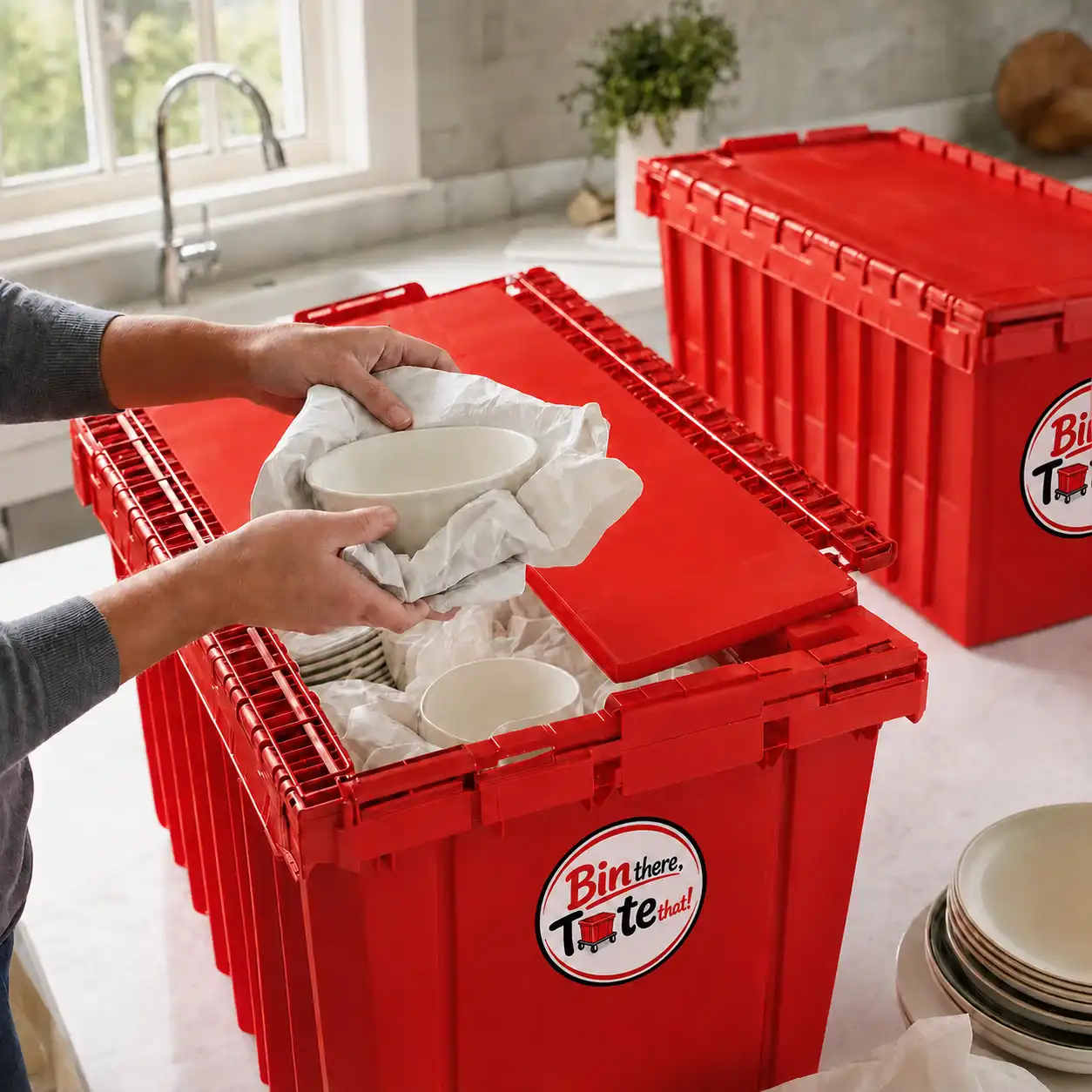
Certain rooms dominate the count in every move we deliver to. The kitchen leads by a wide margin: dishes, glassware, small appliances, pantry goods, and the drawer of utensils that has never been fully excavated. Expect it to absorb a fifth of your total containers all by itself. Books and media come second wherever they live. Bedroom closets rank third, and they punch above their weight in homes with more wardrobe than wardrobe space.
Bathrooms, linen closets, and entryways look small and pack small. The living room looks large and packs medium, because so much of it is furniture that never enters a box at all.
Then there is the garage, which behaves like a separate small move attached to your real one. Tools, paint, holiday decorations, sports gear, and the archaeology of previous hobbies routinely add ten or more containers to a house move, and none of it shows up in a bedroom-based estimate. If you have a garage, shed, or attic, count it as its own room and be suspicious of any total that did not.
Three ways the estimate goes wrong anyway
Even a careful walk-through has failure modes worth naming, because each one has a cheap fix.
The purge that never happens. "We'll declutter before we pack" is the most expensive sentence in moving. If the donation run has not happened by two weeks out, count the clutter as cargo and size accordingly.
The uniform-size order. Buying only large boxes to reduce the count backfires twice: heavy items make them unliftable, and light bulky items leave them half full. A real move needs smalls for dense things and larges for pillows, and the ratio is hard to predict from the couch.
The missing buffer. Running out of containers on packing night means a store run at the worst possible hour, or worse, a moving day spent shuttling loose armfuls. Whatever your count, secure a cushion above it before you need one.
Why tote counts run lower than box counts
The table above pairs 60-box moves with 25-tote packages, and the gap is not marketing arithmetic. A rental tote in the 27-gallon class holds more than a standard medium box, and it holds it better. Rigid walls mean you can pack to the brim without the bulge that makes overfilled cardboard unstackable. Uniform footprints mean every tote nests into the same column in the truck, so no capacity is lost to Tetris failures. And because lids latch rather than tape shut, nobody underfills a container to make the flaps meet.
The packages themselves were sized from real Portland moves, not spreadsheet theory, which is why the mapping in the table holds for most households. If you land between two packages, the honest tiebreakers are storage-heavy rooms, hobby gear, and whether a garage is involved. The mechanics of delivery, the two-week window, and pickup from your new address are laid out in the rental walkthrough.
Picking a number you won't regret
The last fork is whether to source containers yourself or let a package do the sizing.
- Your move is small enough to recount without pain
- You enjoy optimizing size ratios, and some people do
- Part of the load is going into storage long term
- You want the sizing decision made from real move data
- A mid-pack shortage should be a text, not a store run
- Uniform stacking matters for your truck or your stairs
- You would rather not own 60 flattened boxes afterward
Whatever count you land on, the container question has a cost side and a materials side too. The money math gets a full audit in our true cost of cardboard breakdown, the durability question is settled in the cardboard against plastic totes head-to-head, and when you are ready to put a number in a cart, tote rental delivered anywhere in the Portland metro starts at ten totes.

Written by the Bin There, Tote That! team
We rent, deliver, wash, and pick up moving totes across the Portland and Vancouver metro every week, so the advice here comes from vans and doorsteps, not a content mill. Facts about competitors are checked at publication and date-stamped in the text.