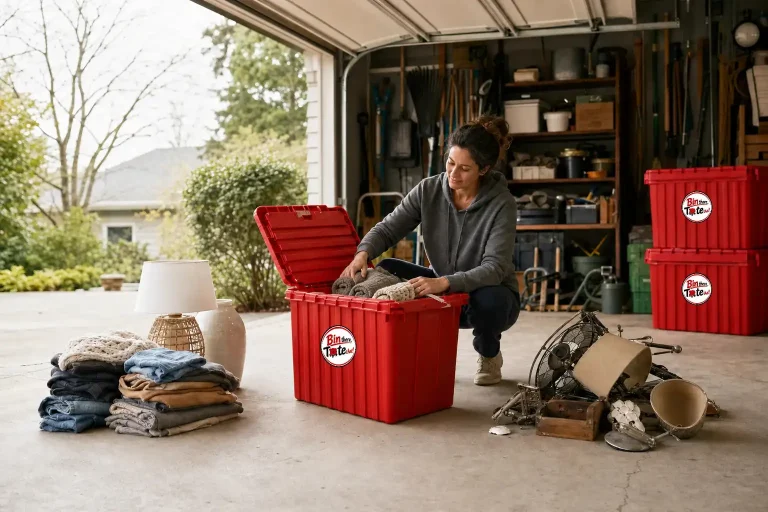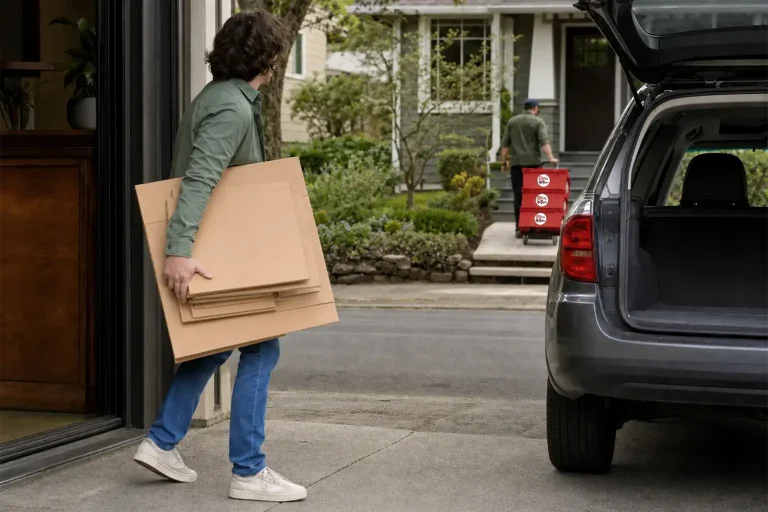
An eco-friendly Portland move comes down to three big levers, in order: drive fewer truck miles by loading densely and right-sizing the vehicle, replace single-use cardboard and tape with reusable containers, and keep functional belongings out of the landfill by selling, donating to local organizations like Community Warehouse, or giving through Buy Nothing groups. Wrapping with paper and your own linens instead of bubble wrap rounds it out.
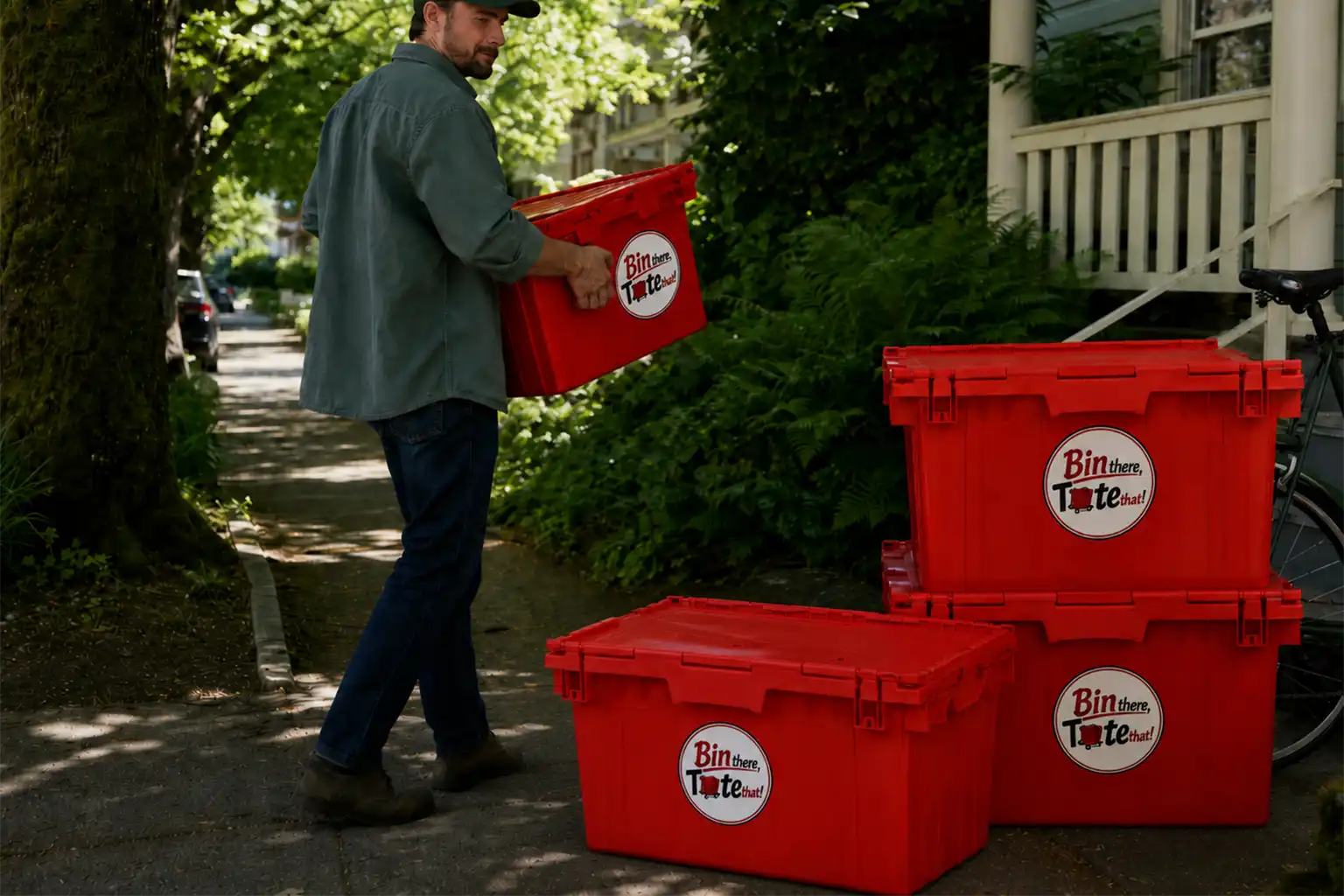
Reusable rental totes hit two levers at once: each tote serves hundreds of moves instead of one, and uniform stacking packs a truck tighter, trimming trips. Bin There, Tote That! delivers and collects them free across Portland and Vancouver, $97 to $257 flat for two weeks.
Rank the effort by impact, not by vibes
Most eco-moving advice is a flat list where "reuse newspaper" sits next to "don't send a sofa to the landfill," as if those were the same size decision. They aren't. A move's footprint comes from three places: miles driven, materials consumed once and discarded, and usable things thrown away. Cut the big three in that order and you can skip the fiddly stuff entirely with a clear conscience.
Here's the whole guide in one table, ranked the way we'd rank it for a friend.
| Tactic | Footprint impact | Effort | The short version |
|---|---|---|---|
| Make fewer truck trips | High | Low, it's planning | One well-loaded trip beats three casual ones |
| Move less stuff | High | Medium | Every donated shelf is weight, fuel, and packing you skip |
| Use reusable containers | High | Low | A rental tote works hundreds of moves; a box works one or two |
| Donate, sell, give locally | Medium to high | Medium | Landfill is the worst exit for anything functional |
| Wrap in paper and linens | Medium | Low | Towels were going in the truck anyway |
| Recycle cardboard properly | Medium | Low | Flatten, keep dry, follow local rules |
| Agonize over tape brands | Low | High | Skip it; win the big rows first |
Fewer trips: the least glamorous, biggest win
Truck miles dwarf almost everything else on the list, and the fix is free: load discipline. Casual moves leak trips. The half-packed car runs, the "we'll come back for the garage" runs, the return run for the thing on the counter. Each one burns fuel to move air and a lamp.
Uniform containers are the quiet trick here. Boxes and totes of identical footprint stack into dense, stable columns, which means the same truck holds meaningfully more per trip and nothing shifts into the aisle. Right-size the vehicle too: a slightly bigger truck loaded once usually beats a smaller one loaded twice, both for fuel and for your evening. Load heavy and uniform first, build full-height columns front to back, and treat empty air in the truck as the enemy it is.
The classic trap is the friend-with-a-pickup plan, which quietly turns one truck trip into six pickup runs across a weekend. Add the mileage honestly and the borrowed truck is often the least green vehicle available. If borrowing is the plan, borrow big, load it once, and hand it back the same afternoon.
Reusable containers: retire the one-move box
A cardboard box is a single-use product that occasionally survives a second tour. Between the trees, the manufacturing, and the fact that a typical household move consumes dozens of them plus rolls of plastic tape, packaging is the most visible waste stream a move produces, and the easiest to design out.
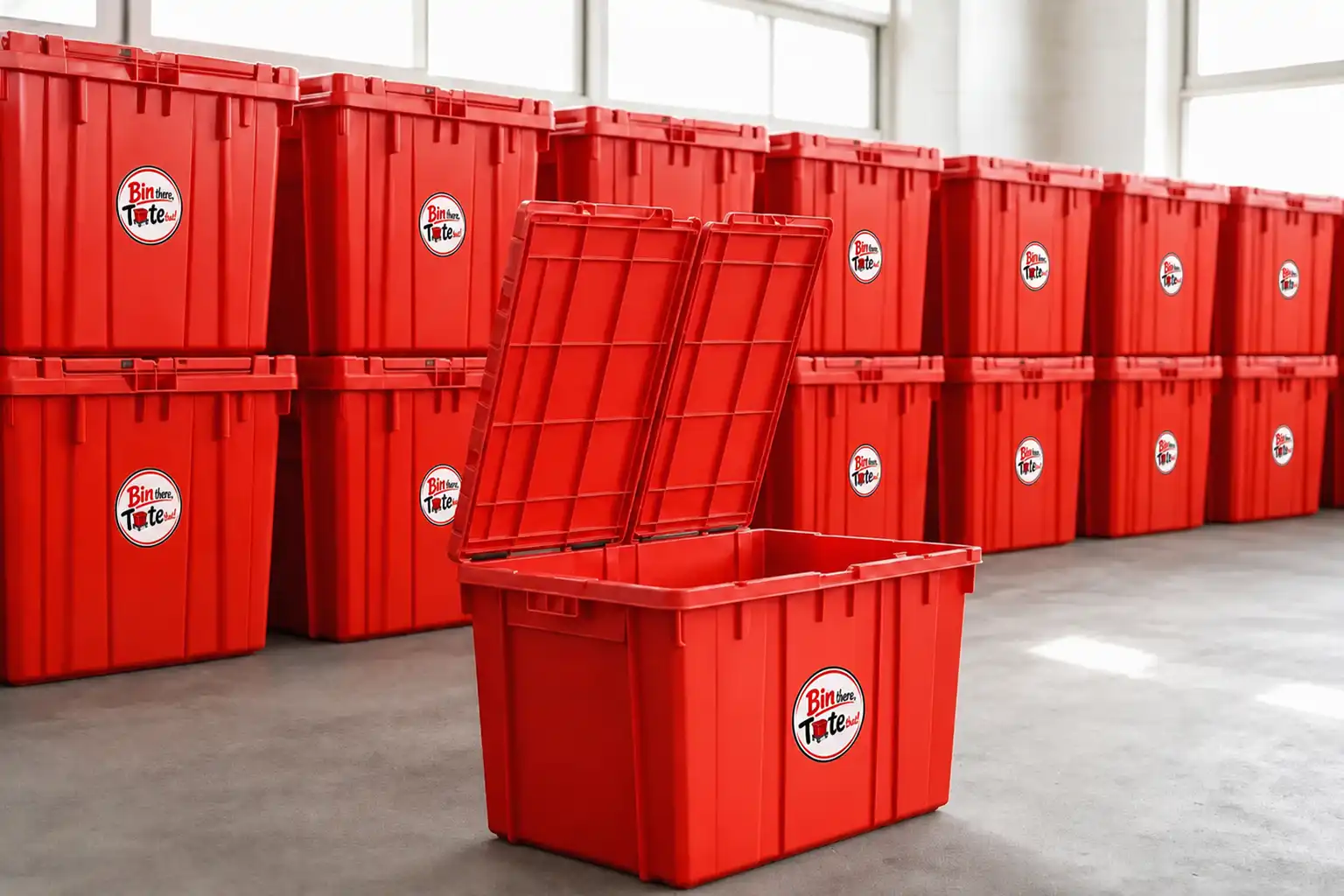
Renting reusable moving totes delivered to your door replaces the whole stream. Each tote in our fleet is built to survive hundreds of rentals, gets washed and sanitized between customers, and needs no tape at all; the lid latches shut. When your two weeks are up, the totes go back into circulation for the next household instead of into a recycling bin. Bin There, Tote That! runs flat packages from $97 to $257 with free delivery and free pickup across Portland and Vancouver, so the reusable option is also the one with the fewest errands attached, which is not how eco-choices usually go.
Donate, sell, and give before you dump
Everything you don't move is fuel saved twice: it skips the truck now and skips being landfilled later. But "get rid of it" has a right order, from best exit to worst.
- Sell what has value. Marketplace and consignment move furniture fastest three to four weeks out.
- Donate what works. Portland's Community Warehouse is a local furniture bank that redistributes donated furniture and household goods directly to neighbors furnishing homes, with donation drop-off locations in the metro area.
- Give the rest away. Buy Nothing groups and a "free" post clear odds and ends within days.
- Recycle what's truly done, following local rules rather than wishful thinking.
- Landfill last, and only what genuinely has no other exit.
Start three weeks before moving day. The order collapses when you're rushed, and rushed people rent dumpsters. Books deserve a special mention: they're the heaviest thing in any move per cubic foot, and the used-book market is glad to absorb the ones you were only moving out of guilt.
Wrap smarter: paper, linens, and the bubble wrap question
Bubble wrap is plastic film you buy to throw away. For most household breakables, crumpled packing paper cushions nearly as well, packs tighter, and recycles curbside when clean. Better still is the padding you already own: towels around plates, socks over glasses, blankets between frames. It's zero-cost, zero-waste, and it means your linens ride the truck as workers instead of cargo.
Reserve actual bubble wrap for the few items that earn it, glass shelves, artwork, the TV if its original box is long gone, and buy the small roll, not the club-store cube. Whatever wrap you do buy, keep it after the move; second use is the cheapest recycling there is.
What doesn't move the needle
Honesty requires naming the feel-good moves that mostly decorate the footprint rather than shrink it. Driving across town to collect "free" used boxes can burn more fuel than the boxes save, especially over multiple runs. Compostable tape on a box destined for the landfill composts nothing. And a truck of perfectly good furniture driven straight to the transfer station undoes every other green choice in one trip.
Beware of round numbers, too. The internet is full of confident statistics about moving waste that trace back to nobody. We haven't quoted any here because we couldn't verify any; the ranking above stands on logic you can check yourself: miles, materials, landfill, in that order.
The test for any green moving tip is the same three questions. Does it remove miles, materials, or landfill mass? If it removes none of the three, it's decoration, and you're free to skip it without guilt.
Green moving is mostly subtraction.
Your greenest route, honestly
Two defensible paths, depending on what you're starting with.
- You already own good boxes from a recent move
- A neighbor's flattened stack is one block away
- You'll pass every box along and recycle the casualties
- You'd otherwise be buying boxes and tape new
- Uniform stacking would cut your truck to one trip
- You have no appetite for a post-move cardboard pile
- Free delivery and pickup beat multiple supply runs
Whichever path you take, the cardboard that does pass through your hands deserves a proper exit; our guide to cardboard's recycling afterlife covers the Portland and Clark County rules. The rest of the thinking, from decluttering to timing, lives in our full library of Portland moving guides.

Written by the Bin There, Tote That! team
We rent, deliver, wash, and pick up moving totes across the Portland and Vancouver metro every week, so the advice here comes from vans and doorsteps, not a content mill. Facts about competitors are checked at publication and date-stamped in the text.