In Portland, flatten boxes, cut them to fit your blue recycling cart empty and dry, and when the cart is full, tape the extras into one bundle no bigger than three feet in any direction and lean it against the cart on pickup day, per portland.gov. In Clark County, flatten everything, keep it clean and dry, place it loose, and check your exact address rules in the county's RecycleRight tool, per clark.wa.gov.
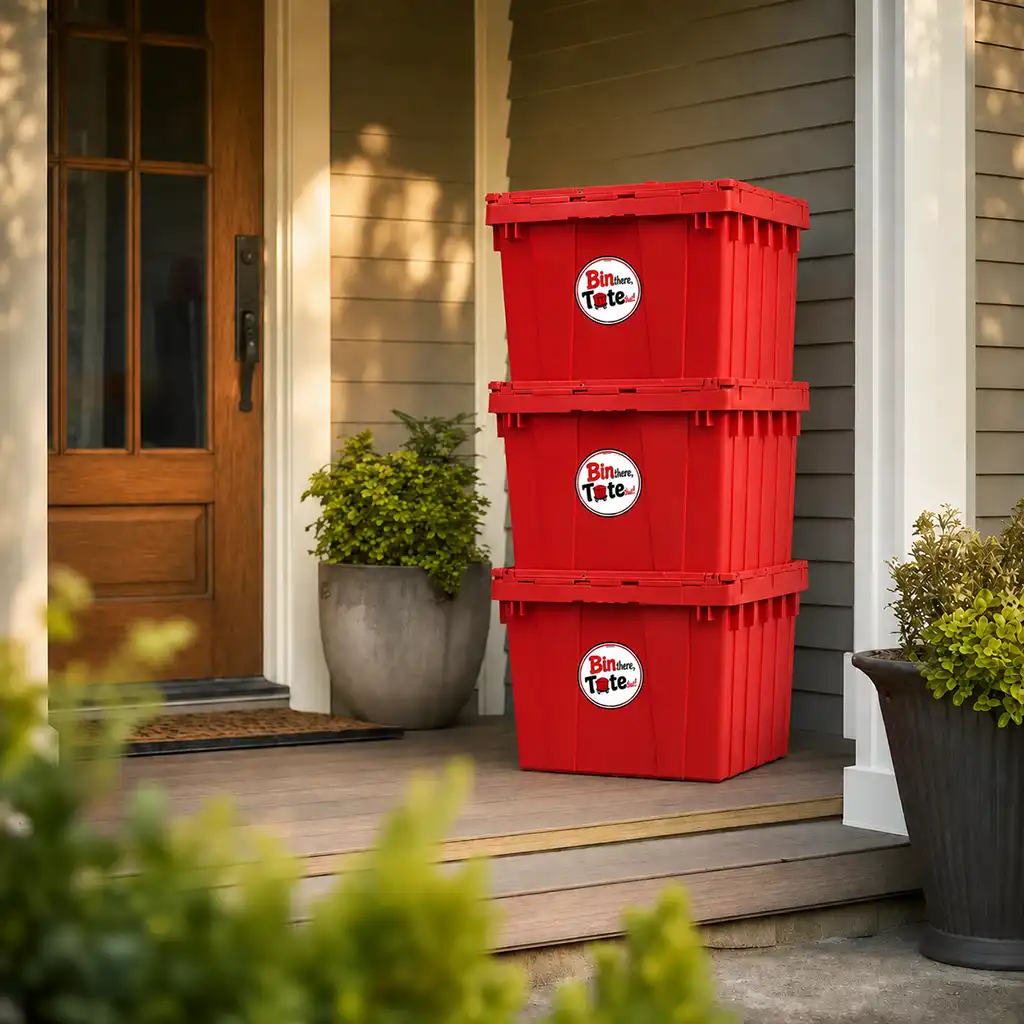
Dry, intact boxes are worth more given away: Buy Nothing groups, Craigslist free listings, and U-Haul's box exchange stations all connect them with the next mover in days. And renting plastic totes for your next move deletes the chore entirely, since Bin There, Tote That! collects the empties free from your new address.
The pile in the garage isn't going to leave on its own
Every move ends the same way: the beds are rebuilt, the kitchen half works, and somewhere there's a shoulder-high mountain of empty cardboard slowly claiming a parking spot. It feels like a someday problem. It isn't. Cardboard stored in a Portland garage through a wet season absorbs moisture, attracts pests looking for winter housing, and becomes steadily less recyclable and less givable the longer it sits.
You have three exits, and this guide covers all of them: recycle the pile under your local rules, pass the boxes to someone mid-move who needs them, or, for your next move, choose containers that never become a pile at all. The right answer is usually a mix of the first two, executed within a week of unpacking, while the boxes are still dry and worth something.
Portland curbside rules, straight from the source
On the Oregon side, cardboard goes in your blue recycling roll cart, with a few rules that matter. Per the city's official recycling guidelines: flatten boxes and cut them down so as much as possible fits inside the cart, and make sure everything is empty and dry before it goes in. Items should be loose, never bagged. Tape, labels, and staples are fine to leave on, but wax-coated cardboard and anything soiled with food or grease belongs in the garbage, not the recycling.
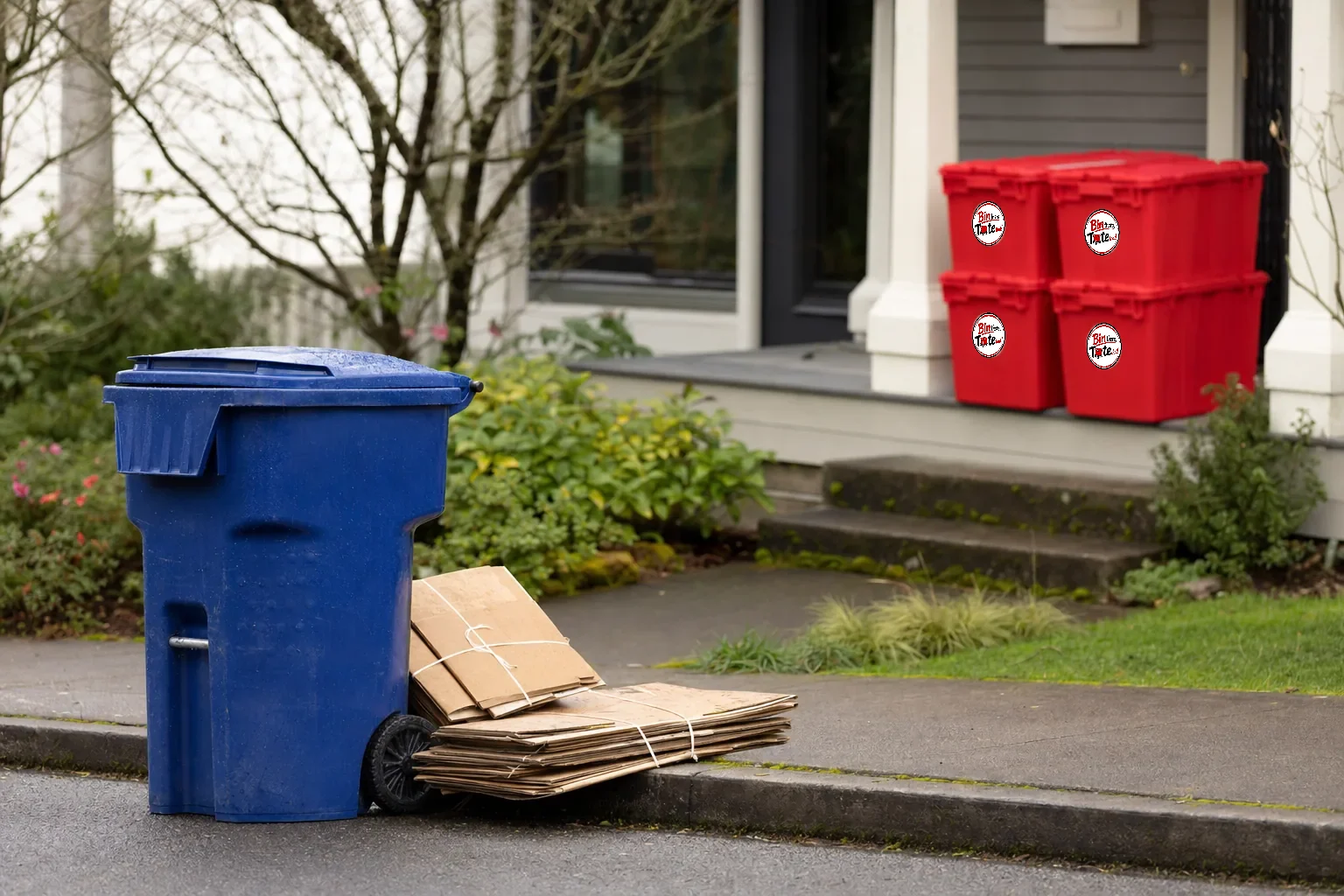
The after-move superpower is the overflow rule. When the cart is full, the city asks you to flatten the extra cardboard, tape it together into a single bundle no larger than three feet in any direction, and lean it against your blue cart on collection day, where the driver can lift it safely. For a normal household move, that usually means the entire pile clears in one or two pickup cycles without a transfer-station trip.
Clark County rules for the Washington side
North of the river, the fundamentals rhyme but the details come from Clark County Public Works: flatten all cardboard before it goes in your recycling container, keep everything clean, dry, and free of food or grease, and place items loose rather than bagged. Flattening isn't just etiquette; unflattened boxes strand air in your cart and can mean paying for capacity you're not actually using.
Because collection details vary by address and hauler in Clark County, the county points residents to its RecycleRight tool and app, where you enter your address and get your exact cart rules and pickup schedule. Two minutes there beats guessing, especially for questions like oversized loads after a move. When in doubt about a specific item, the county's Recycling A-Z directory settles it.
Better than recycling: hand them to the next mover
A dry, intact box has more value as a box than as pulp. Somebody within two miles of you is moving next weekend, and the giveaway channels connect you in a day or two.
Post the lot on your neighborhood Buy Nothing group or Craigslist's free section with a photo, the count, and "flattened, you haul." Full lots go faster than dribbles, so post everything at once. Facebook Marketplace at a token price works when you want a firm pickup commitment. Participating U-Haul stores also take gently used boxes at their Take a Box, Leave a Box stations for the next customer to grab free, as of July 2026, which pairs nicely with a truck return you were making anyway.
One courtesy that doubles your odds: state where the boxes were stored. "Dry garage, one move old" is exactly what a careful stranger wants to read. Small storefronts are a quieter channel too; shops that ship online sometimes welcome clean medium boxes, and asking at businesses you already visit costs nothing.
Every exit for the pile, compared
Match the route to how much cardboard you have and how fast it needs to disappear.
| Exit route | Effort | Cost | Best when |
|---|---|---|---|
| Curbside cart, over several pickups | Low, flatten and load | Included in service | Small to medium piles, no rush |
| Curbside plus a taped 3-foot bundle | Low | Included in Portland service | One-cycle clearance of a full move's boxes |
| Buy Nothing or Craigslist free | Medium, post and coordinate | Free | Boxes still dry and intact |
| U-Haul box exchange station | Medium, requires a drive | Free | You're passing a store anyway |
| Transfer station or drop-off | High, load and haul | Varies by facility | Huge piles or soggy, unrecyclable stock |
| Rented totes next time | None, collected from your door | In the flat package price | You never want this chore again |
The flatten-and-bundle method, step by step
Twenty minutes, a utility knife, and the pile becomes cart-ready.
- Empty every box completely. Packing paper comes out and gets recycled loose; foam and plastic film do not go in the cart.
- Slice the bottom tape and collapse each box flat. Leaving tape on is fine in both Portland and Clark County.
- Cut oversized boxes down so pieces actually fit in the cart with the lid closed.
- Fill the cart first, pieces loose and dry, nothing bagged.
- Bundle the Portland overflow: stack the extra flats, tape the stack into one bundle three feet or less in any direction, and lean it against the blue cart on pickup morning. On the Clark County side, check your address in RecycleRight before setting out extras.
- Store any waiting flats indoors. One rainy night turns recyclable cardboard into heavy compost.
A flattened pile is a chore. A scheduled one is gone.
The version of this chore that doesn't exist
Here's the quiet advantage nobody prices in when comparing boxes: rented totes make this entire article unnecessary. With Bin There, Tote That!, you unpack, restack the empty totes by the door, and we collect them free from your new address, anywhere in the Portland or Vancouver metro. No knife, no bundles, no cart math, no garage mountain. It's the last step of how tote rental works end to end, and customers routinely call it their favorite one. The whole arrangement runs $97 to $257 flat for two weeks, delivery included.
- The move already happened in cardboard
- Your boxes are dry enough to give away
- Curbside cycles can absorb it over a few weeks
- Your next move hasn't been packed yet
- Garage or bin space at the new place is tight
- You'd pay a modest flat rate to skip a chore forever
- Unpacking should end with an empty room, not a project
If some of those boxes are staying in the family for a future move, at least thin the herd first; our eco-friendly moving guide covers what's worth keeping. For the chapters before and after this one, browse the complete moving tips index.

Written by the Bin There, Tote That! team
We rent, deliver, wash, and pick up moving totes across the Portland and Vancouver metro every week, so the advice here comes from vans and doorsteps, not a content mill. Facts about competitors are checked at publication and date-stamped in the text.