Dishes survive a move when two things are true: plates are wrapped and loaded vertically on edge like records, and nothing inside the container can shift. Use plain packing paper instead of newspaper, stand glasses upright with stuffed cavities, nest bowls with paper between, and keep cast iron and appliances on the bottom layer, never above anything fragile.
Purge the pantry before wrapping a single jar, and set aside one last-in, first-out container with the kettle, two mugs, a pan, and dish soap so the first morning in the new place starts with coffee instead of digging.
Why the kitchen is where moves go wrong
Ask anyone who moves households for a living which room produces the breakage, and the answer is always the same. The kitchen holds most of a home's fragile items, most of its dense weight, and most of its odd shapes, all in one room that people save for last because it stays in use until the final morning. Plates crack, glasses chip, and a bottle of olive oil finds a way to open itself somewhere over the Banfield.
Almost none of that is bad luck. Dishes break for two predictable reasons: they were stacked so pressure concentrated on one piece, or they had room to move inside the container. Remove those two conditions and a full kitchen can cross the metro without a single casualty. This guide walks through the method, zone by zone.
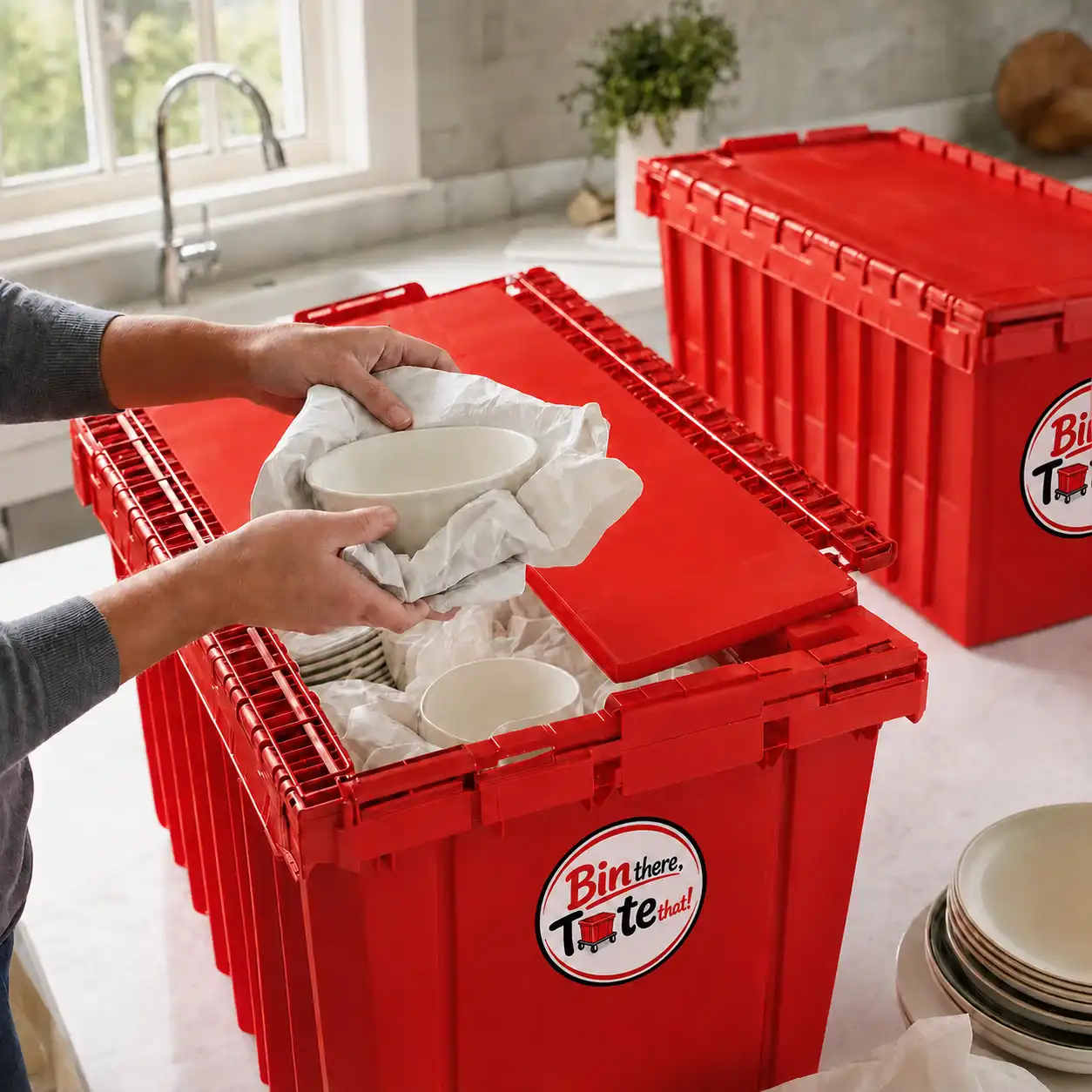
Plates go vertical, like records
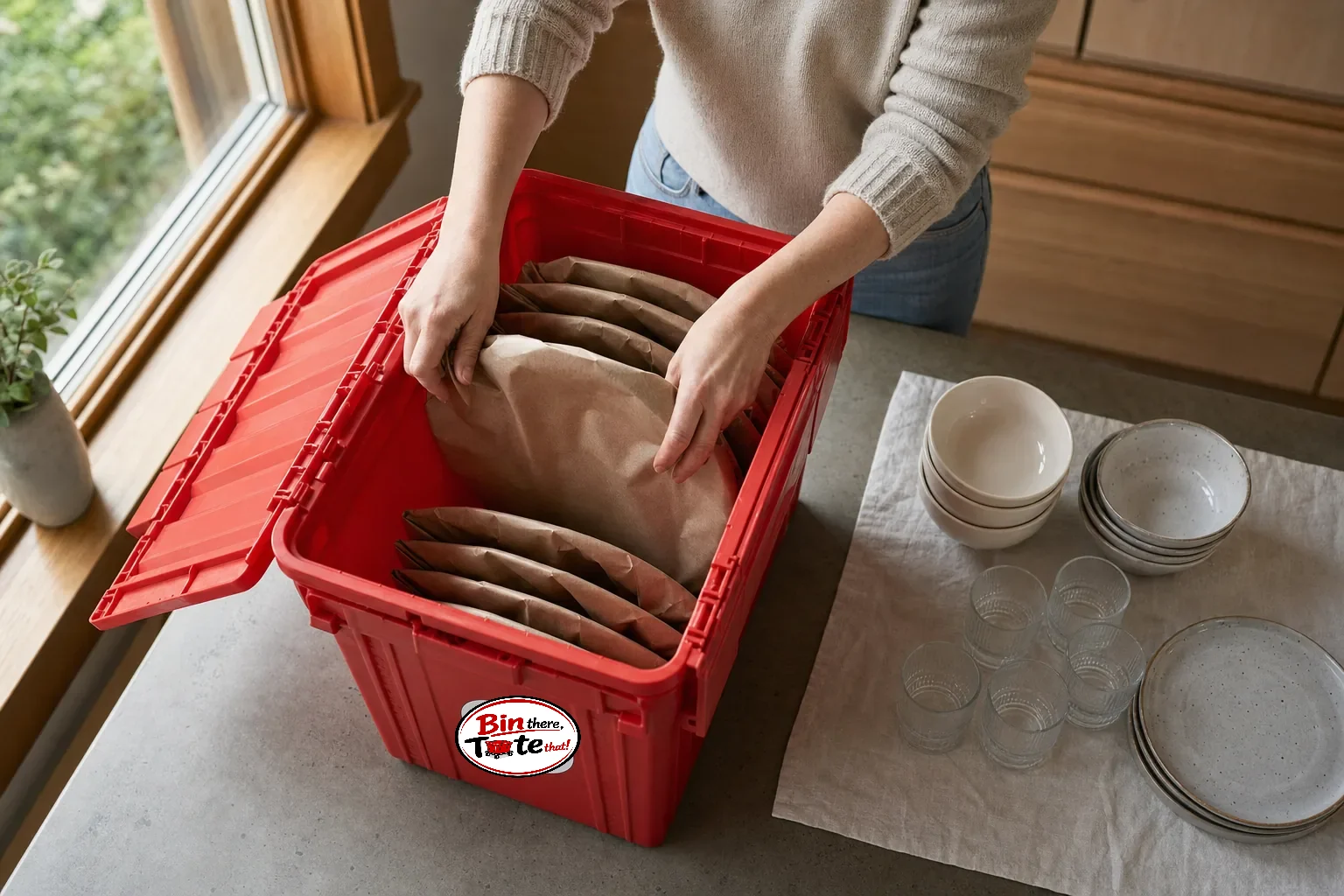
The single biggest upgrade an amateur packer can make: stop stacking plates flat. A flat stack puts the entire column's weight on the bottom plate, and one pothole turns that weight into a hammer. Pros load plates on edge, the way records sit in a crate. On edge, a plate is structurally at its strongest, and a jolt pushes the whole row sideways instead of driving plates into each other.
- Pad the floor of the container with a few inches of crumpled paper or a folded towel.
- Wrap each plate in two sheets of packing paper. Bundle three or four wrapped plates together with a final outer sheet.
- Stand the bundles on edge in a snug row, largest plates first.
- Fill every gap with crumpled paper until nothing shifts when you rock the container.
- Top with a paper cushion before closing. If the lid bulges, repack; pressure from above is how rims chip.
One material note: use plain packing paper or unprinted newsprint, not the Sunday paper. Newspaper ink transfers onto china and takes real scrubbing to remove, which means you unpack into a sink full of gray dishwater on your first night.
Glasses upright, bowls nested
Glasses travel upright, always. A glass on its side takes impact on its weakest axis, and stemware laid flat rarely survives a full truck ride. Wrap each glass, stuff the cavity with a loose ball of paper, and stand it rim-up. If you have cell dividers or cardboard collars from a wine shop, use them; a divider grid turns a container of glasses into a set of individually suspended pieces. No dividers? Roll each glass in enough paper that neighbors never touch, and pack the row tight.
Bowls are friendlier. Nest them in stacks of three or four with a sheet of paper between each, then wrap the whole nest and lay it in on edge or flat over a padded base. Mixing bowls, colanders, and anything metal can nest bare and act as armor for what sits inside them.
The whole kitchen, zone by zone
Every kitchen breaks down into the same handful of zones, and each zone has one right method and one classic mistake. Print this, tape it to a cabinet, and work zone by zone instead of drawer by random drawer.
| Kitchen zone | Method that works | The classic mistake |
|---|---|---|
| Everyday plates | Wrap, bundle, load on edge in snug rows | Flat stacks that crush the bottom plate |
| Glassware | Upright, paper-stuffed, dividers where possible | Laying glasses on their sides to save space |
| Cookware | Nest pots with paper between, lids wrapped separately | Loose lids rattling against their pots |
| Cast iron and appliances | Bottom layer only, cords coiled and tied | Heavy pieces packed above fragile ones |
| Knives | Blades sheathed in folded cardboard, taped, points one direction | Bare blades loose in a utensil pile |
| Pantry | Purge first, then upright sealed jars with padding | Moving open bags of flour, sugar, and cereal |
| Fridge and freezer | Eat down for two weeks, cooler for the last morning | Pretending the freezer will sort itself out |
Heavy low, and why the container matters
Layer discipline does as much work as wrapping. Cast iron, the stand mixer, the Dutch oven: these ride on the floor of the container, always. Mid-weight cookware goes above them, and anything fragile rides in its own container entirely, never sharing space with a skillet that outweighs it ten to one.
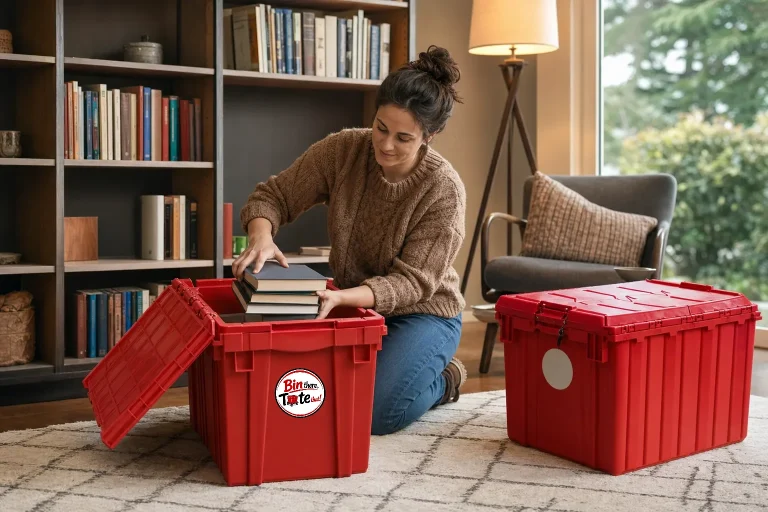
This is also where the container itself earns its keep. A kitchen packed properly is dense, and dense loads punish soft-walled boxes: seams bow, stacks lean, and the bottom carton in a pile absorbs everything above it. Rigid plastic totes hold their shape under a full column of dishware, stack squarely in the truck, and shrug off a Portland drizzle in the driveway. If you would rather not buy that sturdiness outright, we deliver it: a stack of cleaned totes lands at your door free anywhere in the Portland or Vancouver metro, and the two-week window is long enough to pack the kitchen at a sane pace. Details are on the how the delivery and pickup works page.
Wrap for impact. Pack for silence. Stack for gravity.
The pantry purge, and what earns a spot
The cheapest thing to move is the thing you do not move. Food is heavy, oddly shaped, and prone to leaking, so the pantry deserves a ruthless pass before a single jar gets wrapped. Unopened, in-date shelf food you will not eat can go to a local food pantry. Open packages, near-empty bottles, and the hot sauce collection from three apartments ago go in the bin without ceremony.
- The package is open, half-used, or past date
- It can leak, and it costs under ten dollars to replace
- You have not touched it since the last move
- It is sealed, sturdy, and part of how you actually cook
- Replacing it would cost more than carrying it
- It has a story a shelf price cannot cover
Two categories deserve a special ruling. Liquids that survived the purge, oils, vinegars, and the good maple syrup, travel upright in a bag inside their container, caps taped, because one loose cap can cost you a whole load of linens. And the junk drawer gets dumped into a single zip-top bag as-is, no sorting; it has been a mystery for years and can stay one until the new house assigns it a drawer.
The last-in, first-out box
Reserve one container, load it onto the truck last, and carry it into the new kitchen first. Inside: the kettle or coffee maker, two mugs, coffee or tea, one pan, one knife, a cutting board, dish soap, a sponge, and a roll of paper towels. Label it so nobody buries it. Tomorrow morning, while every other container waits patiently, this one makes breakfast possible, and the whole system for marking it lives in our guide to a labeling system that actually works.
Pack the kitchen this way and it stops being the room you dread. It becomes the first room you finish, wrapped tight, stacked low, and silent in the truck. For the rest of the house, room by room, start with the rest of our moving tips and work down the list.

Written by the Bin There, Tote That! team
We rent, deliver, wash, and pick up moving totes across the Portland and Vancouver metro every week, so the advice here comes from vans and doorsteps, not a content mill. Facts about competitors are checked at publication and date-stamped in the text.