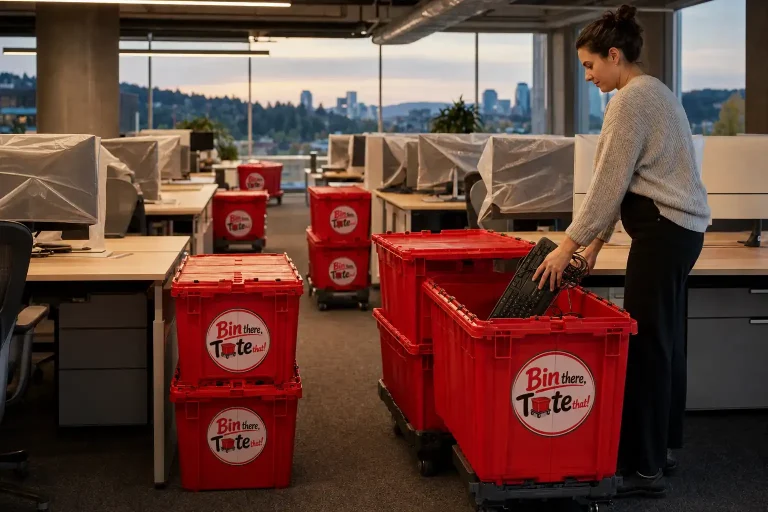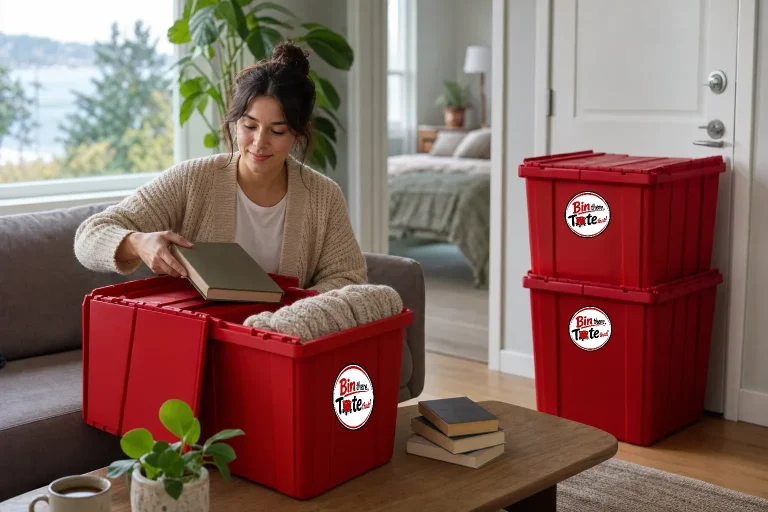
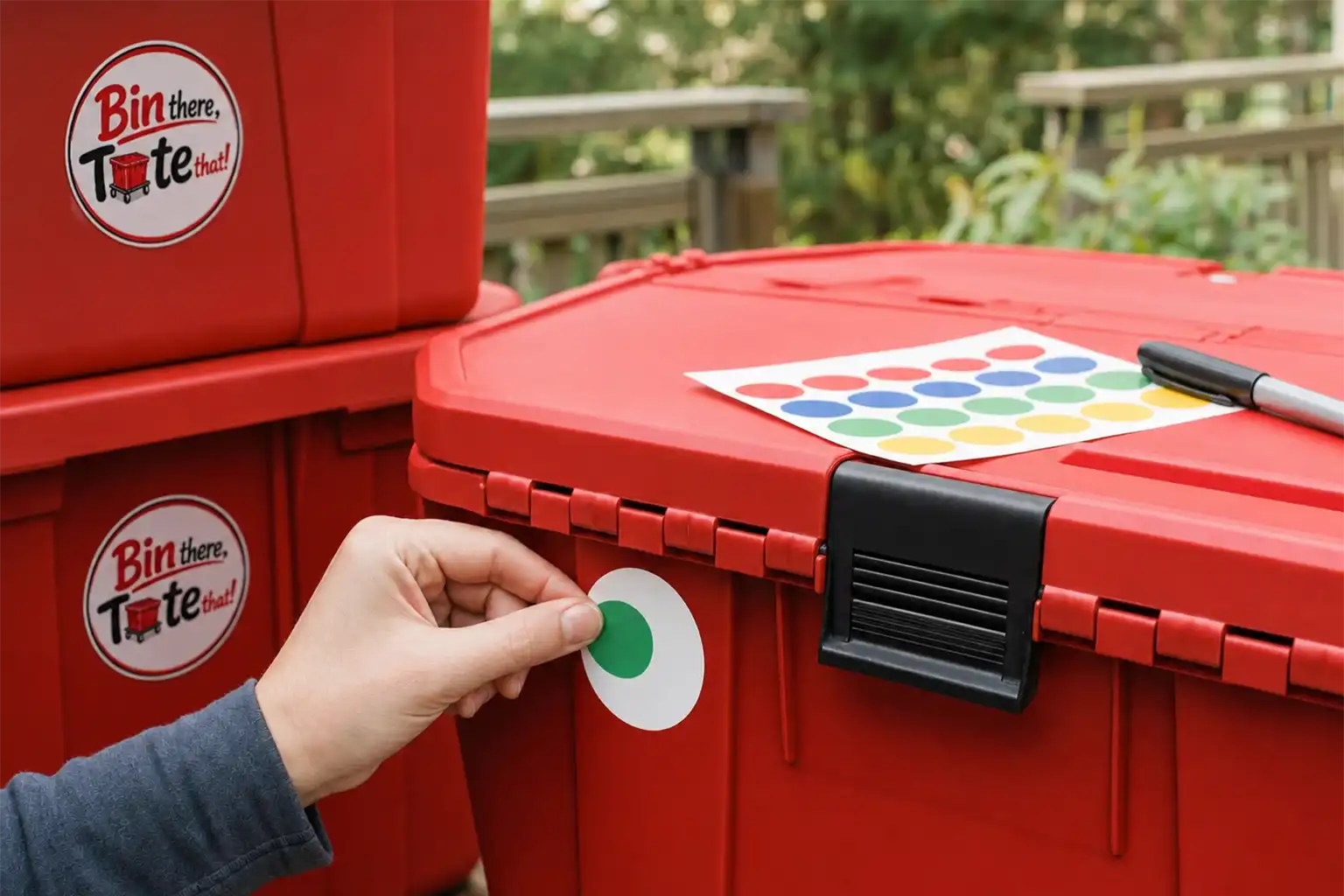
A moving labeling system works when every container answers three questions from across the room: which room it belongs in, when it gets opened, and what is inside. Write room, a priority number from 1 to 3, and a five-word contents headline on two sides of every container, add colored tape per room for distance routing, and never write MISC, because MISC containers stay sealed for months.
For a fleet of identical totes, add the number-and-manifest method: a numbered strip of painter's tape per tote and a one-line entry in a phone note, so any item can be found by search instead of excavation.
MISC is where belongings go to die
Walk into any new home a month after the move and there they are: three containers in a corner, each labeled MISC, each sealed like a time capsule. Nobody knows what is inside. Nobody wants to find out. MISC is not a label; it is a confession that the packing outran the thinking, and the contents of a MISC box have a way of staying missing until the next move, when they get relabeled MISC and carried again.
A labeling system exists to answer questions at two specific moments: on moving day, when someone holding a heavy container needs to know where it goes without asking, and during the following week, when you need the scissors and should not have to open six containers to find them. Every part of the system below serves one of those two moments. Anything that serves neither is decoration.
The three-field label: room, priority, headline
A working label carries exactly three pieces of information, written large enough to read from across a room. More fields go unread; fewer leave questions.
| Label field | The question it answers | Example |
|---|---|---|
| Room | Where does the carrier put this down? | KITCHEN |
| Priority number | When does it get opened? | 1 (first day), 2 (first week), 3 (whenever) |
| Contents headline | What is in here, in five words or fewer? | Pots, pans, oven mitts |
| All three together | Everything anyone will ever ask about this container | KITCHEN · 1 · everyday plates, mugs |
The contents headline is the field people skip and the one that pays longest. Not an inventory, a headline: the three or four things you would look for. Write it at packing time, while you still know what went in, because that knowledge has a shelf life of about a day.
Label for the person carrying it, not the person packing it.
Color per room, words for backup
On moving day, the room field does its work from a distance, and color travels farther than text. Assign each room a color of tape: blue for kitchen, green for bedroom, yellow for bath, whatever the hardware store rack offers. A strip of colored tape on two sides of every container, plus a matching strip on the door frame of the destination room, and anyone helping can route containers without learning your handwriting.
Two provisos keep the color system honest. Always write the room name too, since colors mean nothing to the friend who arrives at noon, and roughly one in twelve men cannot reliably tell some colors apart. And label the sides, never only the lid, because lids vanish from view the moment containers stack.
The number-and-manifest method for totes
Identical containers need one more field. A stack of uniform rented totes is a beautiful thing on a hand truck and a lineup of suspects in the new living room, so give every tote a number and keep a manifest. The method: number a strip of painter's tape on each tote as you seal it, then record one line per number in a phone note. Tote 14: KITCHEN 2, baking gear, cookbooks. The whole ritual costs sixty seconds per container, done while the lid is closing anyway.
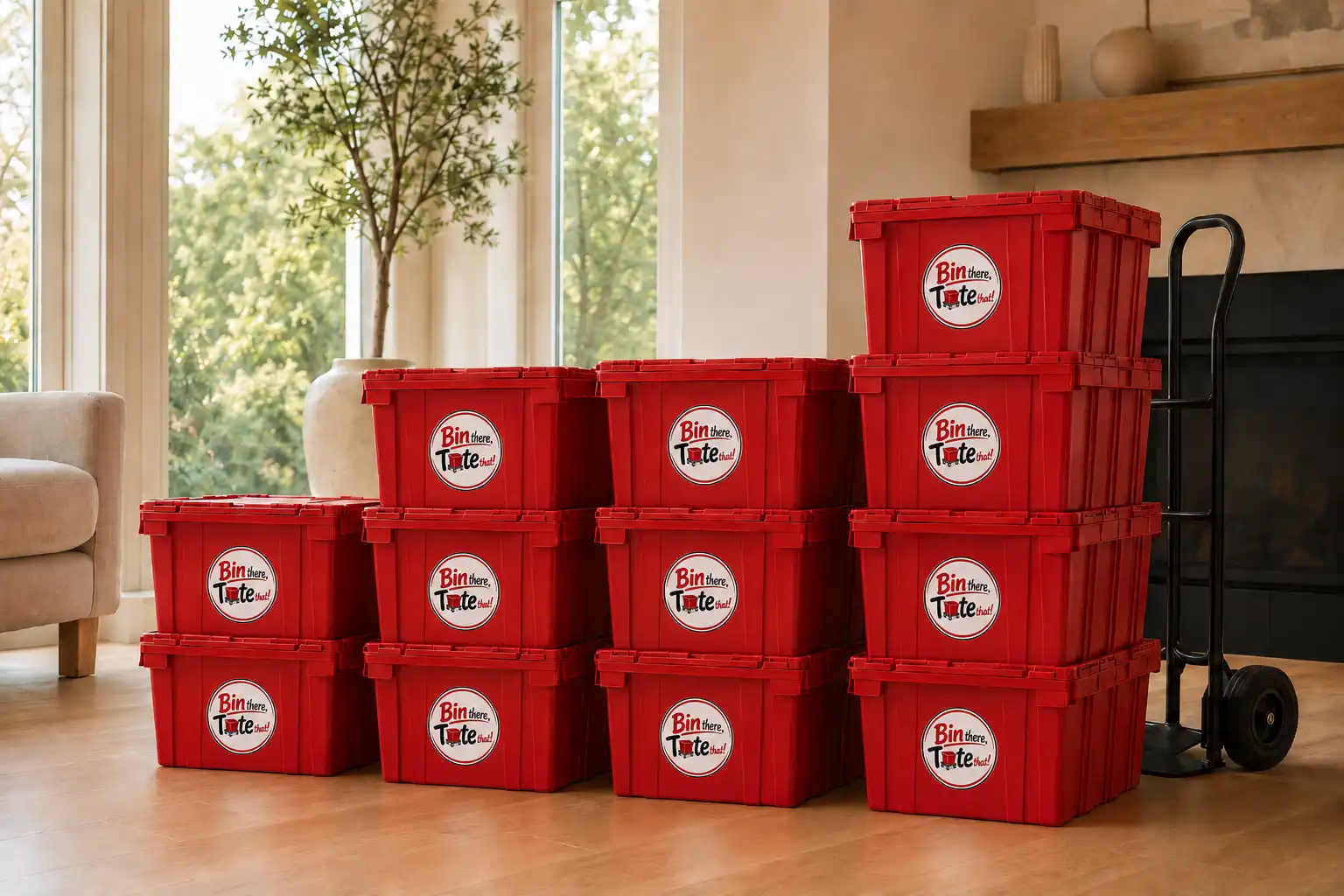
The payoff arrives all week long. Need the cheese grater? Search the note, find tote 14, walk straight to it. The manifest also doubles as a count: if 25 totes left the old place, 25 arrive, and you know instantly rather than eventually. This works especially well with our packages, since the fleet comes in known quantities: the 25-tote Essential Move at $127 or the 50-tote Standard Move at $197 give you a numbered range before you start, delivery and pickup are free on both sides of the Portland and Vancouver metro, and numbered tape peels away before we collect the empties. The rental flow, from drop-off to pickup, is on the the drop-off-to-collection rental flow page.
Priority numbers, and the open-first tote
The priority field is a promise to your future self, so define the numbers before packing starts and hold the line.
Priority 1 means the household stops without it today: everyday dishes, the coffee setup, chargers, the shower curtain. A few containers per room at most; if a third of the move is priority 1, the system has failed. Priority 2 is the first week: most clothes, most kitchen depth, the desk. Priority 3 can wait a month without anyone noticing: books, decor, off-season everything, the garage.
The system extends past containers, because half a household never enters one. Furniture gets a tape tag naming its destination room; disassembled pieces get their tag on the largest part, with the hardware bag taped beside it. Lamps, mirrors, and wall art wear their room tag on the wrapping. If it will be carried, it gets a label; the carrier should never have to ask.
Above them all sits one container that outranks the numbers: the open-first tote. It carries the box cutter, scissors, tape, trash bags, paper towels, a phone charger, and the manifest's paper twin if you keep one. It loads last, rides where you can reach it, and gets opened before anything else, because it contains the tools for opening everything else.
Set the whole system up in twenty minutes
- Buy the kit: painter's tape in four or five colors, two fat markers, and nothing else. Fancy printed label sets solve a problem nobody has.
- Assign colors to rooms and write the key inside a kitchen cabinet at the old place and on your phone.
- Define the three priorities in one sentence each, so every packer in the house applies them the same way.
- Start the manifest note on your phone, one line per numbered container, and share it with whoever you live with.
- Label as you seal, never later. A container labeled from memory the next morning is a MISC box with better handwriting.
Color-code or number-and-manifest: match the system to the move
Both halves of the system work alone; the question is how much of each your move needs.
- The move is small, a studio or one-bedroom
- You are packing and unpacking within a few days
- Helpers will do most of the carrying and just need routes
- You are filling 25 or more identical containers
- Unpacking will stretch across weeks, not days
- You want a count that proves everything arrived
A smaller place can run the lean version of all this; our walkthrough on packing a one-bedroom apartment shows the system at that scale. Labeling is one line item on a longer countdown, laid out week by week in the full moving checklist, and the rest of the packing craft lives in all our moving how-tos.

Written by the Bin There, Tote That! team
We rent, deliver, wash, and pick up moving totes across the Portland and Vancouver metro every week, so the advice here comes from vans and doorsteps, not a content mill. Facts about competitors are checked at publication and date-stamped in the text.