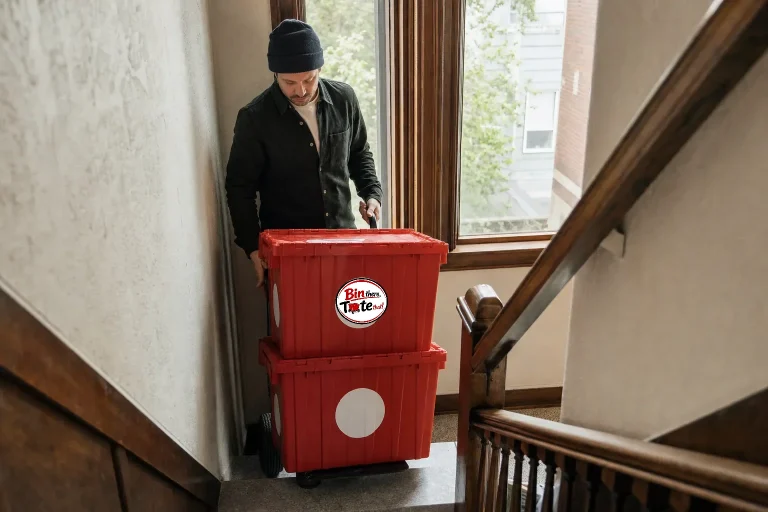
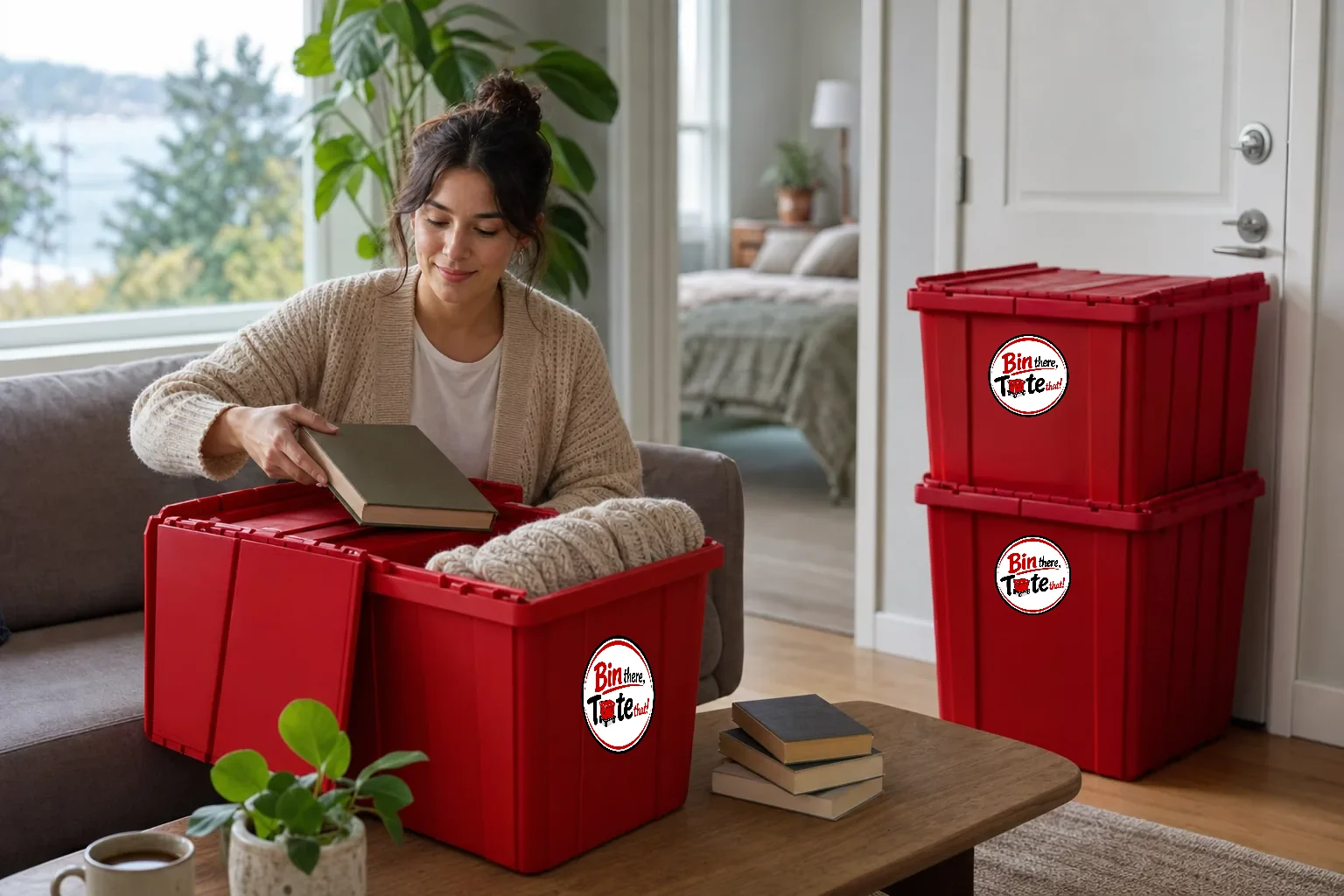
Packing a one-bedroom apartment takes most people 20 to 30 focused hours and fills 24 to 32 medium containers, with the kitchen alone claiming a quarter of both. The workable plan is two weekends: purge and pack the rarely used stuff on the first, finish the kitchen and clothes on the second, with one container per weeknight in between.
Supply-wise you need about 25 medium containers, 5 to 10 pounds of packing paper, a marker, and zip-top bags for hardware. That container count is what the Essential Move tote package (25 totes, $127, delivered and collected free across the Portland metro) was sized for.
How long does packing a one-bedroom actually take?
Plan on 20 to 30 focused hours. Not a weekend. Two weekends, or ten weeknight evenings, or some blend of the two. Almost everyone who has packed a one-bedroom before will tell you the same thing: whatever number you first wrote down, the real one was close to double.
The reason is that packing time isn't wrapping time. Wrapping a plate takes fifteen seconds. Deciding whether you still want the plate, finding its siblings in three cabinets, and figuring out which container it rides in takes minutes. A one-bedroom holds somewhere between two and three thousand individual objects, and every one of them demands a small verdict. That's where the hours go, and it's why the boxes you pack on day one take three times as long as the boxes you pack on day six, when your standards have healthily collapsed.
Packing runs on decisions, not tape. Budget for the decisions.
Room-by-room: hours and containers
These ranges assume a normally furnished one-bedroom and a medium container in the 15-to-17-gallon class. Hoarders of books or kitchen gadgets should round up without shame.
| Room | Realistic hours | Containers |
|---|---|---|
| Kitchen | 6 to 8 | 8 to 10 |
| Bedroom and closet | 4 to 5 | 6 to 8 |
| Living room | 3 to 5 | 5 to 7 |
| Bathroom and linens | 1 to 2 | 2 to 3 |
| Desk, entry, misc. | 2 to 3 | 3 to 4 |
| Total | 16 to 23, plus sorting and donation runs | 24 to 32 |
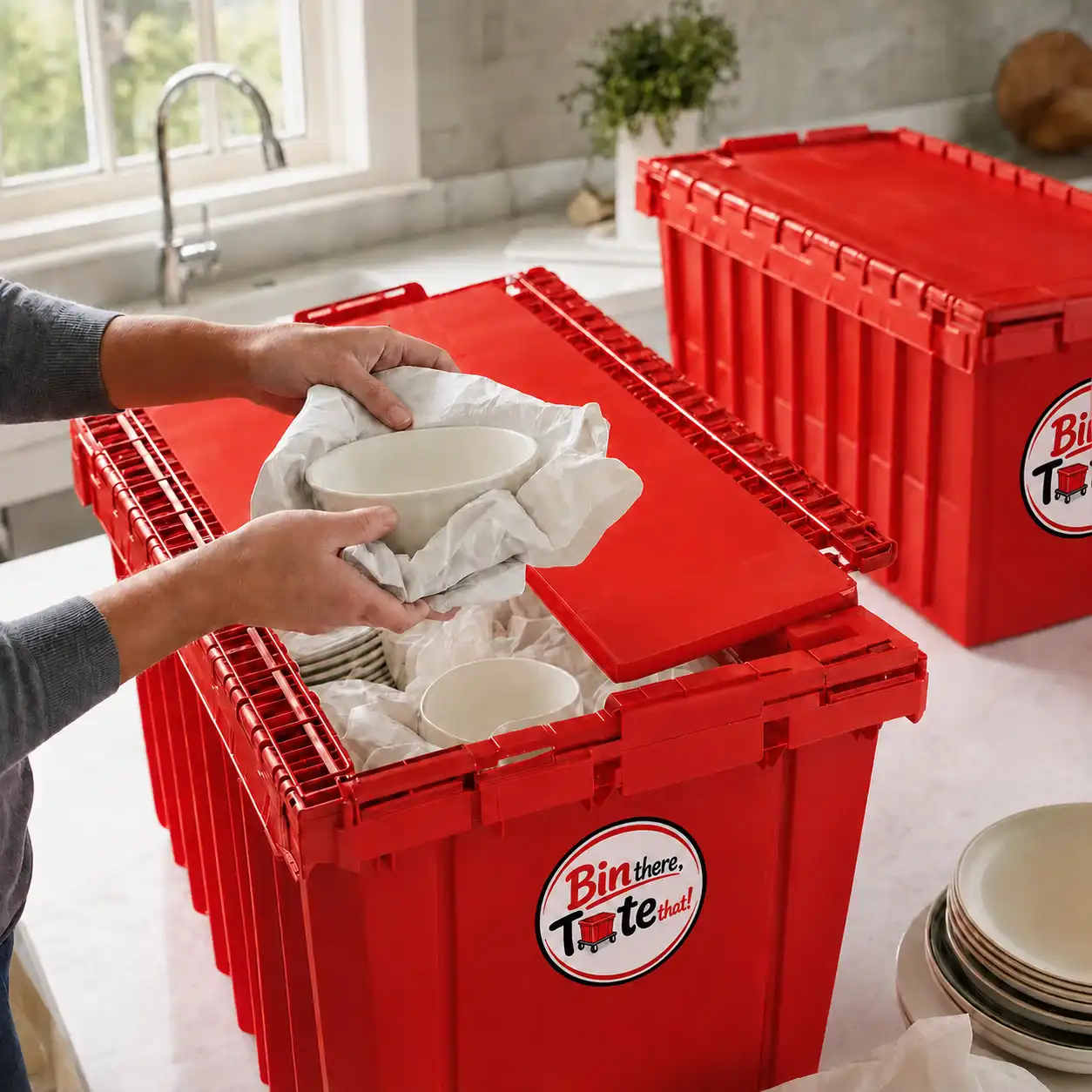
Notice the kitchen. It's the smallest room and the biggest line item, because nearly everything in it is breakable, oddly shaped, or both. Start there, always, while your patience is still intact.
The supply list, complete
A one-bedroom needs less gear than people buy. Here's the whole list.
- About 25 medium containers. The math above lands most one-bedrooms between 24 and 32, and 25 covers it once you've purged. This is exactly what our Essential Move package holds: 25 totes for $127, dropped at your door with a hand truck and collected from the new place two weeks later. If you'd rather see all four package sizes, the flat-rate breakdown takes a minute to read.
- Packing paper, 5 to 10 pounds. Skip bubble wrap for everything except screens and true fragiles. Paper is cheaper, packs tighter, and doubles as void fill.
- A fat marker and painter's tape for labeling, even on totes. Tape peels off clean.
- Zip-top bags for furniture hardware, cords, and the drawer of mystery cables.
- Trash bags and a donation staging corner. A third of what you own shouldn't make the trip.
If you're using cardboard instead of totes, add tape, a tape gun, and an evening of box assembly to the schedule. Neither approach is wrong; one just arrives pre-built.
The two-weekend plan
Spreading the work across two weekends beats one heroic marathon for a simple reason: the first weekend surfaces every problem while there's still time to fix it. Here's the sequence.
- Weekend one, Saturday: purge first, pack second. Closet, bookshelves, and every storage zone you haven't opened since January. Donation run before dinner.
- Weekend one, Sunday: decor, books, off-season clothes, and the kitchen gear you won't touch for two weeks. The waffle iron goes in. Label as you seal.
- Weeknights between: one container per evening. Desk, bathroom cabinet, linen shelf. Twenty minutes each, no ceremony.
- Weekend two, Saturday: the rest of the kitchen except one pan, two plates, two mugs. Remaining clothes except a week's worth. This is the long day.
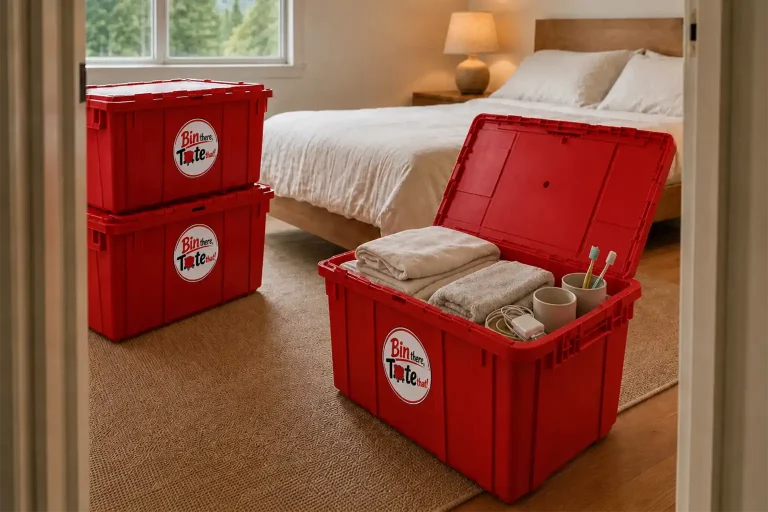
- Weekend two, Sunday: everything left, plus a clearly marked open-first container: sheets, towels, toiletries, chargers, coffee. Our guide to the first-night essentials box covers what goes in it.
Where one-bedroom packs go sideways
Five failure modes account for most of the misery, and all five are avoidable.
Saving the kitchen for last. It's the hardest room, and last-minute energy is the worst energy. People who pack the kitchen on moving-day morning end up with a laundry basket of loose spatulas riding shotgun.
The "misc" spiral. One junk container is a mercy. Four containers labeled misc means unpacking becomes an archaeology project. If a container needs the word misc, at least add the room.
Overpacking big containers with heavy things. Books go in small loads or share space with pillows. A container you can't lift isn't packed; it's stuck.
No open-first container. Your first night shouldn't involve opening nine containers hunting for a phone charger and a towel.
Skipping the purge. Moving things you don't want costs the same sweat as moving things you do. The donation run is the highest-paid hour of the whole project.
What never goes in a sealed container
A short list of things rides with you, in a bag or a single clearly marked tote that stays in your car, and the discipline here matters more in a small move than a big one, because a one-bedroom's containers all look alike by Sunday afternoon.
Documents: passport, lease, birth certificate, checkbook, and the folder with your deposit photos and move paperwork. Nothing ruins week one at a new address like discovering your signed lease is sealed somewhere in a stack of 25 identical containers.
Medications and glasses. Every dose you'll need for a week, plus the backup pair. Pharmacies transfer prescriptions, but not at 9 p.m. on moving day.
Electronics you'd cry about: laptop, tablet, hard drives. Not because containers are unsafe, but because these are the items you want findable, chargeable, and never at the bottom of a stack.
Small valuables. Jewelry, cash, sentimental irreplaceables. Insurance replaces value; it doesn't replace your grandmother's ring. Keep the category small and keep it on your person.
Both sets of keys, old place and new, plus any fobs and mailbox keys, in a zippered pocket you can name without thinking. More move-day hours have been lost to a packed key than to any staircase.
Everything on this list fits in one small bag. Load it first, into the car, before the first container leaves the apartment, and the worst packing mistakes become impossible.
Studio or one-bedroom: where's the line?
Container counts draw the line better than floor plans do. A true studio with restrained furniture and a normal kitchen usually packs into 10 to 14 containers. A one-bedroom with a real closet and a real kitchen almost never does, whatever its owner believes on day one.
- Your kitchen fits in four containers, honestly counted
- One closet holds every piece of clothing you own
- You've moved within the last two years and purged then
- There's a coat closet, a linen shelf, and under-bed storage in play
- You cook, and the cabinet inventory proves it
- Five years of life have accumulated since the last move
- Your bookshelf count is plural
The packing is only half the move, of course. If your building involves stairs, an elevator, or Portland street parking, our guide to apartment moving logistics handles the vertical half, the master moving checklist keeps the whole eight weeks on rails, and the rest of the moving tips catalog is there when the next question comes up.

Written by the Bin There, Tote That! team
We rent, deliver, wash, and pick up moving totes across the Portland and Vancouver metro every week, so the advice here comes from vans and doorsteps, not a content mill. Facts about competitors are checked at publication and date-stamped in the text.