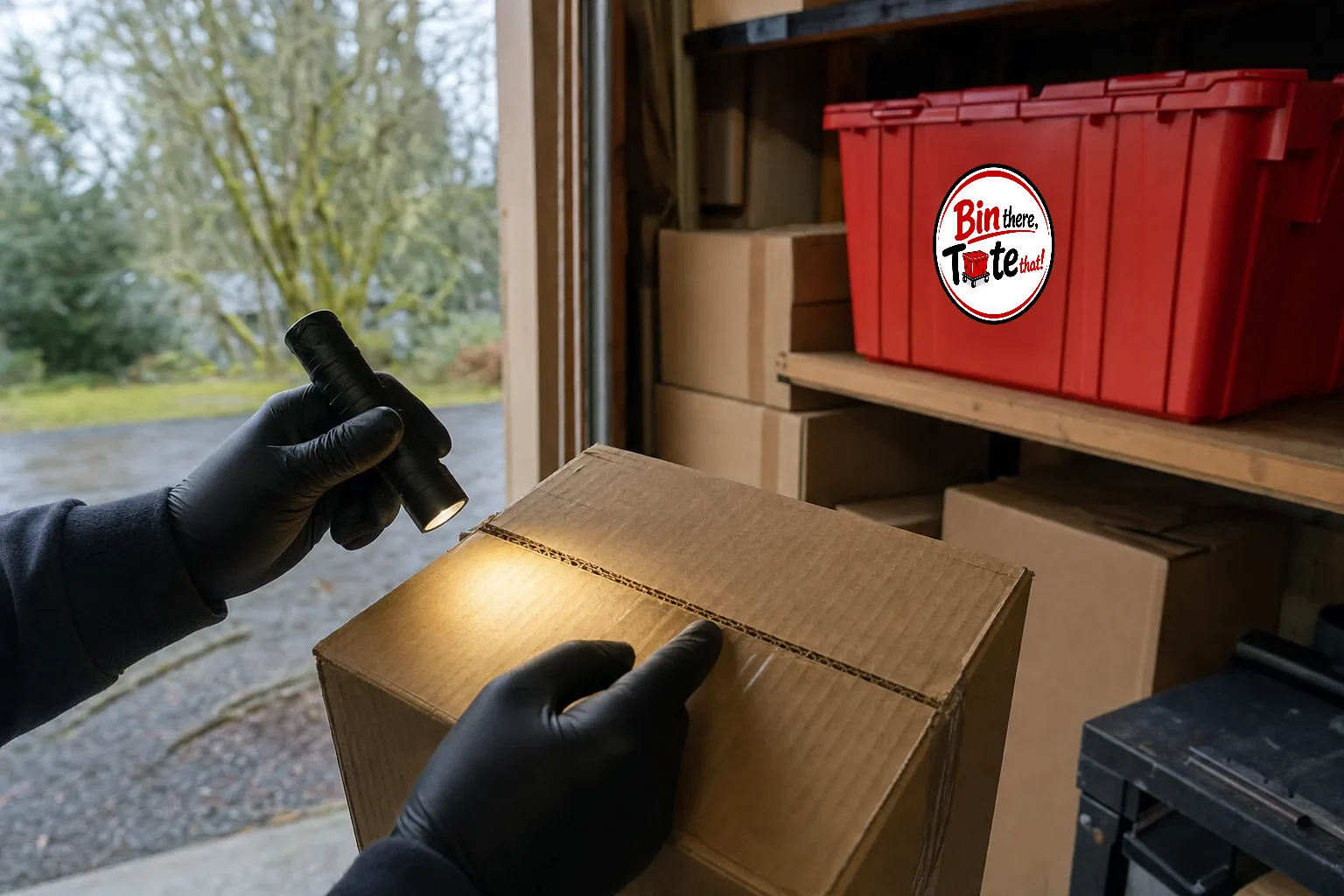
Used moving boxes carry a small but real bed bug risk because corrugated cardboard's glued seams and interior flutes are ideal harborage, and a box's history is invisible. The EPA lists the tell-tale signs, rusty stains, dark excrement spots, shed skins, and tiny pale eggs, and a ninety-second flashlight inspection of seams and folds, done outdoors, catches them. Boxes from store backrooms are low risk; anonymous curbside piles are the ones to walk past.
Sealed plastic sidesteps the whole question: smooth walls, no seams to harbor anything, and a latching lid. Bin There, Tote That! sanitizes every tote between rentals and delivers them free across Portland and Vancouver, $97 to $257 flat for two weeks.
Why secondhand cardboard makes such a good taxi
Bed bugs don't fly to a new home; they ride. They spend daylight wedged into tight, dark crevices near where people rest, and they travel when the object they're hiding in travels. Used cardboard is close to purpose-built for this. The glued seams, the folded flaps, and the corrugated flutes running through every wall offer exactly the kind of narrow, sheltered gaps the insects seek out, and a box that spent a month in an infested bedroom or building basement can carry passengers, eggs included, to wherever it goes next.
None of this means every free box is crawling. The overwhelming majority are just boxes. But moving is the single moment when you import dozens of secondhand objects into your home at once, at speed, without inspection, and that's a bet worth understanding before you make it. The U.S. EPA maintains a plain-language reference on the insect at its bed bugs resource hub, including the useful calming fact that while bed bugs are considered a public health pest, they are not known to transmit disease.
Retail supply chains, by contrast, keep cardboard moving too fast and too far from anywhere people sleep for hitchhikers to be likely, which is why the risk ladder below starts where it starts. Where a box has spent its nights matters more than anything printed on it.
Not all free boxes carry the same risk
Where a box has lived matters more than how it looks. A rough risk ladder, from easiest to trust to hardest:
| Box source | Relative risk | Why | Sensible precaution |
|---|---|---|---|
| Store backroom cardboard | Lowest | Days old, held stock, never lived near beds | A quick visual check is plenty |
| New retail boxes | Effectively none | Never used, straight off the pallet | None needed |
| A friend's known, dry stash | Low | You know the home and the storage story | Check seams before loading |
| Online giveaway lots | Moderate, unknowable | History invisible; could be one move old or ten | Full inspection outdoors before they enter |
| Curbside and dumpster-adjacent piles | Highest | Unknown origin, outdoor exposure, sometimes discarded during infestations | Honestly, leave them |
| Washed rental totes | Sidesteps the question | Smooth sealed plastic, cleaned between users | None; that's the point of them |
How to inspect a used box in ninety seconds
Do this outdoors or in a garage, before the boxes cross your threshold, with a phone flashlight in hand.
- Open every flap fully and look along the glued seams and fold lines, the tightest hiding spots on the box.
- Rake the light at a low angle across corners and the channels where flutes are exposed at cut edges.
- Know the four signs described on the EPA's how to find bed bugs page: rusty or reddish stains, pinpoint dark spots of excrement, pale shed skins, and tiny whitish eggs about the size of a pinhead.
- Check the underside last. Bottom seams collect everything, and they're the surface nobody looks at.
- One suspicious box condemns the lot. These insects move between adjacent boxes in storage, so don't cherry-pick survivors from a stack showing any sign.
If free boxes are the plan anyway, run this protocol
Budget is budget, and free cardboard will keep being part of real moves. You can cut the risk to nearly nothing with a little discipline.
Source high on the ladder: store backrooms first, known friends second, anonymous lots only after inspection. Keep incoming boxes staged in the garage or on a porch, not in bedrooms, and pack from that staging area. Prefer boxes for hard goods, books, kitchenware, tools, and keep bedding, mattresses, and clothing in sealed plastic: bags or lidded bins, tied or latched shut. After the move, get the cardboard out of the house within days rather than months; a box pile against a bedroom wall is exactly the shelter the insect is looking for. Our box disposal guide for Portland and Clark County makes that exit quick.
And weigh the whole bargain honestly. Free boxes carry costs beyond this one, from sourcing time to failure rates, which we tallied in the real cost of free moving boxes.
Arrival-day habits matter as much as sourcing. Unpack suspect boxes promptly instead of storing them full, run any bedding or clothing that rode in questionable cardboard through a hot dryer cycle, the standard heat treatment for soft goods, and break down the empties the same week they're emptied.
Free boxes have a history. You're not told which.
Keep it in proportion
Two things are true at once. First: the risk per individual box is genuinely small, most free cardboard is fine, and nobody should treat a produce box like a biohazard. Second: the downside is wildly asymmetric. A missed hitchhiker doesn't cost you a box, it costs weeks of laundry protocols, professional treatment, and sleep. When a cheap risk carries an expensive tail, you don't panic about it; you spend the ninety seconds, source smart, and move on.
What you shouldn't do is trust internet infestation statistics, including any we might have quoted. Reliable city-by-city numbers barely exist, so we've stated none. The seams-and-flutes logic above doesn't need a statistic to be worth ninety seconds.
The container that opts out of the question
Every worry in this article attaches to one material. Smooth, rigid plastic offers no flutes, no glued seams, and no porous surface to grip, and a latched lid closes the interior off entirely. That's why sealed totes are the standard answer for anyone who wants the used-container savings without the used-container history.
Bin There, Tote That! washes and sanitizes every tote between rentals, then delivers them free across the Portland and Vancouver metro with a hand truck included, on flat two-week rates from $97 to $257. You get containers with a known, clean provenance, and you never store them afterward, because we collect them from your new address. Questions about a specific situation? Call or text and ask; we're happy to talk it through.
Used cardboard or sealed plastic?
Both are legitimate. Pick with your eyes open.
- It comes from store backrooms or homes you know
- You'll inspect each box outdoors before it enters
- Soft goods are riding in sealed bags regardless
- Your boxes would come from anonymous lots or curbs
- You're moving into or out of a multi-unit building
- Bedding and clothing make up much of the load
- Known-clean containers are worth a flat $97
Whichever you choose, the sourcing map in our guide to finding boxes around Portland shows where the low-risk cardboard lives. The rest of the packing wisdom waits in the moving tips hub.

Written by the Bin There, Tote That! team
We rent, deliver, wash, and pick up moving totes across the Portland and Vancouver metro every week, so the advice here comes from vans and doorsteps, not a content mill. Facts about competitors are checked at publication and date-stamped in the text.