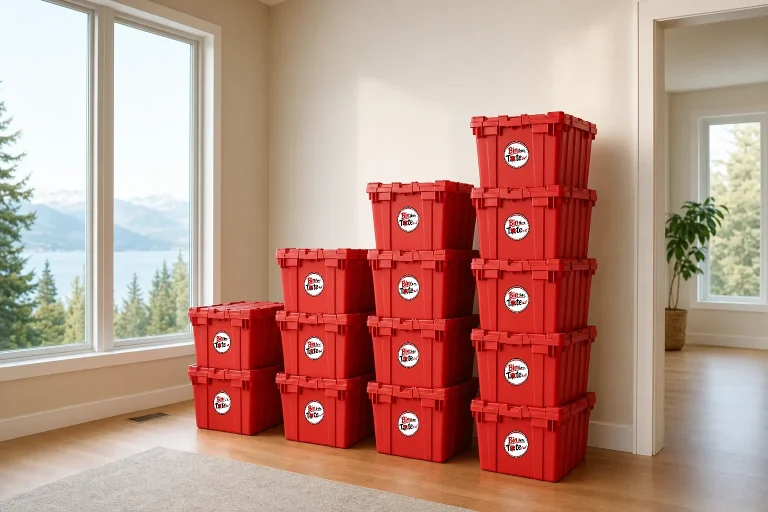
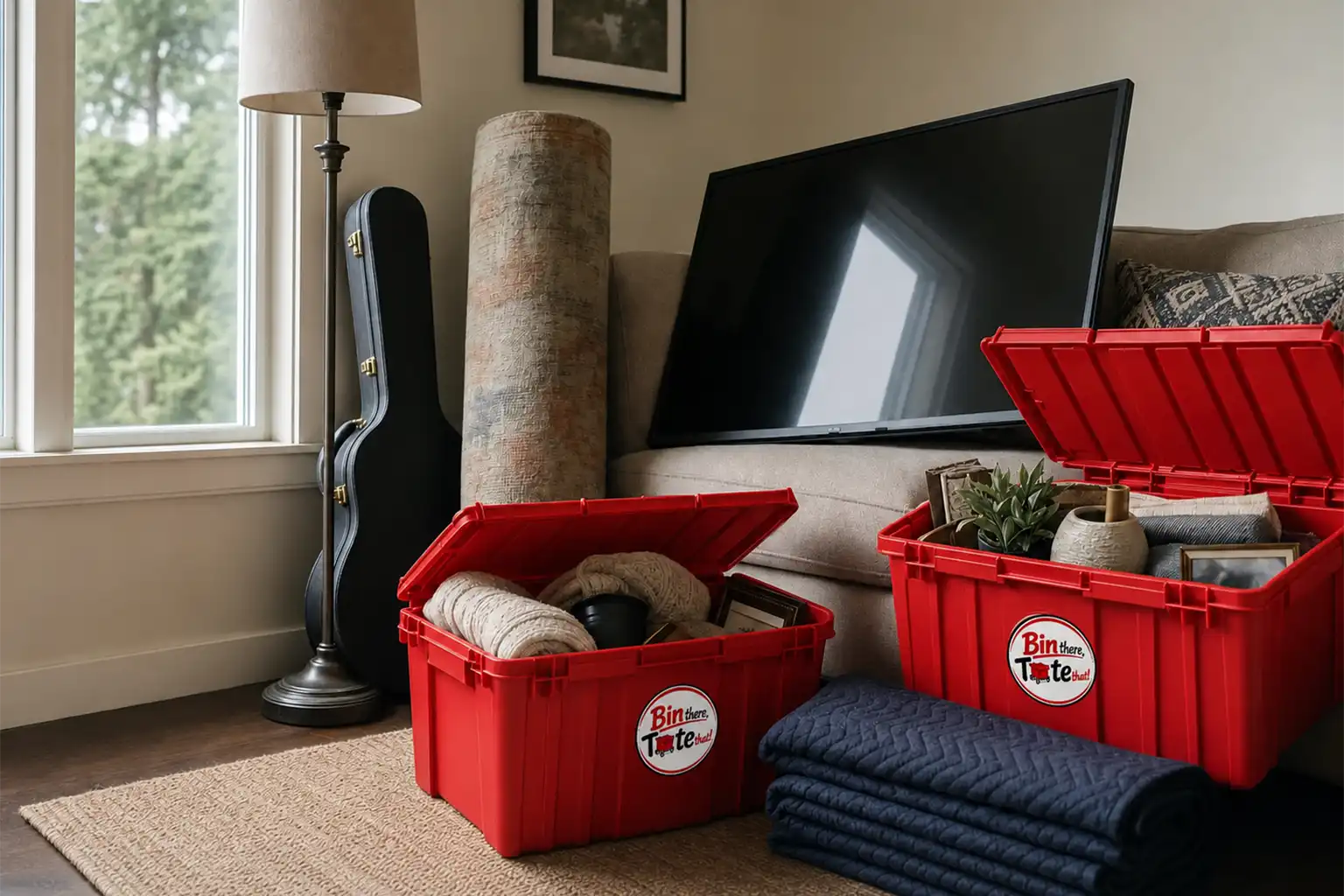
A 27-gallon-class rental tote handles roughly nine-tenths of a household by volume: kitchens, clothing, books, linens, tools, toys, and office contents all pack faster and ride safer in a rigid stackable crate. What totes do not handle are the six usual suspects: hanging clothes, TVs, lamps, live plants, rugs, and mirrors, and no fixed-size container does.
The working answer is a split strategy. Rent totes for the bulk (Bin There, Tote That! packages run $97 to $257, delivered free across Portland and Vancouver with a hand truck included, as of July 2026), then cover the exceptions with moving blankets, the TV's original box, one wardrobe box for the garments that truly cannot fold, and your own back seat for the plants.
What a rental tote actually holds
Every tote objection starts the same way: "but what about my..." followed by a lamp, a television, or a closet full of hanging shirts. Fair question, and this post answers it item by item. First, though, the baseline. A rental moving tote sits in the 27-gallon class, which in household terms means the contents of two packed kitchen cabinets, a deep dresser drawer plus a stack of sweaters, or a shelf and a half of books. Exact interior dimensions vary by fleet, so if a specific item is borderline, ask when you book.
That capacity covers the overwhelming bulk of any home: dishes, pantry, clothing, linens, toys, tools, bathroom shelves, office contents, media. Call it nine-tenths of the average household by volume. This post is about the other tenth.
The stuff that will never go in a tote
Six categories come up in nearly every move, and no container with a fixed footprint handles them: hanging clothes you refuse to fold, televisions, floor and table lamps, live plants, rugs, and mirrors or framed art. A rigid tote is the wrong shape for all six, and pretending otherwise breaks things.
The good news is that none of the six actually needs a tote. Each has a standard fix that professional movers have used for decades, usually involving a moving blanket, a factory box, or the back seat of your own car. The table below pairs each item with the mistake people make and the fix that works.
Item by item: the mistake and the fix
| Item | The common mistake | What actually works |
|---|---|---|
| Hanging clothes | Draping them loose over the back seat, arriving wrinkled and slid to the floor | Fold the everyday items into totes; use one wardrobe box only for the garments that truly cannot crease |
| Televisions | Flat on its back under other cargo, which is how panels crack | Original box if you kept it; otherwise blanket-wrap and ride it upright between mattresses |
| Lamps | Shade, base, and bulb traveling assembled as one fragile unit | Separate them: bases wrapped in blankets, shades nested in a light tote of their own, bulbs out |
| Live plants | Sealed into any closed container, where they cook | Open trays in your own car, last thing loaded, first thing out |
| Rugs | Folded into squares that crease the backing | Rolled tight, tied at both ends, loaded standing up along the truck wall |
| Mirrors and framed art | Slid loose between furniture and hoped for | Corner protection, blanket wrap, and a vertical ride; mirror cartons for the biggest pieces |
A pattern runs through that whole table: the failures come from treating an odd item like a normal one, and the fixes come from treating it like itself. Forcing a lampshade into a tote until the lid bows does not just risk the shade; a bowed lid breaks the flat stacking that makes the rest of the load stable. The exceptions get their own handling precisely so the other nine-tenths of the move can stay boring, and boring is what you want a truck full of your belongings to be.
Hanging clothes and TVs, the two big ones
Closets first, because they generate the loudest objections. Be honest about what actually hangs in yours: for most people, a handful of suits, dresses, and coats genuinely need to stay on hangers, and everything else survives folding just fine. Fold the survivors into totes, where they pack denser and arrive cleaner than they would swinging in transit. Buy or borrow a single wardrobe box for the crease-averse minority. One box, not eight, is the usual honest number.
Televisions reward ten minutes of care. The factory box with its molded foam is the best TV case ever made for that exact TV, which is a strong argument for garage shelf space. Without it, wrap the screen in a moving blanket, tape the blanket rather than the TV, and transport the panel upright, never flat, wedged snugly between soft things. A sofa cushion on each side does more good than any amount of hope.
Where specialty cardboard keeps its place
This site spends a lot of pages arguing for totes over cardboard, so let this section balance the record. Three cardboard formats are genuinely good at jobs totes cannot do. Wardrobe boxes suspend garments on a built-in bar, and nothing rigid replicates that. TV and mirror cartons sandwich flat fragile panels the way a fixed-depth tote never will. And oversized picture boxes telescope to fit art that has no standard size.
The takeaway is not cardboard versus totes as a religion. It is totes for the household bulk, where their stacking and weatherproofing shine, plus two or three specialty pieces for the exceptions. That hybrid loadout is what experienced movers actually run, and it costs far less than solving every problem with specialty boxes.
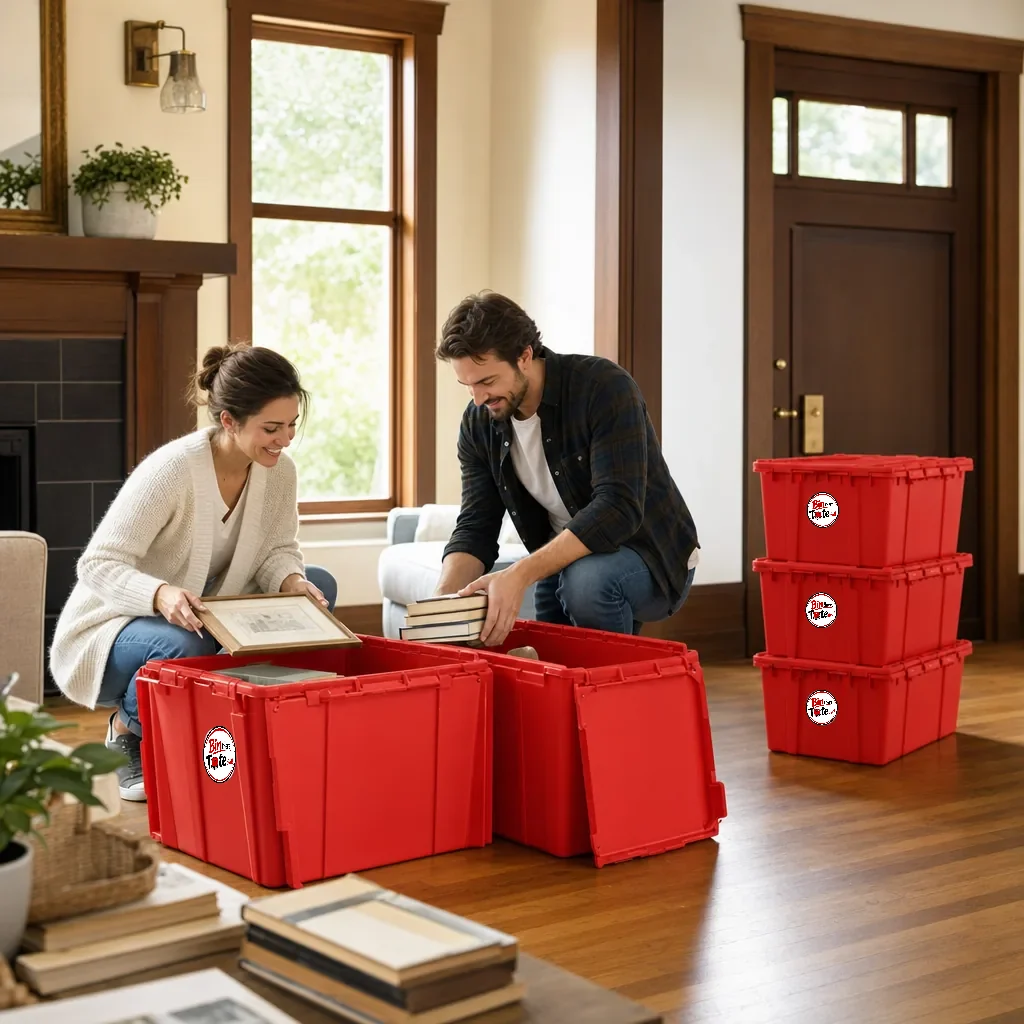
Totes carry the household. Blankets carry the rest.
The order to pack the awkward stuff
Sequence matters more with odd items than with anything else in the move. Work through them in this order and each step protects the next.
- Weeks out: hunt down factory boxes for the TV and any electronics, and decide which few garments earn wardrobe-box treatment.
- Packing week: roll and tie the rugs early, since the floor space they free up becomes your staging area.
- Day before: break down the lamps, wrap the bases, and nest the shades together in a dedicated tote.
- Loading day, early: rugs stand along the truck walls, blanket-wrapped mirrors and art slide vertically beside the mattress.
- Loading day, late: the TV goes in upright once its mattress neighbors are placed, never first, never under anything.
- Last of all: plants ride in your own vehicle, unsealed, and walk into the new place before the first tote does.
The split strategy
Here is the whole post as a packing rule you can apply item by item.
- The item is flat, fragile, and bigger than a tote lid
- Creases or scratches would genuinely ruin it
- It is alive, and therefore needs air and your back seat
- The item fits with the lid closed, which is most items
- It benefits from a rigid, rainproof, stackable ride
- Folding it costs nothing but a moment of letting go
- You want it labeled, stacked, and findable on arrival
Sizing the tote side of that split is its own small science, covered in our guide to how many containers a move really needs. For the delivery logistics, the two-week window and included dolly are explained on the rental process page, and Portland tote packages start at $97 with free delivery and pickup. Still comparing materials from first principles? The side-by-side look at cardboard and totes is where that argument gets settled.

Written by the Bin There, Tote That! team
We rent, deliver, wash, and pick up moving totes across the Portland and Vancouver metro every week, so the advice here comes from vans and doorsteps, not a content mill. Facts about competitors are checked at publication and date-stamped in the text.